
Framed River Artwork
Framed river artwork captures watercourses and bridges through nineteenth-century oils and watercolours.
Framed River Artwork
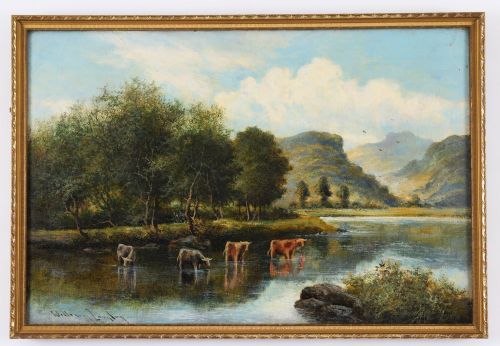
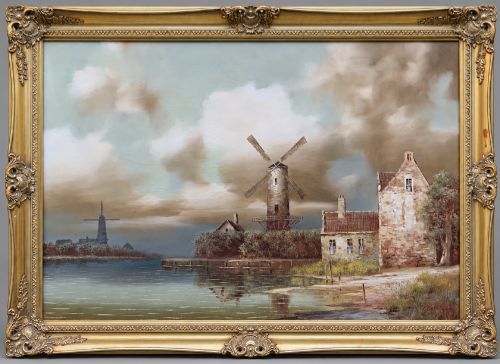
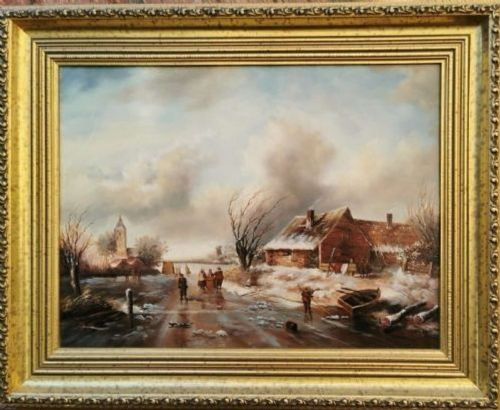
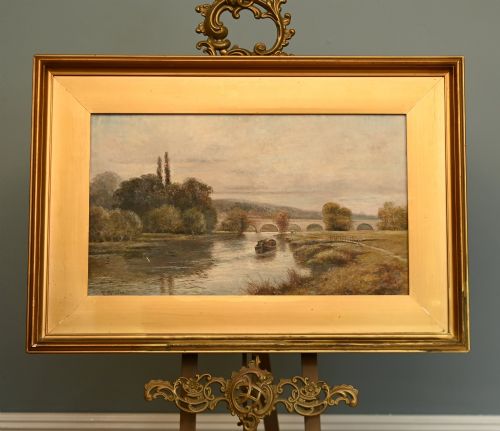
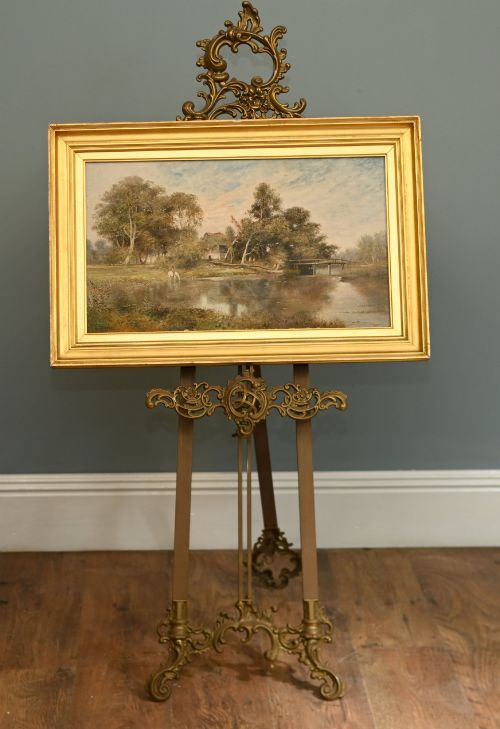
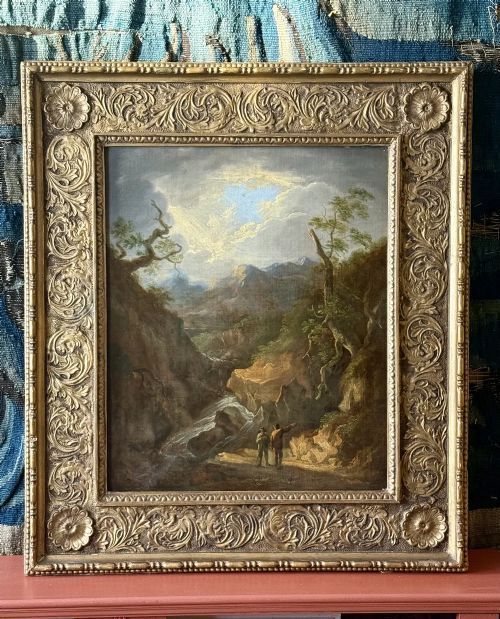
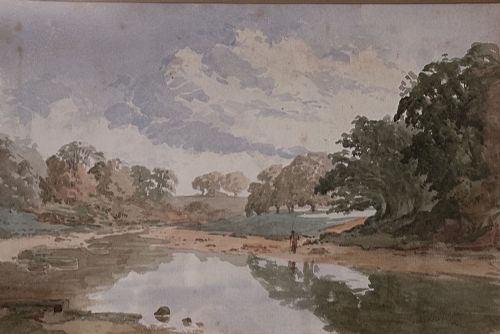
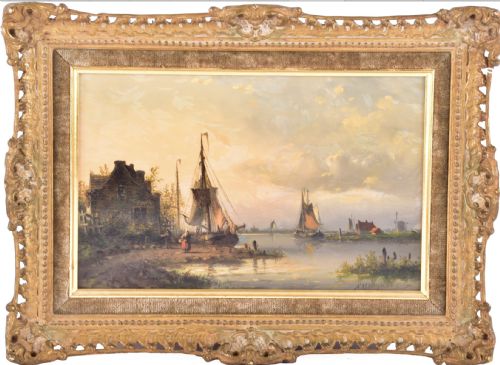
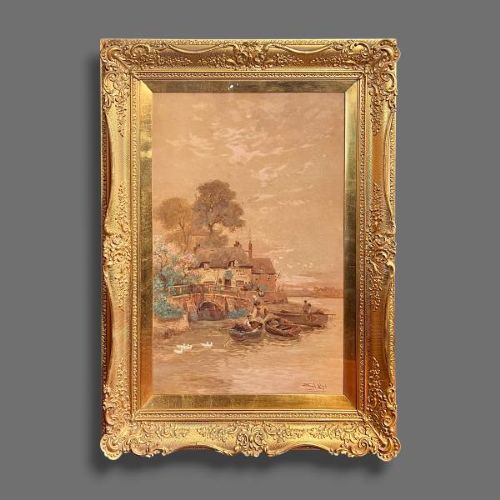
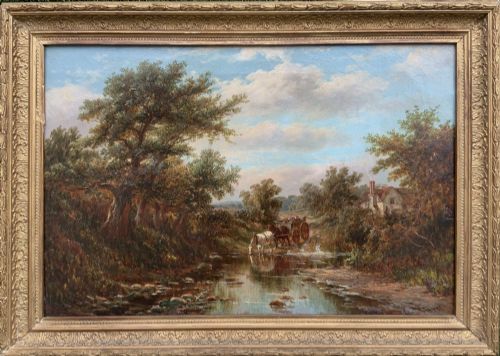
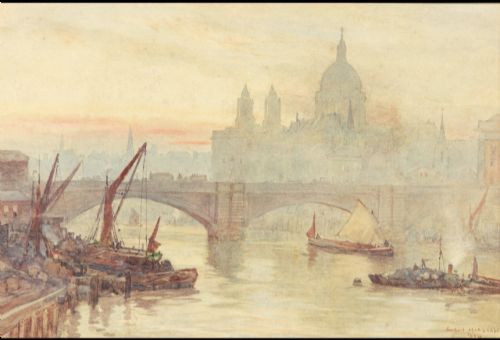
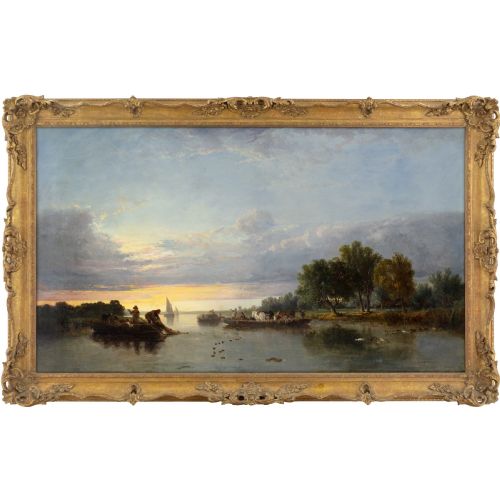
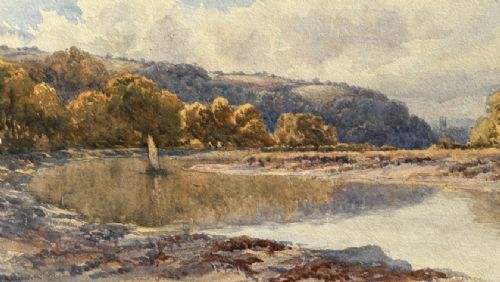
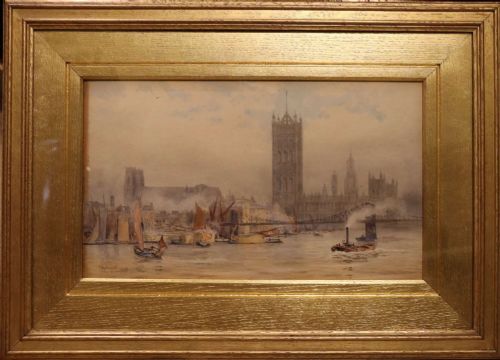
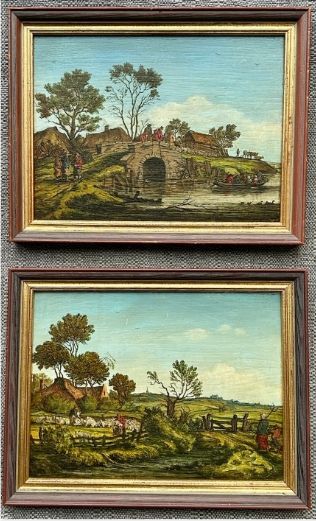
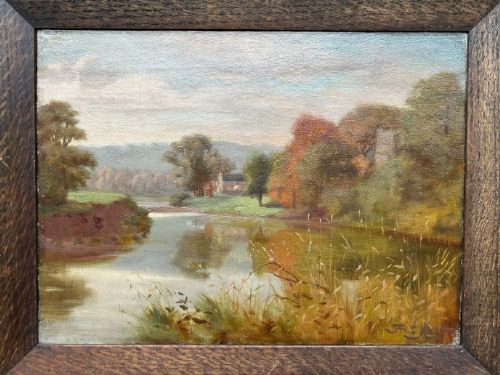
Framed river artwork brings together paintings of waterways, bridges, and towing paths, spanning British, Dutch, and French schools. These works primarily take the form of oil paintings on canvas or wood panels, alongside watercolours on paper and charcoal drawings.
The selection ranges from Victorian urban scenes along the Thames to rural Welsh landscapes and continental canal views. Buyers typically encounter nineteenth-century pieces framed in wood and gesso, reflecting periods from the Victorian era to the early twentieth century.
Materials and execution
Artists painted primarily with oil paint on canvas, wood panels, and board, or applied watercolours and gouache to paper. Works frequently employ supportive mounts of paper and card within protective glass and wooden frames.
Framing often incorporates decorative gesso ornamentation applied to wood moulding. Hand-drawn works utilise charcoal, pen and ink, and etching techniques on paper supports.
Listings feature works spanning the eighteenth century through to the 1960s, executed in oil, watercolour, charcoal, and etching.
Distinctions in execution
Quality rests upon the sureness of the brushwork and the artist's command of light upon water and sky. Stronger pieces display precise topographical detail and atmospheric depth, whereas lesser works rely on formulaic composition.
The integrity of the original frame, the preservation of the pigment without excessive restoration, and the distinction of the artist's signature elevate individual examples.
W Klombeck·Frederick Marriott·Gabriel Mathieu·Frank William Scarbrough·Robert Thorne Waite·Francis Moltino·Willem Bos·George Oyston·T B Hardy·Alfred East·Henry H Parker·T C Hofland
The Framed River Artwork Glossary
- Gesso
- A plaster mixture applied to wood frames to create a smooth surface for gilding and moulding. It provides the decorative relief borders typical of period frames.
- Watercolour
- A paint consisting of pigment suspended in a water-soluble binder, applied to paper. It creates transparent washes often used for atmospheric river landscapes.
- Oil on Canvas
- Pigment mixed with drying oil applied to woven fabric stretched over a wooden frame. This technique allows for rich texture and deep colour blending.
- Etching
- A printmaking process where acid cuts lines into a metal plate to hold ink. The inked plate transfers the image under pressure onto paper.
- Wood Panel
- A rigid flat wooden support used as a base for oil paintings prior to the widespread adoption of canvas.
Framed River Artwork: Frequently Asked Questions
What subjects appear most often?
Views centre on urban bridges, rural river banks, and working ports along waterways such as the Thames and continental canals. Scenes range from quiet pastoral settings to industrial maritime traffic.
Artists frequently captured changing light conditions at dawn or sunset across the water.
How do I identify the period?
Stylistic clues include the painterly approach of Victorian realism, French impressionism, or Romanticism. Frame construction, canvas types, and artist signatures also point to specific decades.
Many pieces carry nineteenth-century or early twentieth-century dates inscribed by the artist.
Are these works signed?
Many pieces feature artist signatures or initials inscribed directly onto the canvas, panel, or paper. Some bear contemporary inscriptions on the reverse.
Unsigned examples are often attributed to specific schools or followers of prominent artists based on technique.