
Green Reading Chair
A green reading chair offers a deep, supportive seat built for long hours with a book, spanning styles from Regency library models to Edwardian tub chairs.
Green Reading Chair
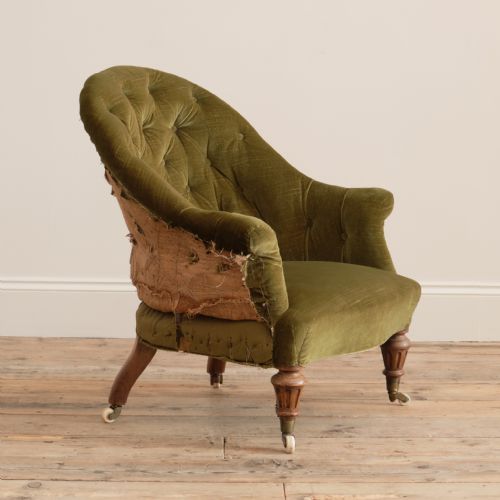
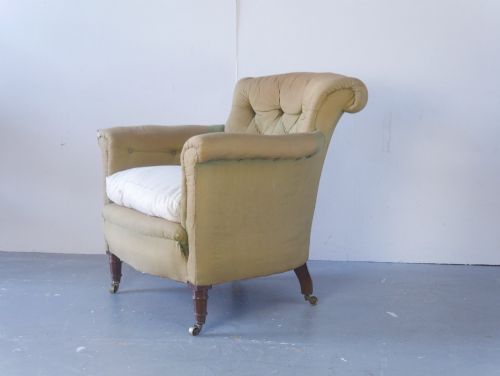
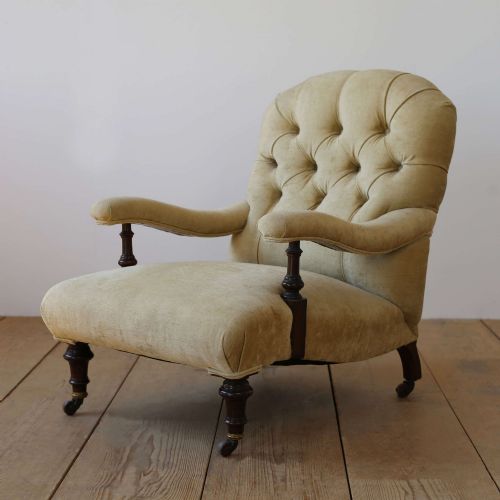
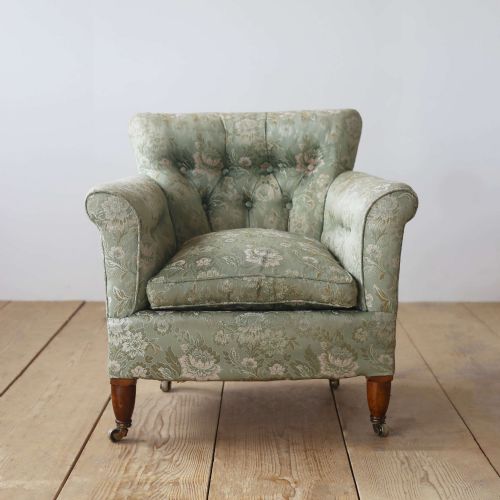
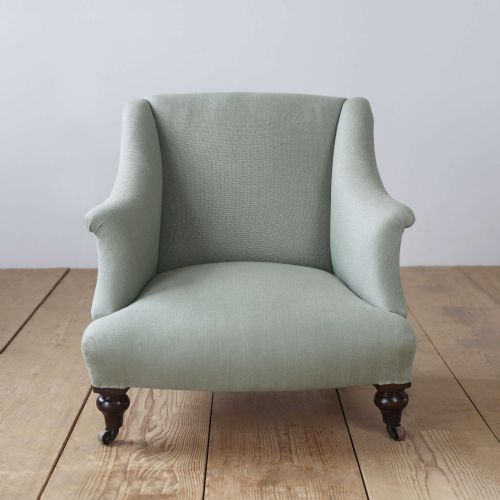
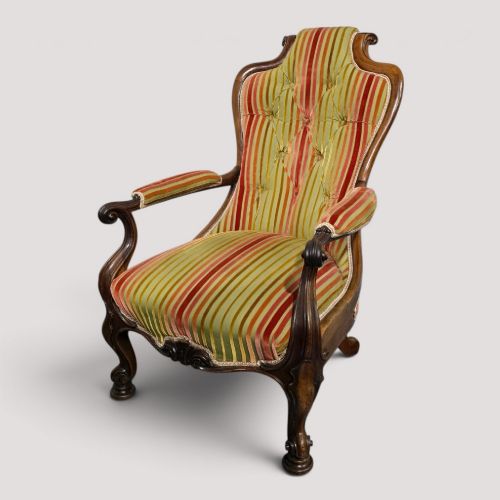
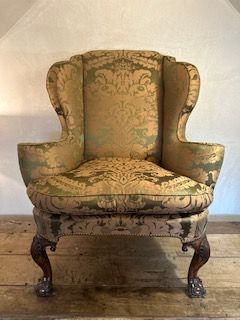
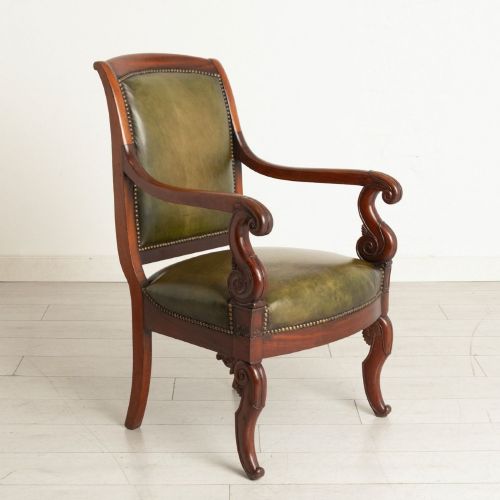
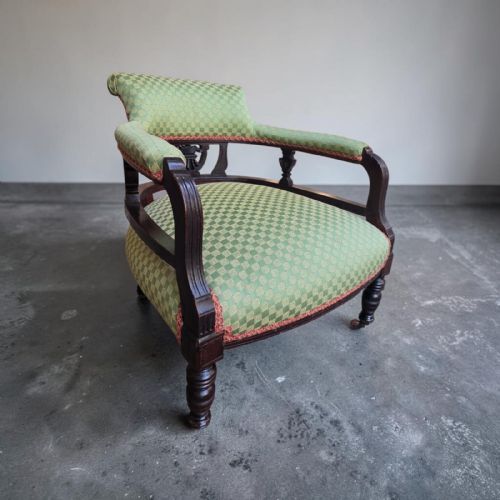
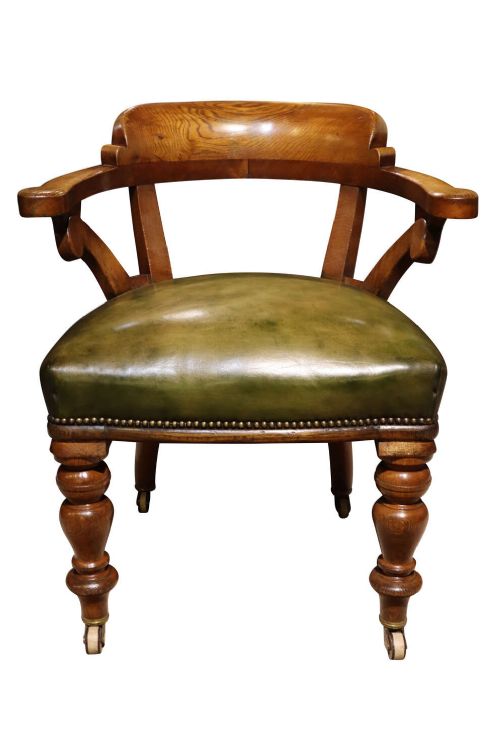
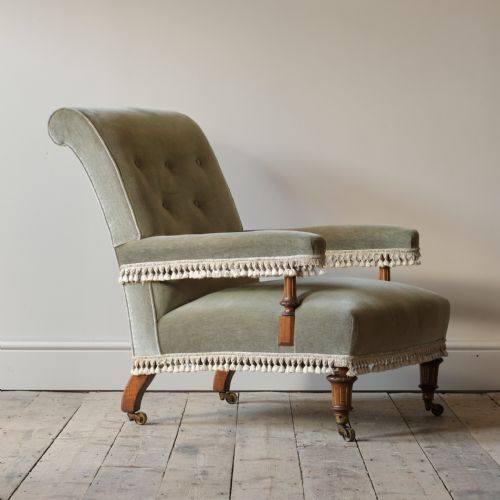
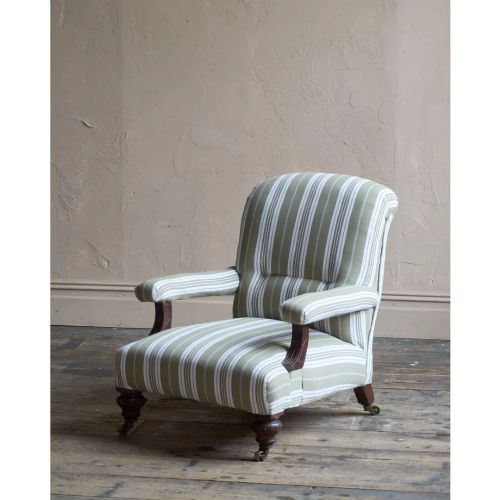
A green reading chair is an upholstered seat designed for comfort and extended study, appearing on this page primarily in Victorian, Regency, and Edwardian forms. The pieces range from library armchairs and wing chairs to adjustable campaign seats and barrel backs.
The materials span mahogany, walnut, oak, and rosewood frames paired with leather, velvet, and textile upholstery. Many pieces incorporate brass hardware, iron mechanisms, or caned panels alongside traditional wooden construction.
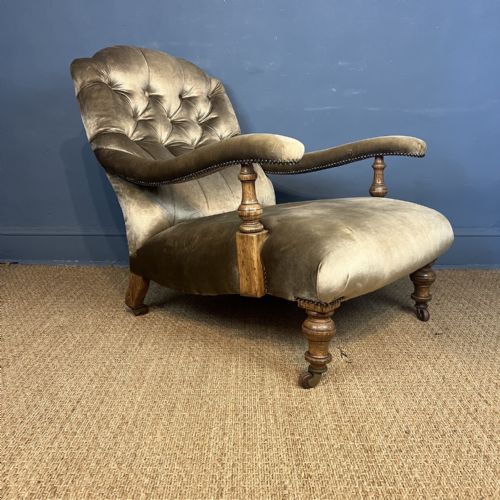
Buyers seeking this phrase most frequently encounter 19th-century and early 20th-century seating featuring traditional buttoning, scroll arms, or adjustable backs. The selection bridges formal library furnishings and relaxed country house seating.
What varies in quality
Quality depends on the crispness of the timber carving, the integrity of the frame construction, and the fidelity of the upholstery materials. Pieces produced by recognised cabinet-makers display superior timber selection and refined proportions.
The sophistication of the mechanical elements also dictates the standard of the piece, particularly in adjustable library chairs and reclining models. Original leather or period textile upholstery retains greater historical interest than modern replacements.
Some Victorian reading chairs include hidden iron mechanisms for dozing off between chapters.
Gillows·Howard and Sons·Holland and Sons·Hampton and Sons·Heals
The Green Reading Chair Glossary
- Bergère
- An enclosed armchair with stuffed or caned sides and a padded seat cushion. This French seating form gained popularity in British libraries during the Regency period.
- Wing chair
- An armchair with high cheek pieces or wings attached to the back, designed to shield the sitter from drafts. Early examples often feature cabriole legs and leather upholstery.
- Library chair
- A sturdy armchair designed for reading rooms, frequently rendered in mahogany or walnut with leather-covered pads. These seats often incorporate desk arms or reading slopes.
- Campaign chair
- A portable, folding piece of furniture designed for travel and military use. 19th-century examples utilise collapsible frames and brass-mounted hinges.
- Tub chair
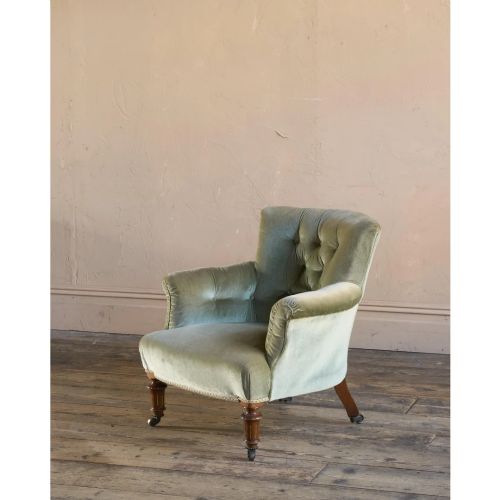
- A curved, semi-circular armchair where the back and arms form a continuous rounded enclosure. Edwardian and Victorian makers favoured this shape for compact seating.
Green Reading Chair: Frequently Asked Questions
What defines a traditional library chair?
A library chair is built for prolonged reading, usually featuring a sturdy hardwood frame of mahogany or walnut and a supportive upholstered back.
Many examples include padded armrests or leather upholstery designed to withstand daily study use.
How do I identify a Regency period armchair?
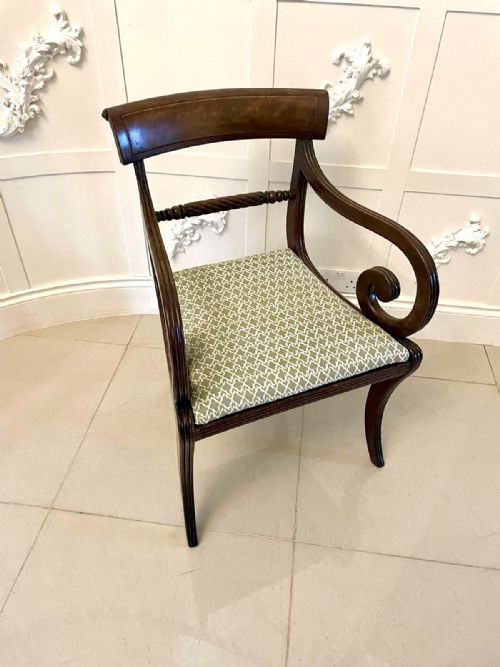
Regency armchairs typically display classical influences, featuring dark hardwoods, reeded legs, and sabre frames.
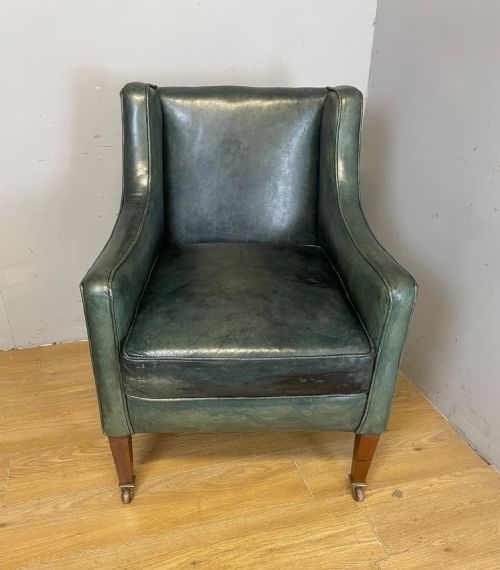
Upholstery on these pieces frequently utilises green leather or caned panels reflecting early nineteenth-century taste.
Were these chairs used for writing or reading?
Many of these chairs served dual purposes in studies and libraries, accommodating both book reading and desk work.
Models with wide arms or adjustable backrests were particularly suited for long hours of sustained focus.
What is an adjustable backrest on an antique chair?
An adjustable backrest allows the sitter to alter the angle of the chair using mechanical hinges or ratchets.
These functional elements are commonly found on campaign furniture and specialised reading seats from the nineteenth century.