
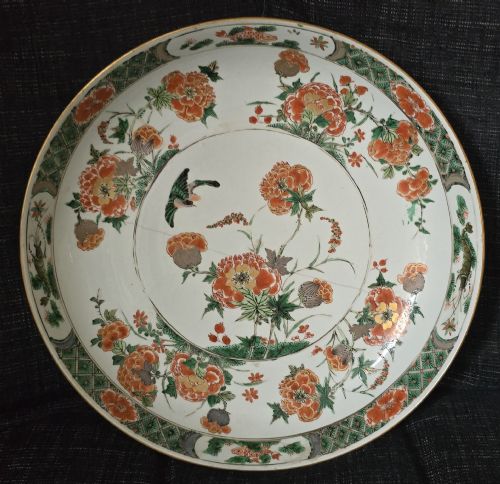
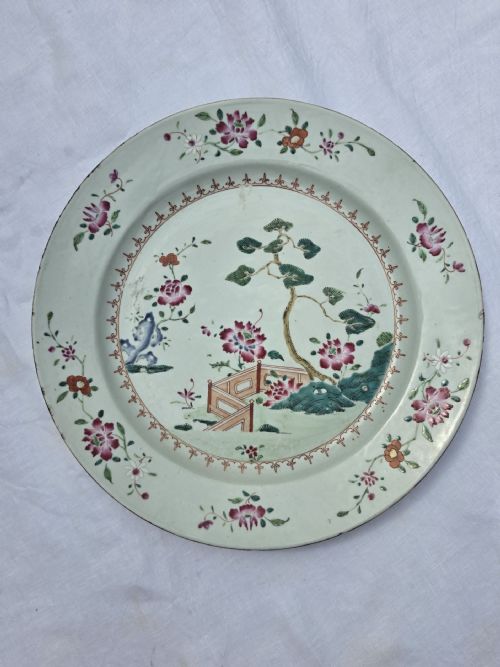


Green Porcelain Charger
These green porcelain chargers are large decorative plates shaped by centuries of Asian and English tradition, offering deep glazes and painted court scenes that anchor any wall or table.
Green Porcelain Charger
A green porcelain charger is a broad decorative dish or plate, and on this page you are most likely to meet Chinese Longquan celadon pieces from various centuries alongside Japanese Kutani examples.
The selections span significant periods from pre-sixteenth century Song and Yuan dynasties through to eighteenth-century export wares and nineteenth-century Japanese Meiji productions.
Makers and kilns produced these objects primarily as large decorative chargers, dishes, and armorial plates designed to command visual attention in formal interiors.
Materials and Techniques
Hard-paste porcelain and standard ceramic bodies form the solid foundation of these chargers, providing the dense substrate required for large-scale firing.
Glazes such as celadon glaze and enamel glaze coat the surfaces, often complemented by hand-painted pigments and gilt highlights applied during periods like the Qing dynasty and Meiji era.
Listings span multiple eras from pre-sixteenth century Song dynasties through to nineteenth-century Japanese Meiji productions and English Victorian pottery.
Factors of Quality
The refinement of the carved or moulded floral scrolls and the depth of the celadon glaze separate the standard production pieces from the most accomplished historical examples.
Precision in hand-painted detail, particularly on court life scenes and armorial crests, marks the distinction between ordinary workshops and premier potteries.
Bluett and Sons·Copeland Pottery
The Green Porcelain Charger Glossary
- Celadon glaze
- A transparent green glaze with iron impurities that produces jade-like hues upon firing. It appears frequently on early Chinese dishes.
- Famille verte
- A palette dominated by green enamel colours used for pictorial scenes on porcelain. It characterises many eighteenth-century Chinese chargers.
- Imari
- A Japanese export porcelain style featuring underglaze blue and overglaze iron red, gold, and supplementary colours. It represents a major strand of nineteenth-century production.
- Armorial porcelain
- Ceramic tableware and plates painted with specific European family coats of arms. They were commissioned directly from Chinese kilns.
- Hard-paste porcelain
- A dense, vitrified ceramic material fired at very high temperatures. It forms the durable body of traditional East Asian chargers.
Green Porcelain Charger: Frequently Asked Questions
What is a green porcelain charger used for?
These large plates served primarily as grand table centerpieces or decorative display items rather than everyday dining vessels. Their generous diameters allowed kilns to showcase intricate celadon glazes and painted narratives.
Today, they function best displayed on walls using specialist hangers or mounted securely on sturdy plate stands within a dining room or study.
How do I date a celadon charger?
Dating relies on examining the weight of the ceramic body, the exact shade of the green glaze, and the characteristics of any moulded floral scrollwork. Earlier pieces from the Song and Yuan periods exhibit distinct body density and glaze pooling compared to later nineteenth-century revivals.
Matching stylistic traits such as twin fish motifs or foliate rims against known museum examples provides further chronological certainty.
Where were these chargers made?
The pieces originate primarily from historical kilns in China, such as the Longquan celadon production centres, and Japanese manufacturing hubs including Kutani and Arita. A small number also derive from English potteries like Copeland.
Export wares were frequently commissioned through trading ports to satisfy European demand for armorial and decorative services.
How should I clean my charger?
Maintenance requires only a gentle wipe with a soft, dry cloth to remove dust from the glazed surface. Avoid immersing antique pieces in water or using modern chemical detergents that could harm fragile enamels.
Keep the charger away from direct, strong sunlight to preserve the stability of any overglaze painted decoration over time.