


Oriental Glazed Stoneware
Oriental glazed stoneware brings together centuries of Asian ceramic traditions, offering rich glazes and sculptural forms for the home.
Oriental Glazed Stoneware
Oriental glazed stoneware comprises vessels and figures from Chinese and Japanese kilns, spanning centuries of ceramic development from the Song Dynasty through to the Taisho and Showa periods. When searching for oriental glazed stoneware, buyers encounter diverse forms ranging from utilitarian pitchers and jars to highly decorative vases and sculptural figures.
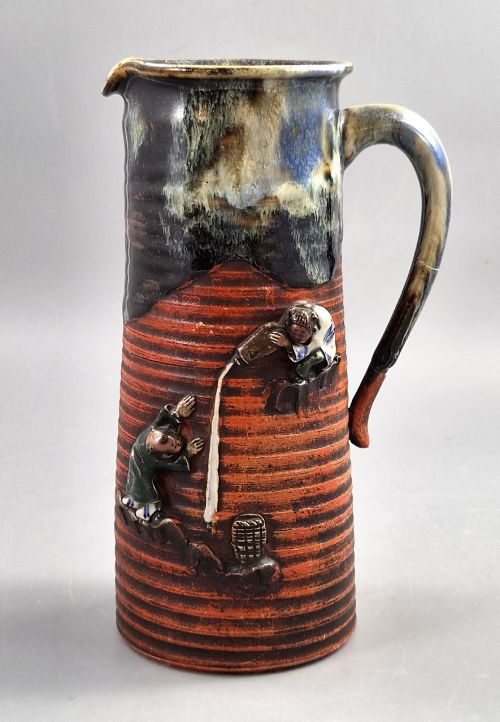
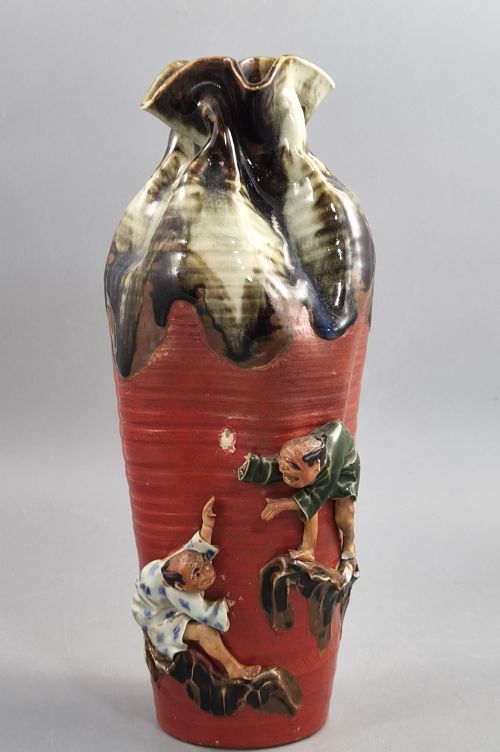
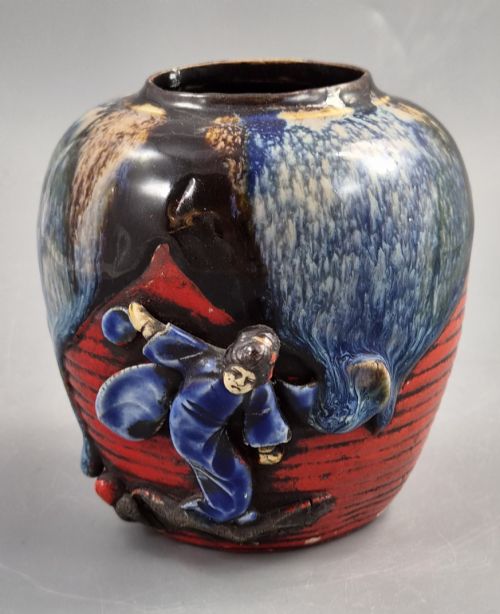
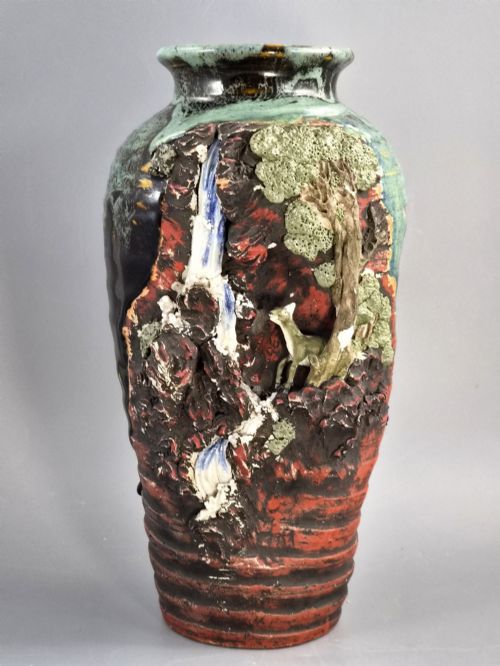
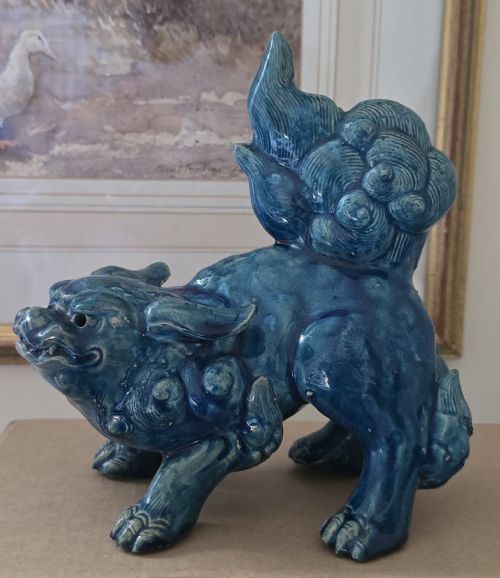
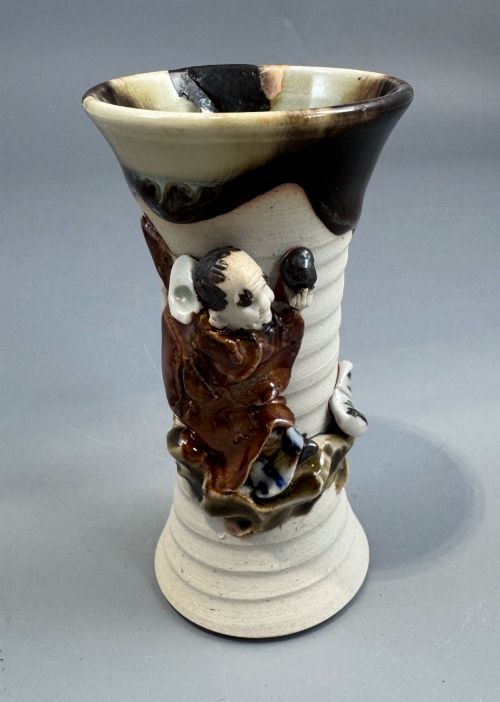
The pieces appearing on this page lean heavily towards Japanese Meiji and Taisho period creations, particularly Sumida Gawa wares featuring applied figures and flambé glazes. Alongside these, Chinese Shiwan pottery figures, celadon bowls from earlier dynasties, and monochrome vases represent the breadth of available stock.
Forms include globular vases, foliate-rim bowls, sculptural landscape vessels, and zoomorphic figures such as Shishi lions and tigers. Each object demonstrates the distinct regional techniques and aesthetic preferences of its maker and period.
Materials and Working Methods
The body of oriental glazed stoneware relies on dense, vitrified clay bodies capable of holding heavy liquid glazes at high kiln temperatures. Stoneware and earthenware provide the structural foundation for both utilitarian vessels and intricate sculptural figures.
Current listings feature stoneware, earthenware, and terracotta pieces decorated with enamel and specialised glazes from the 18th, 19th, and early 20th centuries.
Judging Quality in Stoneware
Quality in oriental glazed stoneware rests on the mastery of the kiln process and the confidence of the modelling. Successful application of complex glazes, such as running flambé or controlled tea dust, separates masterworks from routine production pieces.
Sculptural definition dictates value in figures and applied-relief vessels, where the crispness of a modelled face, animal limb, or landscape detail shows the hand of a skilled artisan. Signed pieces and attribution to noted workshops or makers add another layer of distinction.
Inoue Ryosai·Makuzu Kozan II·Hattori
The Oriental Glazed Stoneware Glossary
- Stoneware
- A robust ceramic fired at high temperatures until the clay body vitrifies and becomes impermeable to water. It forms the durable base for many Asian decorative vessels.
- Flambé glaze
- A streaked or mottled glaze achieved through complex metallic oxide reactions in the kiln. It produces unpredictable and highly decorative colour variations.
- Celadon
- A pale green or grey-green glaze traditionally associated with Chinese kilns. The subtle coloration mimics the appearance of jade.
- Shiwan pottery
- A ceramic tradition from Guangdong province famous for expressive figures and thick, colourful glazes. Artisans often left parts of the clay body unglazed to contrast with the glossy surface.
- Sumida Gawa
- A distinctive Japanese pottery style originating near Tokyo, noted for heavy glazes and high-relief applied figures. Pieces frequently depict children, animals, or narrative scenes.
Oriental Glazed Stoneware: Frequently Asked Questions
What is Sumida Gawa pottery?
Sumida Gawa pottery is a distinct Japanese ceramic style characterised by thick, dripping glazes and heavily modelled figures applied to the surface. These pieces often depict narrative scenes, animals, or children interacting with the vessel.
Originating around the Meiji period near Tokyo, this ware combines traditional glazing methods with a sculptural approach that makes each piece unique.
How do I care for stoneware?
Caring for oriental glazed stoneware requires simple dusting with a soft cloth and avoiding harsh chemical cleaners. Because many pieces are historic or feature delicate applied details, hand washing in lukewarm water without submerging for long periods is safest.
Keep pieces away from rapid temperature changes and direct sunlight to protect the glaze and clay body over time.
How can I tell the age of a piece?
Dating these ceramics involves examining the potting style, glaze characteristics, and any visible signatures or seals. Comparing the base, clay body, and wear patterns against established historical periods helps narrow down the era of production.
Different dynasties and Japanese imperial periods used distinct clay compositions and glaze recipes that guide identification.