





Green Pendant Lamp
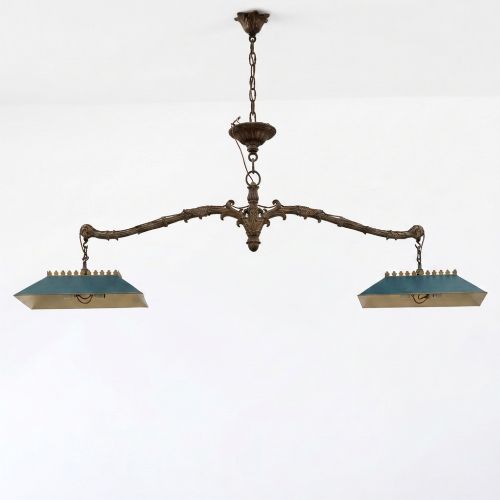
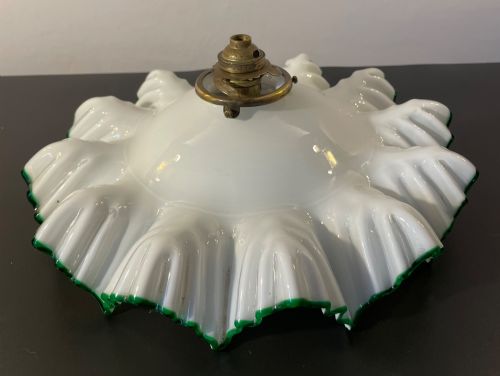
These green pendant lamp pieces bring coloured glass, enamel, and brass into a room, offering functional illumination with period character.
Green Pendant Lamp
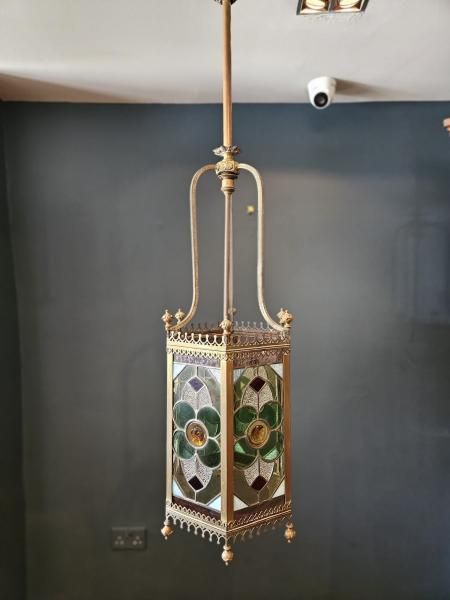
A green pendant lamp brings together ceiling lighting fixtures defined by green glass shades, enamelled metal domes, or coloured crystals suspended from above. When you search for a green pendant lamp, you encounter forms ranging from industrial factory shades to delicate Art Nouveau bulbs and Victorian leaded glass lanterns.
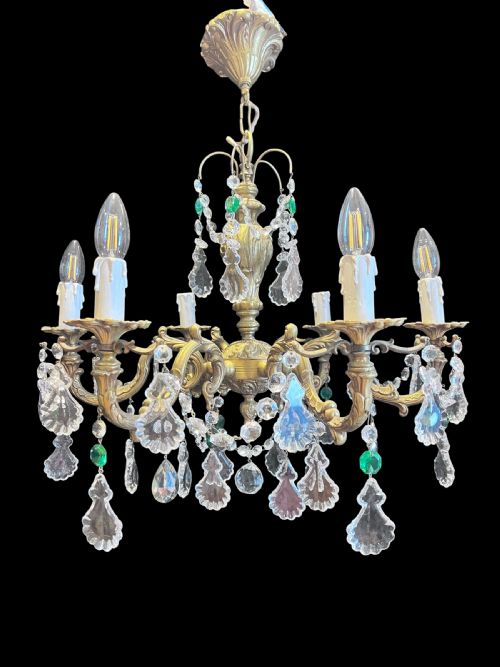
The pieces on this page span the nineteenth century through the 1930s, taking in styles such as Victorian, Industrial, Art Nouveau, and Art Deco. You will find ceiling lights, pendant lights, chandeliers, and lampshades in brass, bronze, steel, glass, and vitreous enamel.
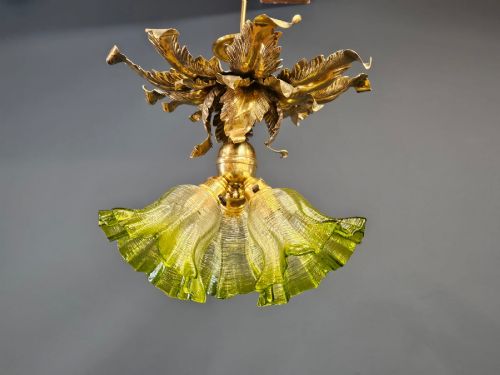
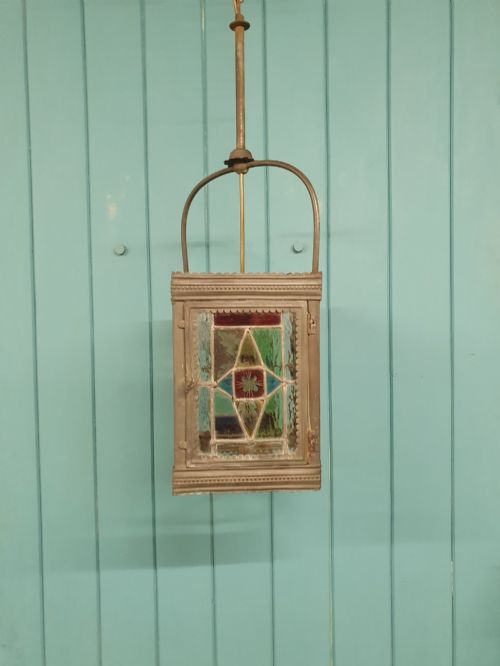
Industrial enamel fittings and Art Nouveau green glass ceiling lamps appear alongside French brass chandeliers and leaded glass hall lights. Each variant serves to hang a green shade or bulb centrally in a room to cast downward illumination.
Materials and construction
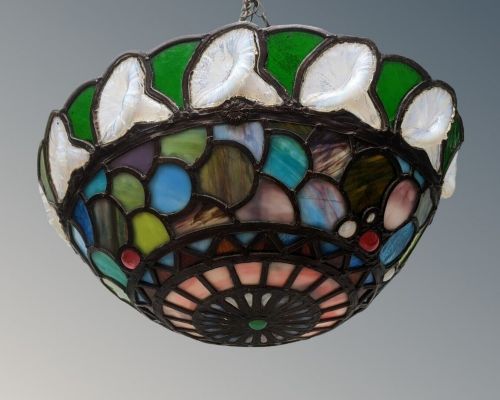
Manufacturers formed these ceiling fixtures using spun metal, cast brass, and blown or moulded glass. Vitreous enamel provided a durable, glossy coloured surface for industrial factory pendants, while leaded glass and stained glass panels were soldered into intricate geometric or botanical lantern frames.
Brass and bronze components were cast, turned, and polished to form structural frames, ceiling roses, and decorative leaf motifs. Coloured crystals and glass bulbs were integrated into chandeliers and rise-and-fall mechanisms to diffuse the light.
Listings feature periods from the nineteenth century up to the 1940s, utilising materials including brass, glass, bronze, and vitreous enamel.
Judging quality
Quality rests in the weight of the cast metals, the depth and consistency of the enamel or glass colour, and the integrity of the original joints and mounts. Heavier gauge brass, crisp casting in leaf designs, and unblemished leaded glass mark out superior pieces.
The finesse of the hardware, such as original brass fittings, working rise-and-fall counterweights, and intact coloured crystals, separates standard production from finer examples. Maker execution in the glassblowing and metal assembly dictates the overall presence of the fixture.
The Green Pendant Lamp Glossary
- Vitreous enamel
- A material made by fusing powdered glass to a substrate by firing, producing a durable and glossy coloured coating on industrial pendants.
- Rise and fall
- A mechanical pulley system allowing the hanging light to be adjusted to different heights above a table or floor.
- Holophane
- A brand of scientific glass reflector designed to direct and diffuse light evenly while reducing glare.
- Toleware
- Painted and lacquered metalware, often featuring polychrome decoration on chandeliers and lampshades.
- Leadlight
- Glass pieces held together within a network of lead cames, frequently seen in Victorian and Edwardian lanterns.
Green Pendant Lamp: Frequently Asked Questions
How do I hang a heavy brass chandelier?
These ceiling lights require secure attachment to a joist or heavy-duty ceiling hook capable of supporting the combined weight of brass, bronze, and glass components.
Professional electrical installation ensures the internal wiring and ceiling rose support the fixture safely.
Where should I place a factory enamel pendant?
Industrial enamel pendant lights suit kitchens, utility spaces, or dining tables where direct, downward task lighting is required.
The vitreous enamel shade directs light efficiently onto the surface below while adding an industrial aesthetic to the room.
How do I clean an antique glass lampshade?
Glass and crystal shades benefit from gentle washing in lukewarm water with mild soap to remove dust and grease without damaging the surface.
Metal elements like brass and bronze should be dusted carefully to preserve their natural patina.
Are these vintage lights compatible with modern bulbs?
Most antique and vintage pendant fittings accommodate standard modern LED bulbs, provided the wattage matches the historical capacity of the socket.
Rewiring is often carried out to meet current electrical safety standards while retaining the original lamp holder.