
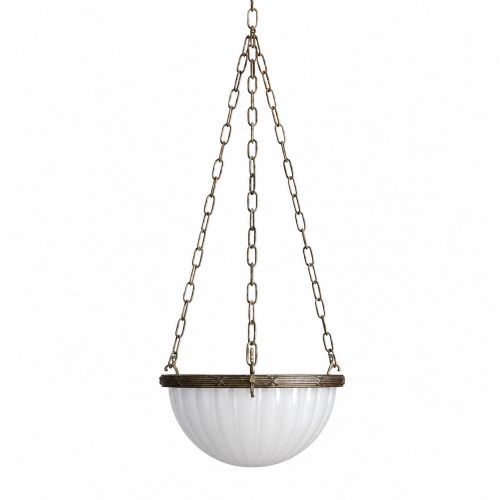
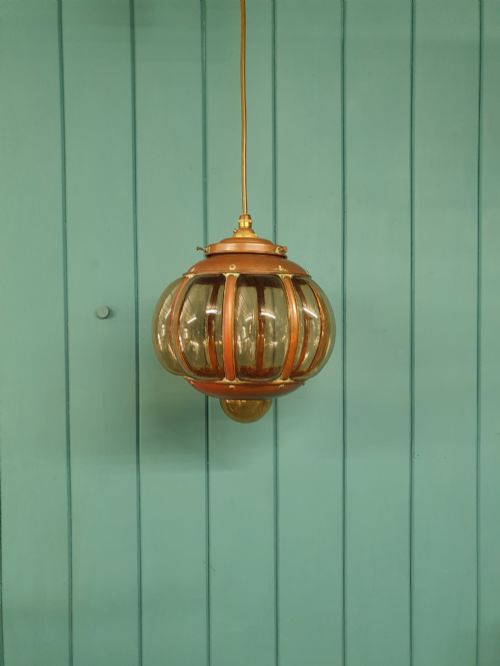
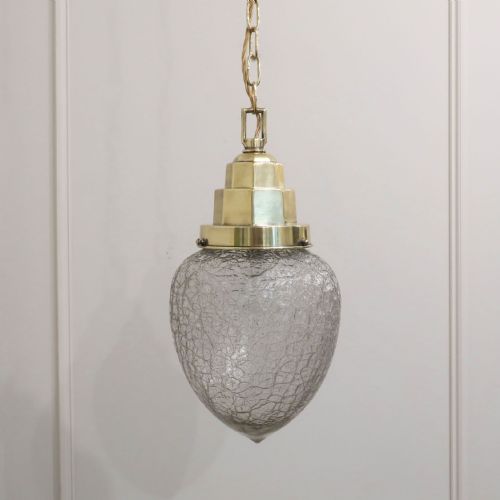


Retro Ceiling Light
These retro ceiling light options bring original mid-century and industrial character to a room through authentic period glass and metalwork.
Retro Ceiling Light
A retro ceiling light encompasses hanging pendants, chandeliers, and plafonniers originating predominantly from the 1920s and 1930s. Buyers searching this phrase encounter fixtures designed for domestic and industrial spaces during the early twentieth century.
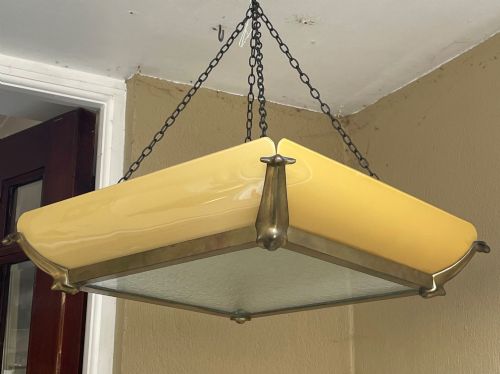
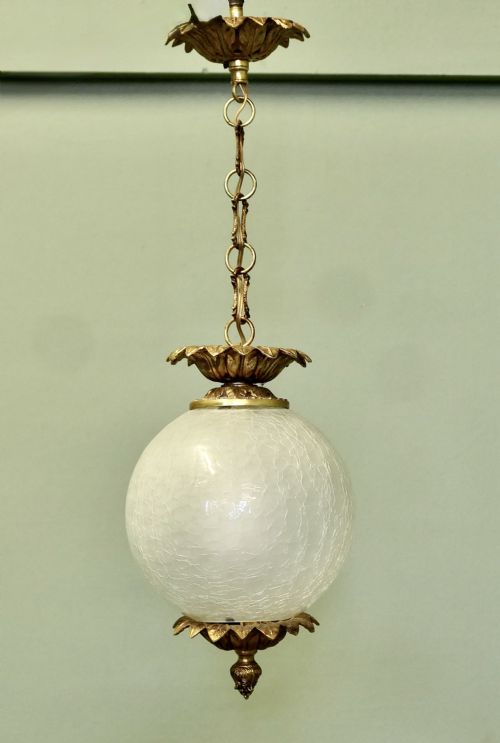
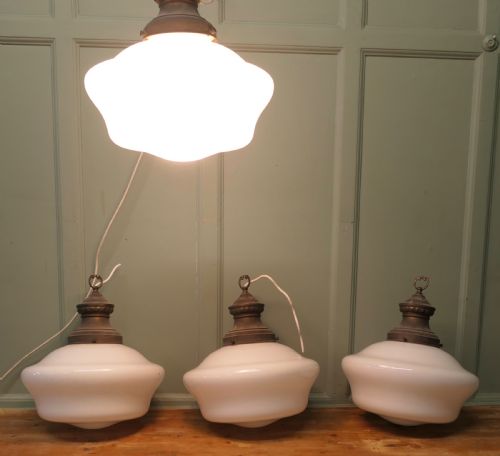
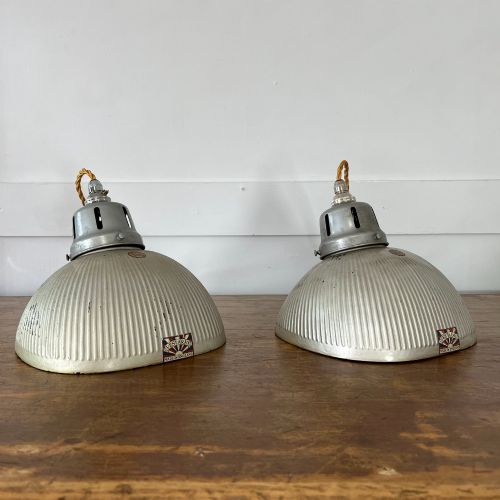
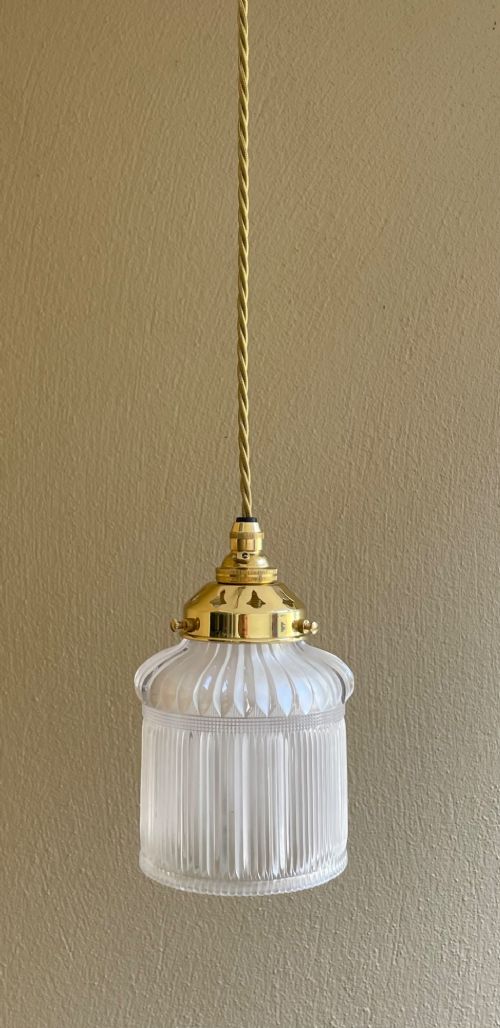
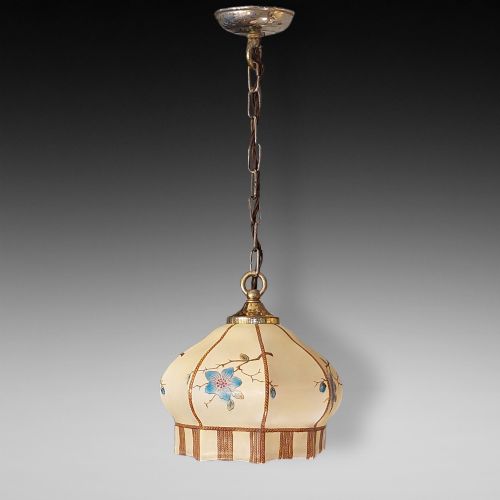
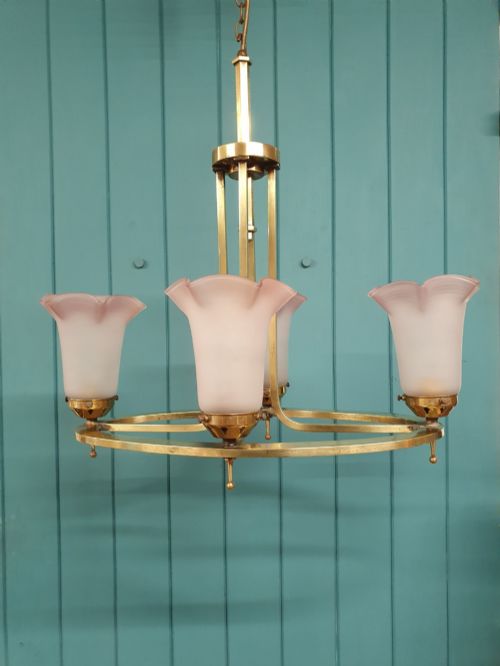
The most common examples on this page are Art Deco glass globes and opaline pendants that diffuse light softly through moulded or hand-painted shades. Industrial factory lights and brass chandeliers also appear frequently across the selection.
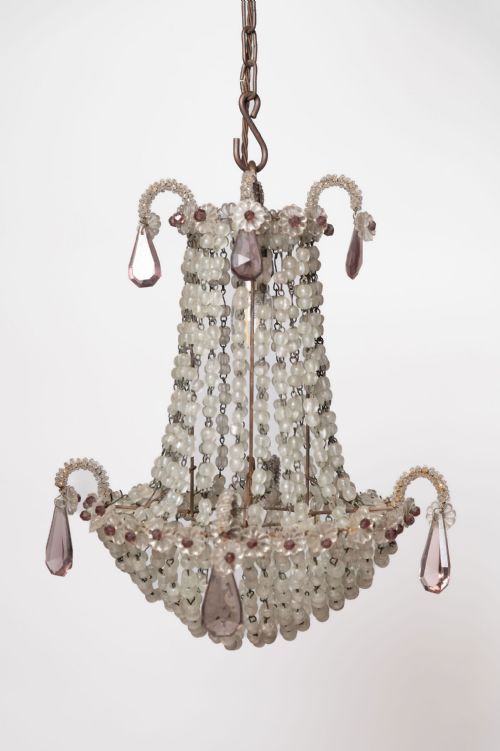
Periods represented range from Victorian and Edwardian examples through to robust mid-century industrial designs. Styles stretch from Italian Florentine and Venetian glass to British and French factory engineering.
How they were made
Makers utilised durable metals such as brass, chrome, steel, and copper to construct structural galleries, chains, and frames that support heavy glass components. These metal housings often retain patinated surfaces developed through decades of service in commercial and residential settings.
Glass elements were cast, moulded, or blown into distinct shapes including pear, conical, bell, and fish scale profiles. Specialist treatments like opaline, frosted, smoked, crackle, and hand-painted finishes were applied to control illumination and appearance.
Listings feature brass, glass, metal, frosted glass, opaline glass, chrome, steel, and copper across periods spanning the nineteenth century to 1940.
What varies in quality
The distinction between standard commercial lighting and superior examples lies in the complexity of the glasswork and the integrity of the metal gallery. Heavy moulded opaline glass and signed designer pieces demonstrate greater material substance than simple utilitarian shades.
Original matching components, such as specialised galleries paired with correct prismatic or textured shades, elevate a fixture. The presence of maker attributions or distinct regional glass styles from French or Italian workshops marks out the higher tier of production.
Jean Gauthier·Ezanville Ezan France·Holophane·Vestaray·Jefferson
The Retro Ceiling Light Glossary
- Plafonnier
- A ceiling-mounted light fixture that sits flush or very close to the ceiling surface, commonly utilised in hallways and rooms with lower headroom. These fixtures often feature moulded glass bowls held by metal mounts.
- Opaline glass
- A milky, semi-translucent glass developed to diffuse light evenly while reducing harsh glare from the bulb. This material appears frequently in vintage pendants and shades.
- Gallery
- The metal collar or ring at the top of a lampshade that secures the glass to the suspension wiring and holder. Galleries are often cast from brass or chrome.
- Prismatic glass
- Glass moulded with geometric ribbing or prisms designed to refract and scatter light efficiently across a workspace. Holophane lighting is particularly known for this optical technique.
Retro Ceiling Light: Frequently Asked Questions
How do I hang a heavy glass pendant?
Suspension requires a secure ceiling joist or a suitable patress box to bear the weight of brass, copper, and thick glass assemblies. Independent ceiling hooks and chains are typically employed to take the physical load off the electrical flex.
Professional installation is recommended for vintage fixtures to ensure proper earthing of metal galleries and structural stability.
What is the difference between opaline and frosted glass?
Opaline glass is manufactured with specific mineral additives that create a dense, milky-white appearance which diffuses light evenly across the entire surface. Frosted glass achieves its translucent quality through acid etching or sandblasting the inner or outer layer of clear material.
Both treatments soften harsh bulb glare, but opaline provides a solid porcelain-like aesthetic while frosted glass retains a more crystalline base.
Can I use modern LED bulbs in these lights?
Modern LED bulbs function well within vintage fixtures provided the physical dimensions fit inside the enclosed glass shade or gallery. Selecting a warm white LED mimics the traditional glow of older incandescent lighting without generating excessive heat.
Care must be taken with older brass and porcelain lamp holders to ensure wiring insulation meets current safety standards before inserting new bulbs.
How do I identify an Art Deco light fitting?
Art Deco lighting is characterised by symmetrical geometric forms, stepped motifs, and stylised floral or fan patterns executed in brass, chrome, and pressed glass. Fixtures from the 1920s and 1930s frequently combine rich metals with coloured or crackle glass shades.
Clean architectural lines and streamlined profiles distinguish these pieces from the more ornate flourishes of preceding Victorian and Edwardian designs.