
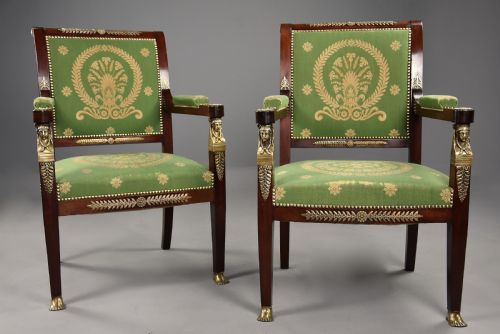
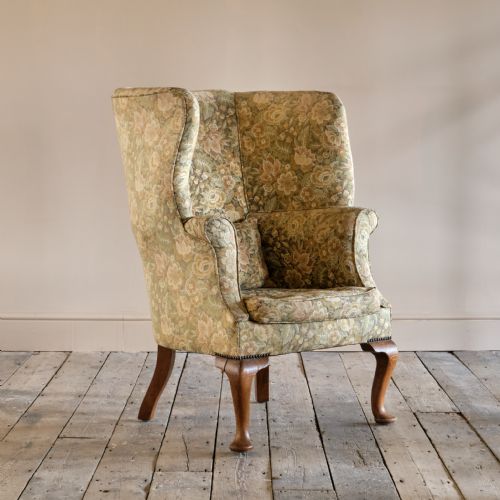


Green Patterned Chair
A green patterned chair brings texture and historic presence into a room, spanning nineteenth-century salon suites and early twentieth-century fireside designs.
Green Patterned Chair
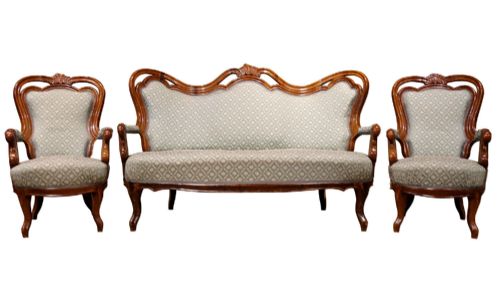
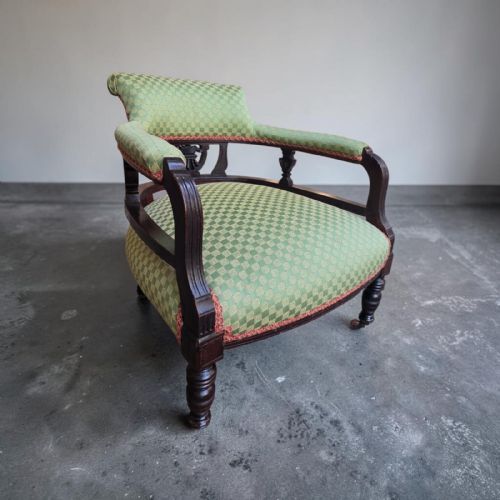
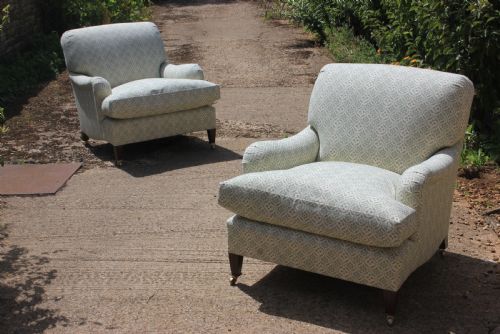
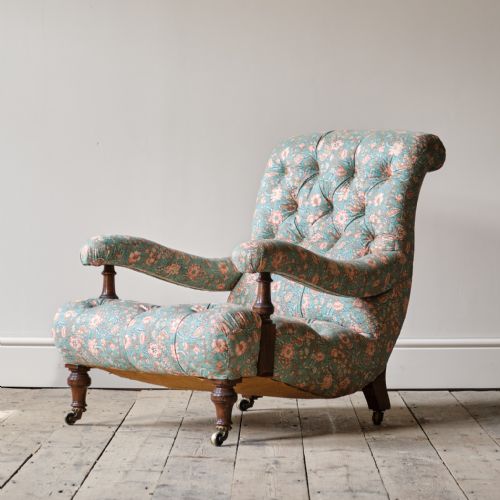
A green patterned chair encompasses diverse seating forms from the eighteenth to the early twentieth century, including wing armchairs, tub chairs, and salon suites. Buyers seeking a green patterned chair will encounter Victorian gentleman's armchairs, Edwardian fireside chairs, and Georgian style library seating.
The selection ranges from mahogany and walnut frames upholstered in tapestry fabric and floral textile to carved giltwood and bentwood structures. Examples span distinct stylistic revivals, including Rococo Revival, Queen Anne Revival, and Art Deco, reflecting shifting domestic tastes across multiple eras.
How they were made
Frames rely on traditional hardwoods such as mahogany, walnut, rosewood, and beech, shaped through joinery and hand carving. Woodwork ranges from plain turned supports to elaborate parcel-gilt and hand-carved giltwood ornamentation.
Upholstery involves fabric, tapestry fabric, and specialised textiles secured over sprung or padded interiors. Makers integrated structural brass fittings and exposed wood frames to balance durability with decorative refinement.
Listings feature seating upholstered in tapestry fabric and traditional textile across Victorian, Edwardian, and eighteenth-century periods.
What varies in quality
The refinement of the carved woodwork and the fidelity of historical revival styles separate standard seating from exceptional examples. Superior pieces display crisp detailing in the wood frame, whether executed in the French Empire manner or following Queen Anne traditions.
The choice and execution of upholstery materials, from simple woven textiles to complex tapestry fabrics, influence the character of each piece. Integration between the structural hardwood frame and the upholstered body determines the overall visual balance.
Howard and Sons·Holland and Sons·Heals·J.Mills
The Green Patterned Chair Glossary
- Fauteuil
- An open-armed upholstered armchair with exposed wooden arms, originating in France. These pieces typically feature carved wooden frames and padded armrests.
- Wing armchair
- A high-backed seating form featuring projecting side panels designed to shield the sitter from drafts. Eighteenth-century and revival examples often incorporate deep upholstery.
- Bentwood
- Wood softened through steam and curved into rounded structural forms. This technique found favour during the Art Deco period for lighter chair frames.
- Salon suite
- A matching set of seating furniture intended for formal reception rooms. These suites usually comprise a sofa and several armchairs sharing identical wood and textile treatments.
- Parcel-gilt
- Woodwork partially decorated with gold leaf applied over specific carved details. This treatment highlights particular architectural elements on library and salon seating.
Green Patterned Chair: Frequently Asked Questions
How do I identify a Victorian armchair?
Victorian armchairs often display dark hardwoods like mahogany or walnut combined with deep buttoned upholstery or scroll arms. Look for stylistic cues such as Rococo Revival curves or heavy Victorian proportions.
Construction methods from this era typically involve sturdy frame assemblies designed for domestic parlours and gentleman's studies.
Are eighteenth-century chairs different from revival pieces?
Eighteenth-century chairs date from the actual Georgian period and exhibit period-specific joinery and wear. Georgian style pieces made during the Edwardian era replicate these earlier silhouettes using later production methods.
Examining the wood grain, interior construction, and tool marks helps clarify the age of the frame.
How should I care for antique upholstery?
Antique upholstery requires gentle vacuuming with a soft attachment to remove dust without stressing fragile textile fibres. Direct sunlight should be avoided to prevent fading on historic fabrics and tapestry covers.
Professional textile conservation is recommended for fragile or historic covering materials.