

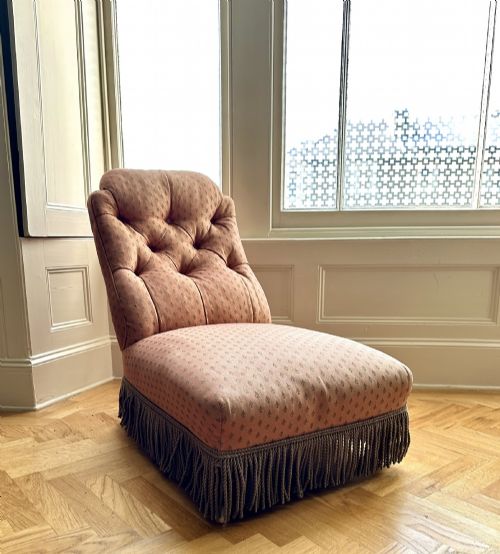


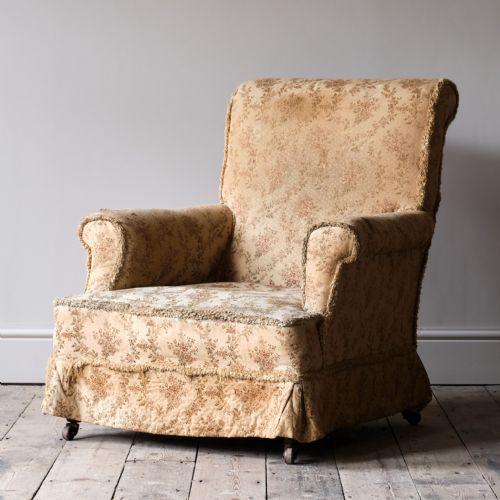


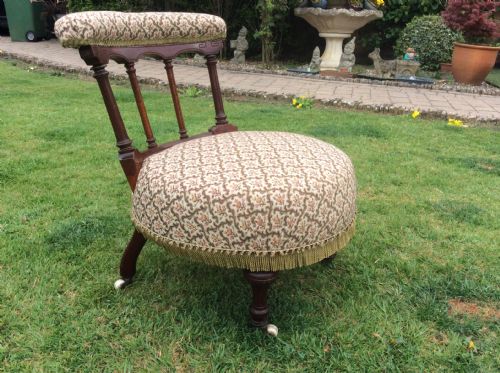

Fringed Accent Chair
A fringed accent chair brings tactile textile detail and period silhouette to a room, offering low seating or upright lounging through decades of design.
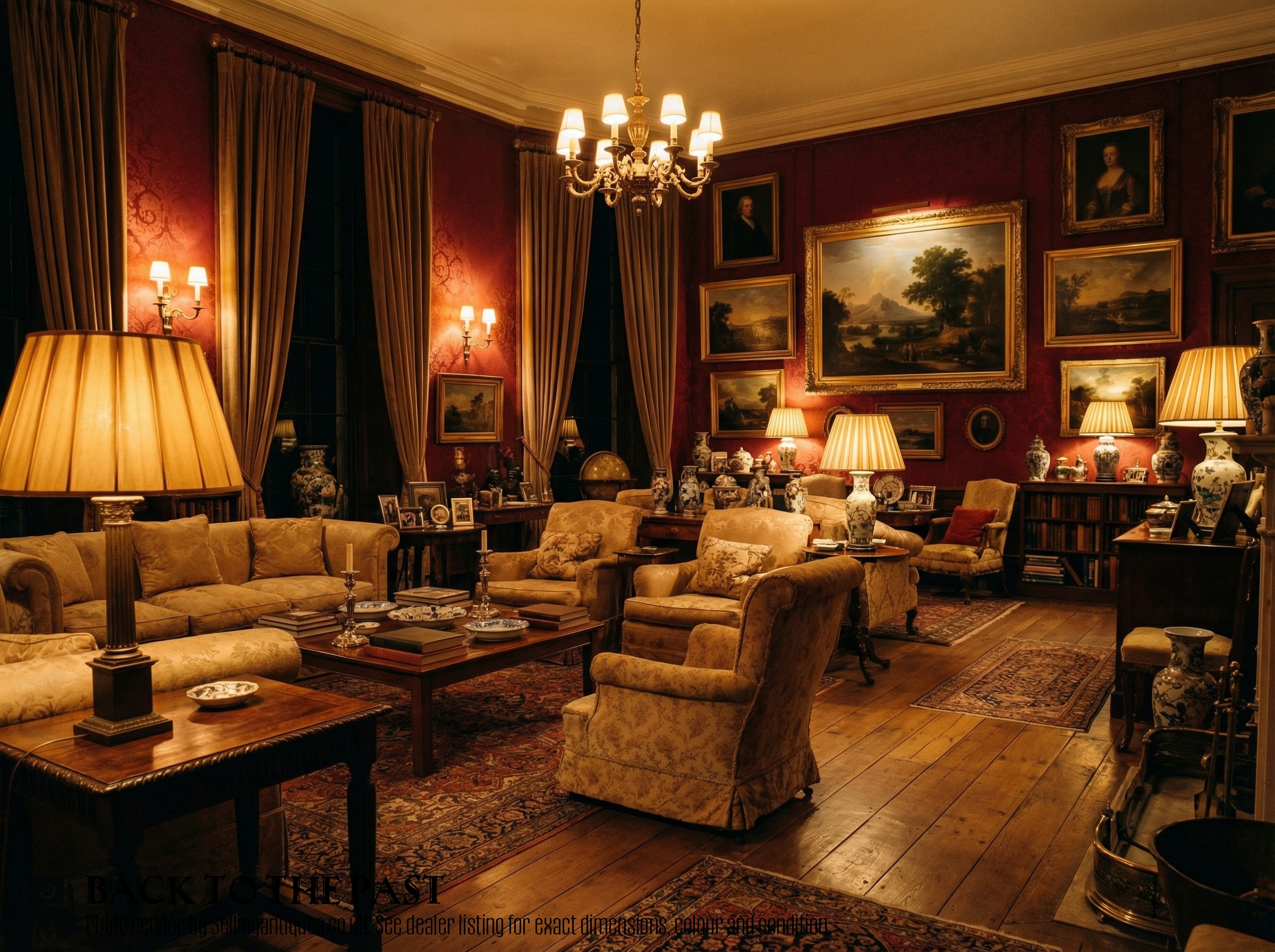
Fringed Accent Chair
When you search for a fringed accent chair, you encounter a varied selection of antique seating ranging from Victorian bedroom chairs to Art Deco armchairs. The pieces appearing on this page span several centuries, including seventeenth-century throne armchairs, eighteenth-century forms, and nineteen-thirties designs.
The most common versions you meet here are nineteenth-century slipper chairs and boudoir chairs, frequently upholstered and finished with decorative fringe. These forms include oak cross-frame armchairs, French Empire chairs, and Howard style country house armchairs.
Object types vary across these listings from low-slung bedroom chairs to open armchairs and slipper chairs intended for specific domestic settings. The stylistic range covers Victorian, Gothic Revival, Art Deco, Napoleon III, French Empire, Edwardian, and Baroque Revival.
How they were made
The construction of these chairs relies on structural timbers such as oak, walnut, and general timber frameworks that support the heavy upholstery. Many pieces incorporate exposed wooden elements like carved walnut frames or oak cross-frames.
Surfaces are upholstered in materials including velvet, tapestry, and various decorative fabrics, often finished with a applied fringe along the base. Details such as brass hardware further accent the wooden and textile components.
Materials across these listings span velvet, fabric, wood, brass, oak, timber, fringe, and tapestry.
What varies in quality
Quality in these chairs rests upon the integrity of the underlying timber frame and the sophistication of the period upholstery style. Pieces attributed to specific makers like J.Mills demonstrate finer craftsmanship in their open armchair frames.
The distinction between standard domestic seating and superior examples lies in the execution of the period style, whether that is a Baroque Revival throne or a refined Howard style armchair. The preservation of original materials such as period velvet, tapestry, and fringe elevates the character of the piece.
J.Mills
The Fringed Accent Chair Glossary
- Slipper chair
- A low-seated upholstered chair originally designed for ladies' bedrooms in the eighteenth and nineteenth centuries for dressing. These pieces sit close to the floor and frequently feature fringe trim.
- Fringe
- A decorative textile border consisting of hanging threads or cords attached to the base of upholstered furniture. This detail conceals the underpinnings while adding texture to Victorian and Edwardian chairs.
- Cross-frame armchair
- A chair supported by intersecting diagonal stretchers or frame members forming an X shape. This structural form appears in oak listings from the early twentieth century.
- French Empire
- A neoclassical design style emerging from the early nineteenth century characterised by classical motifs and formal symmetry. Pieces from this era reflect Napoleonic influence.
- Howard style
- A nineteenth-century British upholstery tradition known for deep, comfortable seating and generous arm proportions. These country house chairs set a standard for relaxed domestic comfort.
Fringed Accent Chair: Frequently Asked Questions
What is a slipper chair?
A slipper chair is a low-framed upholstered seat designed originally for Victorian and Edwardian dressing rooms. Their height makes them distinct from standard parlour seating.
They often feature decorative fringe and compact dimensions, allowing them to fit easily into smaller bedroom spaces or reading corners.
How do I identify a Howard style armchair?
Howard style armchairs originating from the nineteenth century are defined by deep proportions and comfortable, sprung upholstery designed for country houses. They prioritise relaxed lounging over formal posture.
These chairs often feature substantial padded arms and sit on low wooden legs, frequently finished with castors.
What periods do these chairs cover?
The selections span from the seventeen-hundreds through the nineteenth century and into nineteen-thirty. You will find seventeenth-century walnut framed pieces alongside Victorian and Edwardian boudoir examples.
Later items include Art Deco armchairs and nineteen-thirty oak cross-frame designs that demonstrate twentieth-century modernist shifts.
Where were bedroom chairs used?
Bedroom chairs and boudoir chairs were placed in private chambers for personal dressing and quiet reading. Their compact scale suited intimate domestic rooms.
Unlike formal reception furniture, these pieces matched the softer textiles and decorative fringes of private sleeping quarters.