


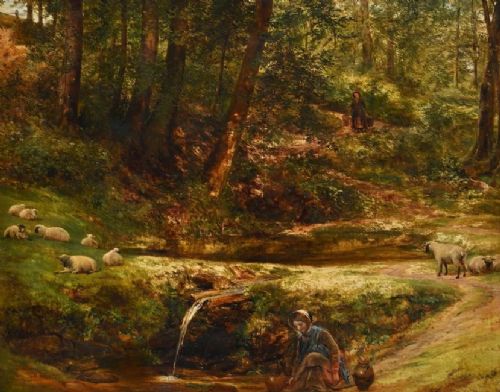
Green Pastoral Painting
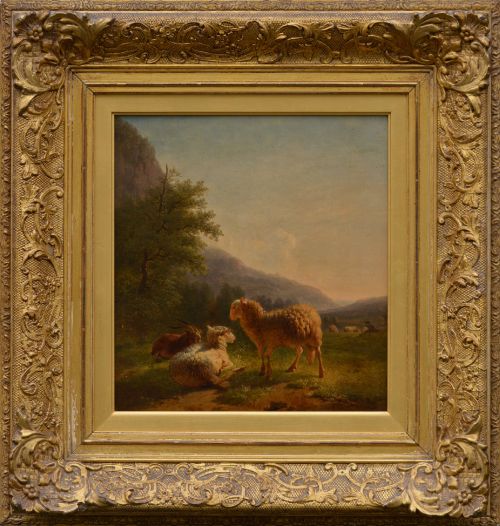
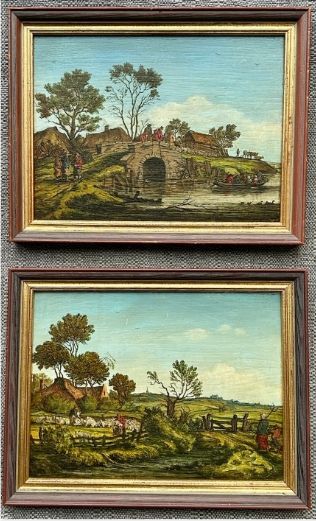
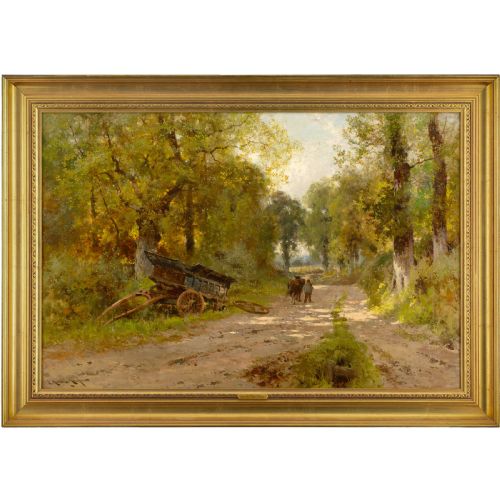
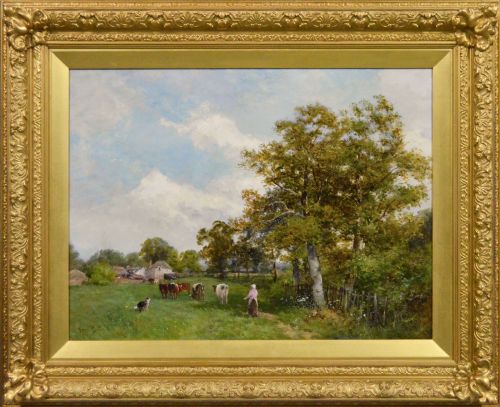
Green pastoral painting brings together rural landscapes, livestock and figures across canvas and wood panels.
Green Pastoral Painting
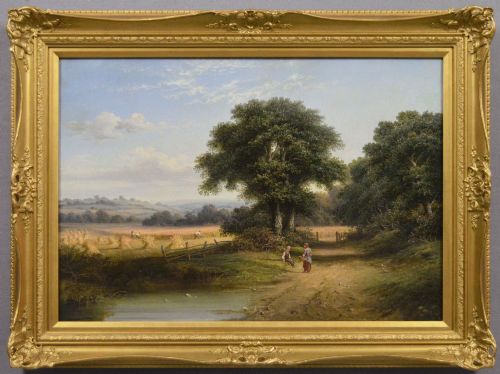
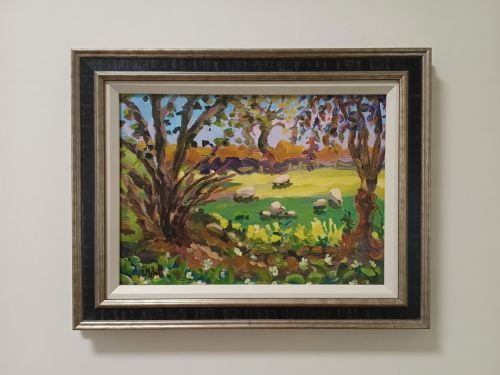
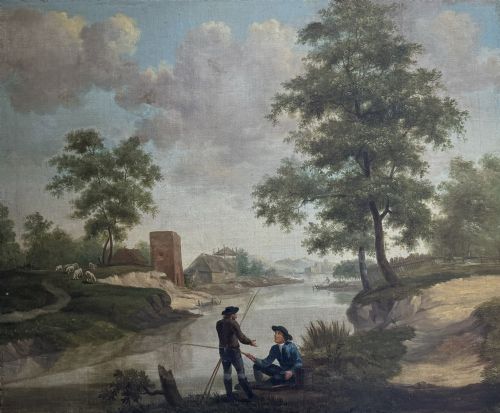
A green pastoral painting captures rural scenery, typically featuring meadows, rivers, livestock and figures engaged in quiet countryside tasks. These works span the nineteenth and early twentieth centuries, drawing on Victorian, Edwardian and British Impressionist traditions.
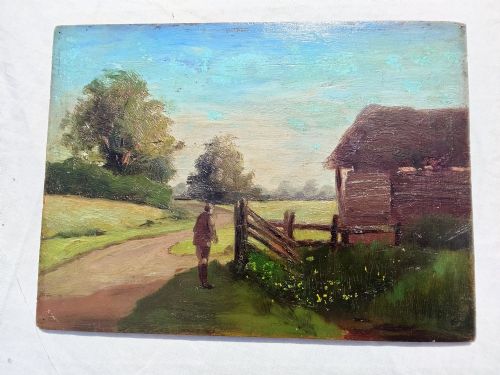
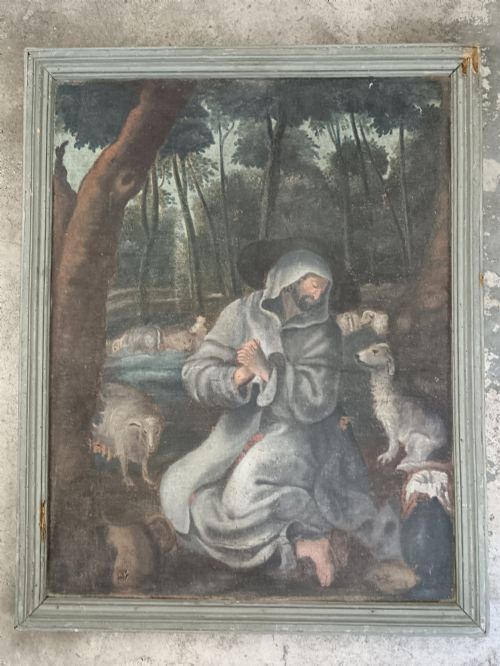
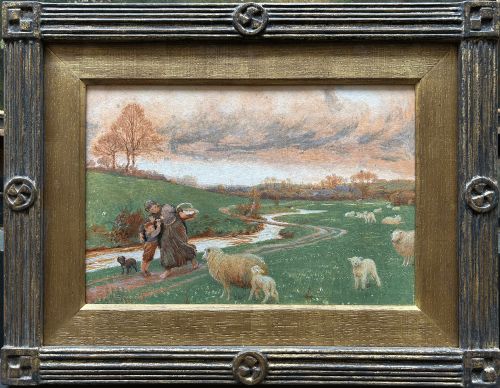
Buyers encounter oil paintings on canvas and wood panels alongside watercolour paintings on paper. Subjects range from shepherds with sheep and cattle near woodlands to riverbanks and harvest fields.
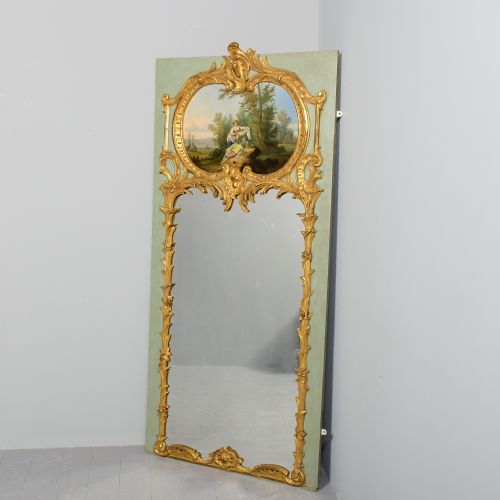
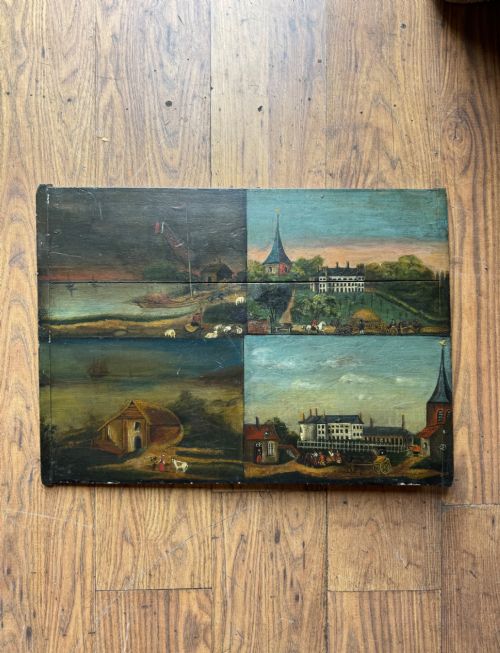
The selection includes provincial naive folk art alongside signed works by established artists of the English and Scottish schools. Frames often incorporate giltwood and gesso to complement the painted surface.
Materials and technique
Artists painted primarily with oil paint on stretched canvas or wooden boards, utilising the medium to build depth in foliage and fields. Watercolours on paper offer a lighter, translucent alternative for pastoral scenes.
Support panels of wood provide a rigid base for detailed brushwork, while canvas accommodates larger compositions. Frames frequently consist of carved giltwood ornamented with gesso mouldings.
Even ancient woodland gods occasionally wander into these fields, appearing alongside everyday cows and very diligent shepherds.
Assessing quality
Quality rests upon the artist's ability to render natural light, atmospheric distance and believable anatomy in animals and figures. Subtle tonal variations in the green palette separate accomplished compositions from formulaic studio output.
The condition of the original paint surface and the integrity of the wooden panel or canvas support influence the overall standard. Original framing in period giltwood enhances the presentation and historical context.
Eugène Verboeckhoven·William H Myers·George Graham·Tom Campbell·W Klombeck·John Horace Hooper·David Bates·Walter Heath Williams·Lucy Pratt·Frederick Walker·Richard Redgrave·Ernest Higgins Rigg·George Oyston·Frederick James Kerr·Robert Watson·Russell Sidney Reeves·Johann Friedrich Voltz·Henry H Parker·George Morland·Philip Richard Morris·Oswald Garside·Margaret Maitland Howard·William Henry Mander·Thomas Sidney Cooper·Franz van Severdonck
The Green Pastoral Painting Glossary
- Oil on Canvas
- Pigment bound in drying oil applied to a woven fabric support. This combination allows for rich colour blending and texture.
- Wood Panel
- A flat wooden board utilised as a rigid support for painting. These panels frequently date from the nineteenth century.
- Giltwood
- Wood that has been coated with a thin layer of gold leaf. It is commonly found on antique picture frames.
- Gesso
- A paint mixture consisting of a binder mixed with chalk or gypsum. It provides a smooth surface for gilding on frames.
- Watercolour
- Paint consisting of colour suspended in a water-soluble vehicle. It is typically applied to paper in transparent washes.
Green Pastoral Painting: Frequently Asked Questions
What defines a pastoral painting?
A pastoral painting depicts idealized rural life, typically focusing on shepherds, cattle, rivers and rustic cottages. These scenes emphasise harmony between humans, animals and the natural landscape.
The genre draws heavily on nineteenth-century British and European artistic traditions, prioritizing tranquil rural settings over industrial or urban subjects.
Are these paintings on canvas or wood?
The works appear on both stretched canvas and solid wood panels, depending on the artist's preference and the period. Canvas allows for larger, textured compositions.
Wood panels provide a smooth, rigid surface often favoured for detailed nineteenth-century landscapes and smaller cabinet paintings.
How do I care for an antique painting?
Protect the artwork from direct sunlight and dramatic shifts in temperature or humidity. Keep the surface clean by gently dusting the frame and canvas with a soft, dry brush.
Avoid using water or chemical cleaners on the paint surface. Consult a professional conservator if the canvas requires cleaning or tension adjustment.
How can I date a pastoral painting?
Dating relies on stylistic markers, artist signatures, clothing styles of any figures, and the physical characteristics of the canvas or wood panel. Framing often provides additional chronological clues.
Examine the reverse of the work for old labels, inscriptions or stamps left by framing shops and dealers.