




Green Painted Wooden Cabinet
A green painted wooden cabinet brings functional storage and a softened, lived-in surface to a room through centuries of tradition.
Green Painted Wooden Cabinet
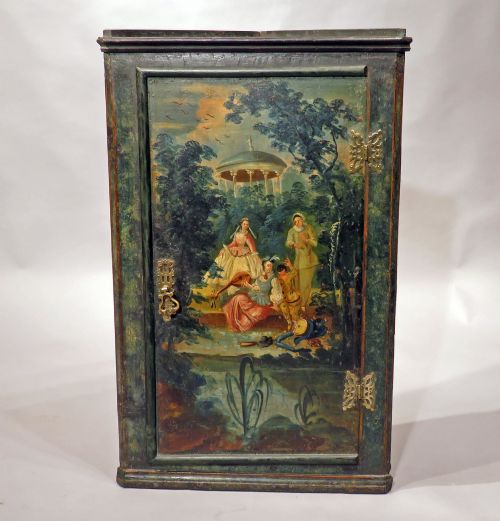
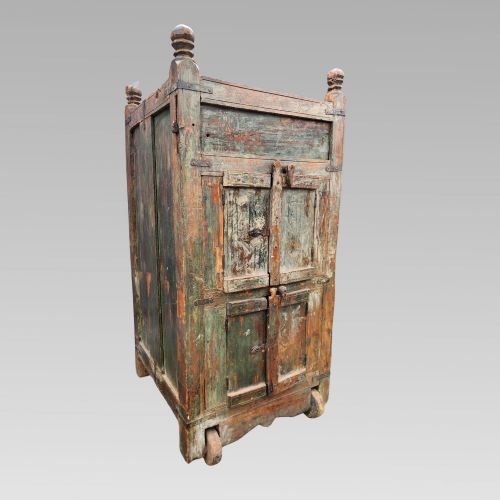
A green painted wooden cabinet encompasses practical storage forms ranging from corner cupboards and wall-mounted units to larger dressers, chests, and sideboards. These pieces emerge from diverse traditions, including English country workshops, Scandinavian folk art pieces, and Indian dowry chests.
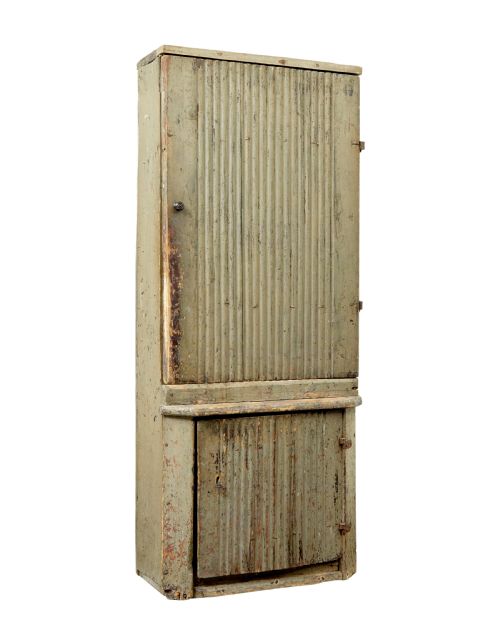
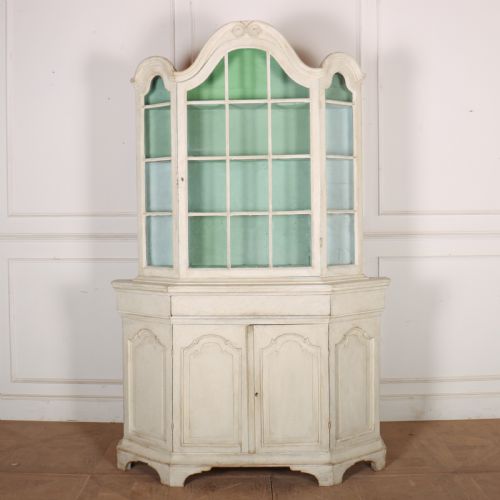
The version most commonly encountered on this page is the 19th-century pine cupboard or wall cabinet, often showing layers of aged paint. Alongside these are 18th-century examples, Georgian corner cupboards, and specific regional forms such as Dutch vitrines and Italian side cupboards.
How they were made
Construction relies predominantly on solid pine and oak, shaped into carcases with panelled doors, dovetailed drawers, and occasionally carved or pokerwork ornamentation. Iron and brass hinges, handles, and latches provide structural reinforcement and functional hardware.
Surfaces are finished with applied paint layers, ranging from early oil paints to later decorative schemes, sometimes revealing underlying wood or giltwood details depending on the geographical origin and period style.
Apple racks appear among the cabinetry, reminding buyers that green paint occasionally protected fruit ventilation trays rather than precious china.
What varies in quality
Quality rests in the integrity of the timber framing and the character of the surface finish, distinguishing honest regional vernacular work from later decorative adaptations. Pieces retain varying degrees of their original structural joinery and surface patination.
Proportion and the handling of the painted surface dictate the visual success of each item, separating utilitarian storage with later coatings from pieces where the paint layer has matured naturally alongside the wood structure.
Melissa White
The Green Painted Wooden Cabinet Glossary
- Corner Cupboard
- A storage cabinet specifically designed to fit into the internal corner of a room, saving floor space while displaying or concealing contents. These appear in hanging and standing formats.
- Dresser Base
- A low sideboard or cupboard unit originally used in kitchens for food preparation and storage, often featuring drawers above panelled cabinet doors. They form a sturdy surface for daily domestic tasks.
- Vitrine
- A glass-fronted display cabinet intended for showing objects of interest, such as ceramics or glassware. These units protect contents from dust while allowing full visibility.
- Almirah
- A traditional freestanding storage cupboard originating from South Asia, frequently constructed from teak and used for household possessions. These pieces often feature substantial panel work and traditional hardware.
- Patina
- The surface texture, sheen, and colour acquired by wood and paint over decades of handling, cleaning, and exposure to light. It serves as an indicator of age and continuous use.
Green Painted Wooden Cabinet: Frequently Asked Questions
Where should I place a corner cupboard?
A corner cupboard utilises unused junction space in a dining room, hallway, or sitting room without intruding into the main floor area. Hanging versions mount directly to wall studs at eye level.
Standing versions anchor securely against the intersection of two walls, providing sturdy storage for tableware or books.
How do I clean a painted wooden surface?
Dust the painted wood regularly with a dry, soft cloth to prevent particulate accumulation. Avoid harsh chemical cleaners that can degrade aged paint layers.
Apply a minimal amount of gentle beeswax only if the paint surface is stable and non-porous, consulting the finish type first.
What is a housekeeper's cupboard used for?
A housekeeper's cupboard serves as large-scale utility storage for household linens, dry goods, and domestic supplies. The internal shelving and deep carcase accommodate bulky items.
Historically positioned in corridors or kitchens, these tall two-door units keep contents organised and protected from household dust.
How do I identify a 19th-century pine piece?
Examine the timber grain, construction joints, and backboards for hand-cut marks and traditional joinery methods such as hand-cut dovetails. Pine from this era often exhibits tight growth rings and dense knots.
Inspect the paint layers for craquelure, wear patterns, and underlying preparation coats that indicate age rather than modern factory distressing.