

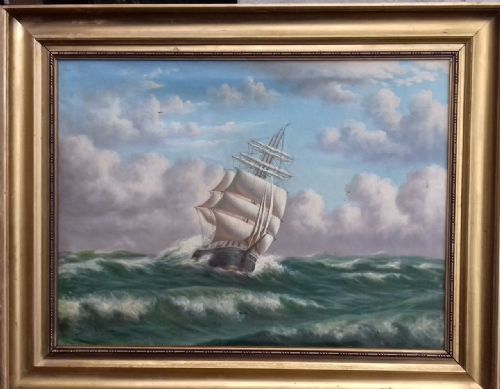


Green Ocean Landscape Art
Green ocean landscape art captures coastal waters and shorelines across the nineteenth and twentieth centuries.
Green Ocean Landscape Art
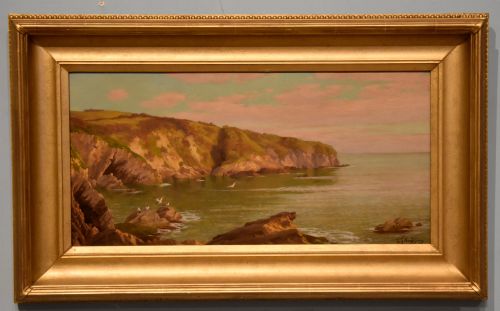
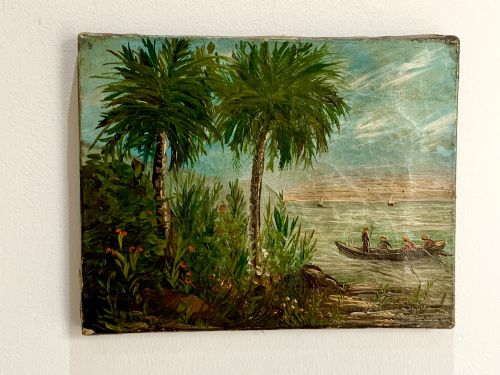
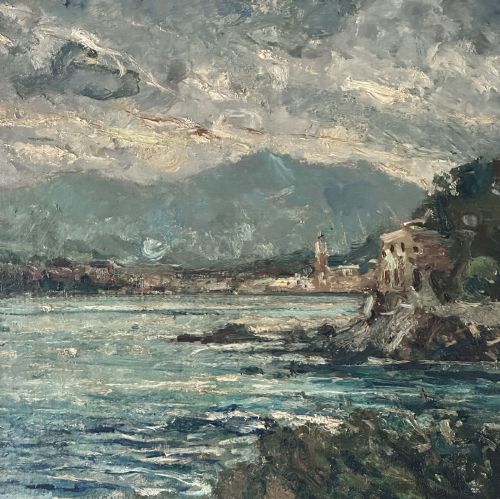
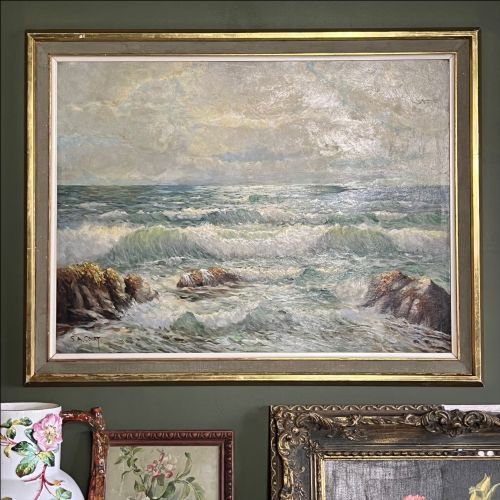
Green ocean landscape art comprises oil paintings and watercolours depicting coastal scenes, marine views, and shorelines. These works range from nineteenth century maritime depictions to mid-century modern interpretations of British and European shores.
Buyers encounter varied formats including framed oil on canvas, en plein air coastal panels, and watercolours on paper. Subjects span specific locations such as Cornish coasts, Welsh bays, and Italian shores rendered by regional artists.
The selection encompasses Victorian marine painting alongside impressionist and modernist visions of the sea. Each piece reflects the specific palette and atmospheric approach of its respective period.
Materials and methods
Artists utilised oil paint on canvas and wood panels, alongside watercolour on paper, to capture coastal light and water movement. En plein air techniques allowed painters to work directly by the shore, recording shifting tones of green sea and sky.
Frames incorporate gilt wood and gold leaf, providing period housing for nineteenth century marine canvases and twentieth century modernist works alike. Pigments were applied with varied brushwork, from tight nineteenth century maritime detail to looser impressionist strokes.
Green Ocean Landscape Art Retail Price Guide 2026
Typical asking prices for green ocean landscape art among the pieces listed under this phrase on Sellingantiques today, from the lower quarter to the upper quarter. They describe what is for sale here now, not the wider market.
Several artists braved windswept British beaches with wet paint palettes just to catch the exact green of a breaking wave.
Assessing quality and execution
Quality rests upon the artist's handling of light, atmosphere, and maritime topography within the green ocean landscape art genre. Stronger works demonstrate confident brushwork and accurate coastal atmosphere rather than mechanical repetition of waves.
The distinction between standard decorative pieces and notable works lies in the dexterity of the oil paint application and the framing integrity. Original artist signatures and documented regional locations elevate the historical interest of the painting.
Sidney A. Court·James Watson·Donald McIntyre·Charles Martin Powell·Alastair Flatterly
The Green Ocean Landscape Art Glossary
- En plein air
- Painting outdoors to capture direct observation of natural light and coastal conditions. This method produces immediate atmospheric effects.
- Impressionism
- An artistic style focusing on accurate depiction of light in its changing qualities rather than rigid detail. Painters apply visible brushstrokes to render sea and sky.
- Marine painting
- Artwork depicting ships, seascapes, and coastal views. This genre forms a significant portion of historical ocean imagery.
- Gilt wood
- Wood carved and covered with a thin layer of gold leaf or metal powder. It frames many traditional nineteenth century canvases.
Green Ocean Landscape Art: Frequently Asked Questions
What periods do these paintings span?
The available works extend from the nineteenth century through the nineteen-fifties and nineteen-sixties. This timeline covers Victorian marine styles up to mid-century modernist coastal interpretations.
Each era brings distinct framing choices and painting techniques to the depiction of green coastal waters.
How were these coastal scenes painted?
Artists worked primarily in oil paint on canvas or wood, alongside watercolour on paper. Many utilised en plein air methods directly on beaches and cliffs.
This direct observation helped painters capture shifting ocean tones and atmospheric coastal light in real time.
Where do these maritime scenes originate?
The listings feature coastal locations across Britain, Ireland, Wales, and continental Europe. Specific sites include Welsh bays, Cornish shores, and Italian coastlines.
Artists recorded these regional waters during travels or while residing near maritime communities.
How should I display framed oil paintings?
Oil paintings on canvas require stable indoor environments away from direct sunlight and excessive humidity. Proper wall placement protects both the canvas support and the original gilt wood framing.
Allowing adequate circulation behind the frame preserves the longevity of the vintage materials.