




Green Marble Top Console
These green marble top console tables bring stone and carved wood together for hallways and reception rooms.
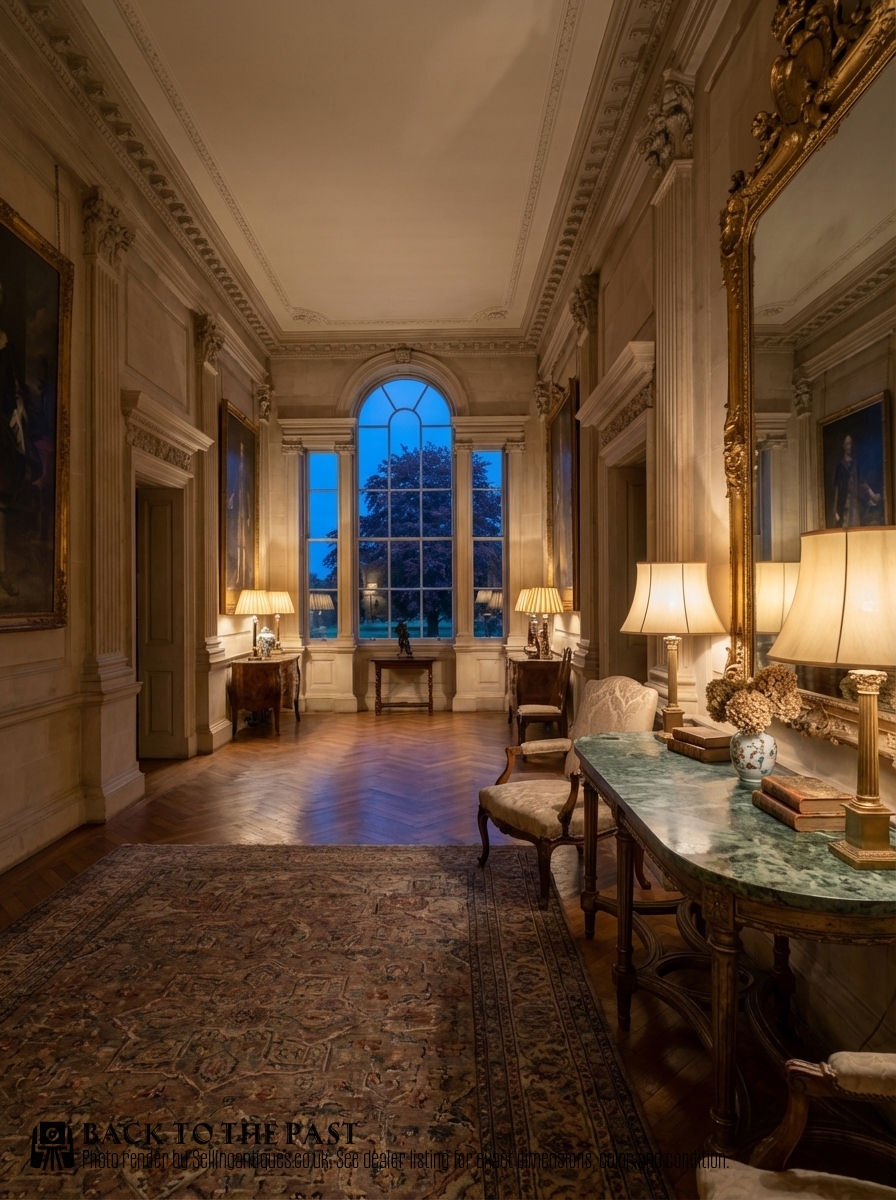
Green Marble Top Console
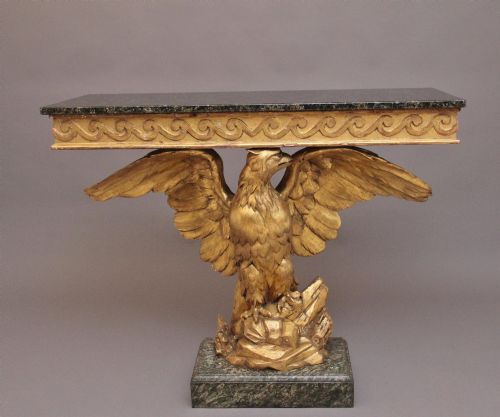
A green marble top console table is a wall-fixed or freestanding support designed for hallways, drawing rooms and reception spaces. When you search for a green marble top console, you encounter forms spanning the eighteenth, nineteenth and early twentieth centuries. These range from restrained Gustavian pieces to grand Italian Rococo and French Empire designs.
Console tables on this page appear alongside related furniture such as centre tables, side cabinets, side tables, washstands and coffee tables. The surface stone is frequently paired with carved giltwood, painted finishes, mahogany, rosewood or walnut structures. Makers across England, France, Italy and Sweden produced these tables to anchor interior wall spaces beneath mirrors or art.
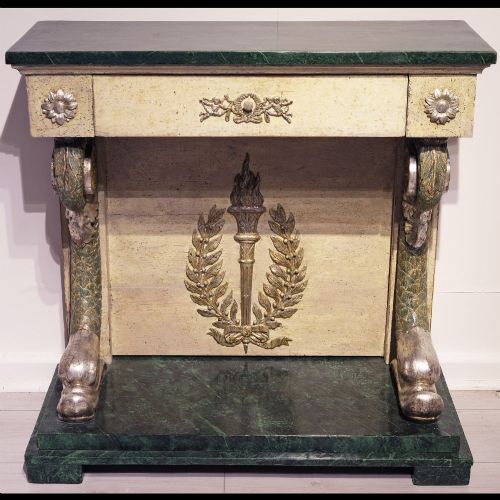
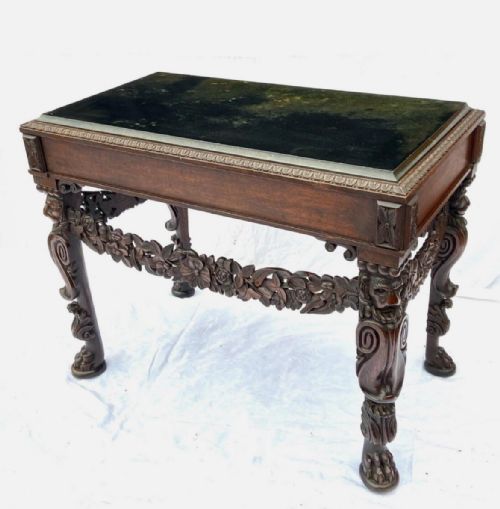
The twentieth-century examples often adopt earlier neoclassical or Louis XVI vocabularies, showing painted or gilded frames alongside specimen or plain green marble. Earlier eighteenth-century iterations lean towards heavier carved giltwood or structural oak with lion masks and paw feet. The core function remains decorative and surface-led, offering a strong stone slab supported by architectural timber frames.
How they were made
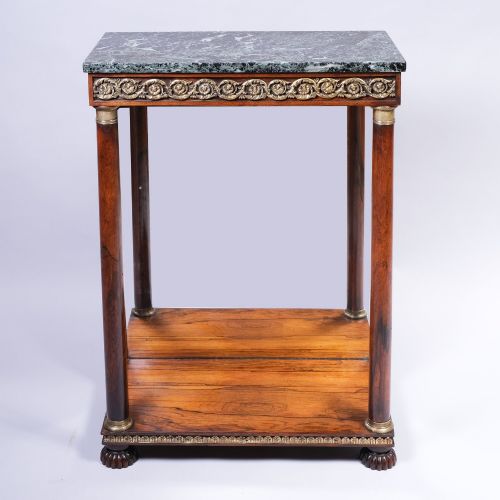
Carvers and joiners shaped the structural frames using timber such as mahogany, oak, walnut and rosewood, applying gesso where intricate relief work was required. Giltwood pieces received layers of gold leaf over preparation grounds, whilst painted surfaces utilised oil-based pigments on pine or hardwoods. Brass mounts, handles and decorative collars were cast and chased to embellish First Empire and neoclassical examples.
The tabletops rely on worked marble, sometimes specified as green or specimen marble, cut to conform to rectangular, serpentine or demi-lune formats. Stonemasons smoothed and polished the marble surfaces to highlight natural veining and colour variations. Joinery methods varied from traditional mortise and tenon frames in the eighteenth century to lighter assembly in Edwardian and early twentieth-century workshops.
Listings feature console tables spanning the eighteenth to the early twentieth centuries, utilising materials like marble, giltwood, mahogany and gesso.
What varies in quality
Quality rests in the crispness of the wood or gesso carving and the depth of the gilding or paint finish. Hand-carved motifs, such as lion masks, paw feet and acanthus scrolls, show the hand of a skilled artisan rather than mechanical replication. The choice of timber and the weight of the stone slab also signal the ambition of the original commission.
The integration between the marble top and the wooden base dictates the visual success of the piece. Top-tier examples feature marble slabs specifically fitted to the frame contours, sometimes with later replacements integrated sympathetically. Proportion, balance and the preservation of original patination on the painted or gilded surfaces distinguish superior pieces from standard production.
The Green Marble Top Console Glossary
- Console table
- A table designed to stand against a wall, traditionally supported by two front legs or brackets fixed to the masonry. They frequently carry heavy marble slabs.
- Giltwood
- Timber, usually lime or pine, coated with gold leaf over a gesso ground. It creates a reflective surface favored in neoclassical and baroque interiors.
- Demi-lune
- Half-moon shape in furniture design, common in side tables and consoles designed to sit flush against a flat wall. It softens rectangular room layouts.
- Serpentine
- A curved line that undulates inwards and outwards, typically seen on the front edge of console tables and commodes. It requires careful carpentry and stonecutting.
- Gustavian
- The Swedish interpretation of French neoclassical style, characterised by pale painted finishes and restrained classical detailing. These pieces date largely from the late eighteenth century.
Green Marble Top Console: Frequently Asked Questions
Where should I place a green marble top console table?
These tables suit entrance halls, narrow corridors and living room walls where floor space is limited. They provide a stable surface for lamps, vases and decorative objects while drawing the eye along a wall.
Pairing a console with a hanging mirror or painting above creates a traditional focal point. Their shallow depth allows them to sit comfortably in transit areas without obstructing movement.
How do I care for the marble top?
Marble is a sensitive stone that reacts to acids found in citrus, wine and vinegar. Wipe spills promptly with a damp cloth and mild soap to protect the polished finish.
Avoid abrasive cleaners and harsh scrubbing pads which can dull the surface. Periodic gentle polishing maintains the natural sheen of the green stone.
Are these tables freestanding?
Many historical console tables were originally designed to fix directly to the wall for stability, especially when carrying heavy stone tops. Some later or smaller variations operate as fully freestanding pieces with four legs.
Check the base construction and weight distribution to determine if wall anchoring is necessary for safety. Heavier marble slabs often rely on gravity alone if the frame is robust.
How do I identify a neoclassical revival piece?
Neoclassical revival furniture adopts the symmetrical lines, column supports and urn motifs of the late eighteenth century but dates from later periods like the late nineteenth or early twentieth century.
Examine the construction methods, tool marks and timber ageing to distinguish original eighteenth-century work from later revivals. Revival pieces often display machine assistance or secondary woods characteristic of later workshops.