


Green Marble Base
A green marble base grounds figures, lamps and columns across nineteenth-century and Art Deco work.
Green Marble Base
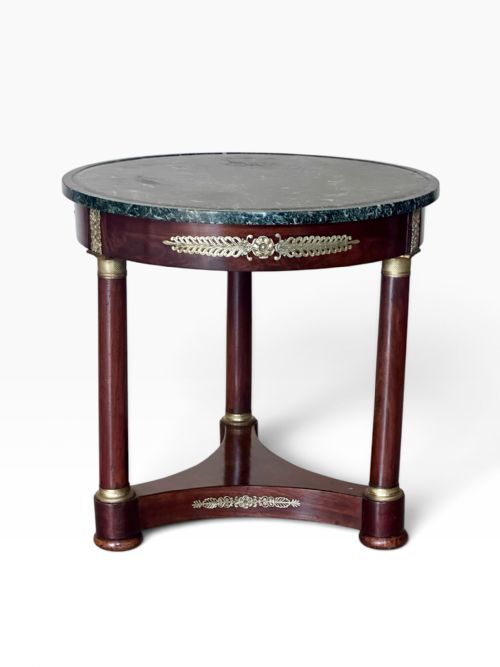
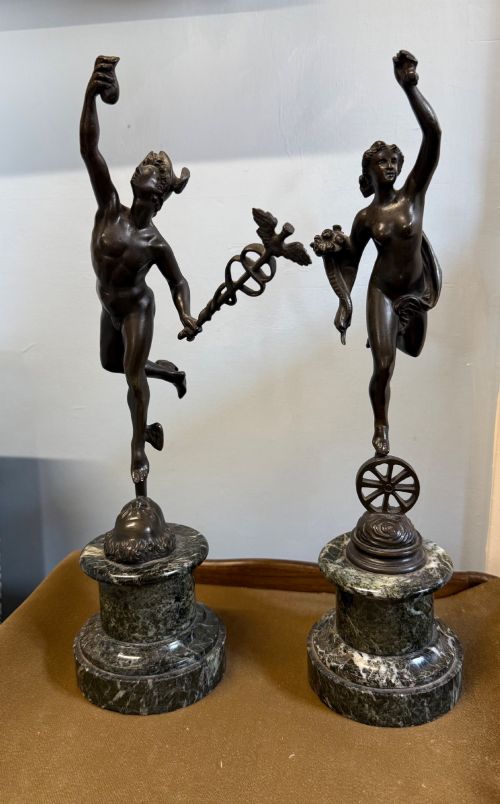
When you search for a green marble base, you find sculptural supports, lighting, and tables that anchor decorative metalwork, bronze figures, or stone busts. These items span periods from the nineteenth century through the Art Deco era, including French Empire, Grand Tour, and Neoclassical designs.
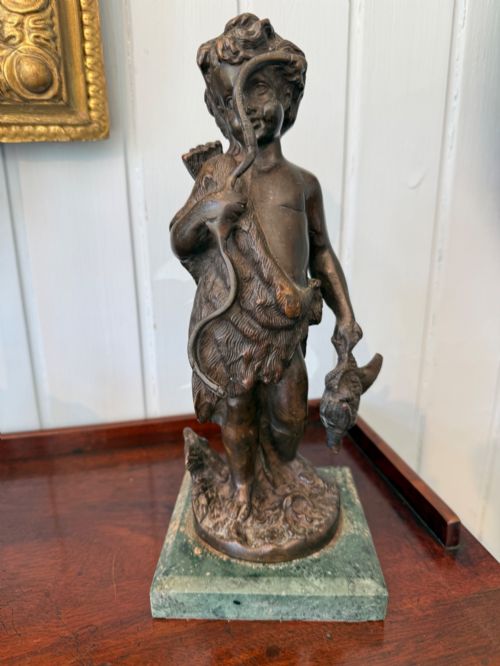
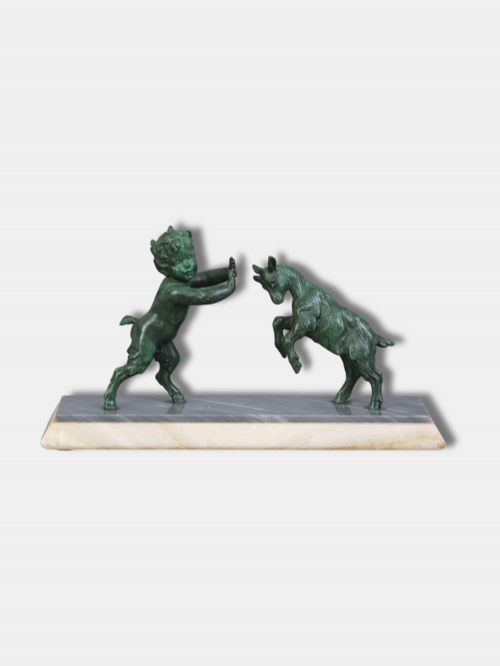
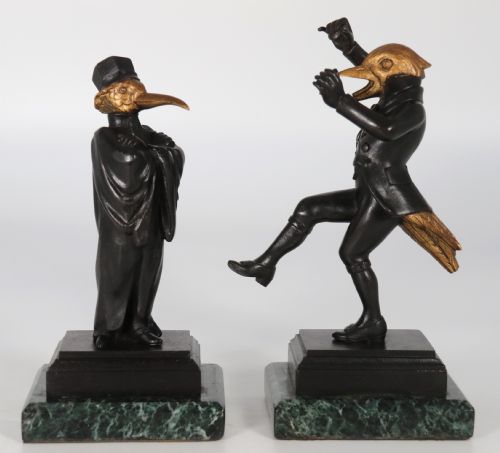
The most common formats on this page are bronze figures mounted on square or stepped plinths, alongside table lamps and occasional centre or coffee tables. They serve as structural plinths that elevate animalier studies, classical figures, and busts.
Makers and workshops across France, Austria, and Italy utilised this stone to give weight and colour contrast to metal and carved elements. The resulting objects function equally as cabinet sculptures, functional lighting, and architectural furniture.
Materials and construction
Makers combined natural green marble, such as Vert de Mer or Vert de Patricia, with cast bronze, brass, spelter, and ormolu. Stonemasons turned, carved, and polished the marble to form columns, plinths, and table slabs.
Metal elements like figures, animals, and lamp mounts were cast using traditional foundry methods, then chased and patinated before being fixed to the stone bases via threaded bolts or pins.
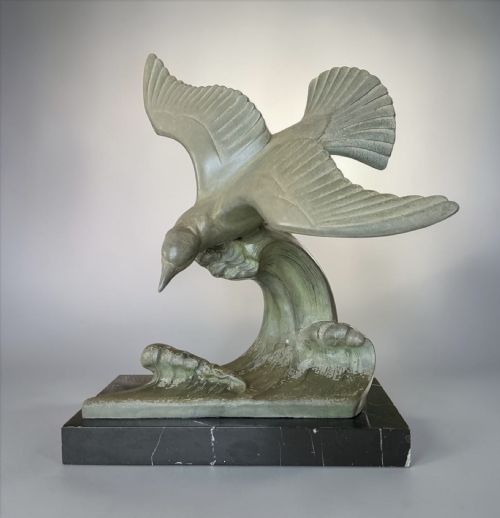
A tiny bronze bird perches on a wave, reminding us that heavy green marble makes a surprisingly good ocean.
Assessment of quality
Quality rests in the precision of the stone cutting, the weight and depth of the marble figuring, and the crispness of the cast metal mounted upon it. Superior examples show seamless integration between the heavy mineral plinth and the sculpture or lamp it supports.
Finer pieces display detailed chasing on the bronze or brass components and carefully matched stone grades, whereas simpler items utilise standard turned blocks and basic spelter castings.
Emile Carlier·E. Drouot·Delabrierre·P. Sega·Paul-Édouard Delabrièrre·C Masson·Willems
The Green Marble Base Glossary
- Vert de Mer
- A dark green ornamental marble featuring varied veining. It appears frequently on nineteenth-century French furniture and architectural mounts.
- Ormolu
- Gilded bronze used for decorative mounts and decorative details. It provides a bright metallic contrast against dark green stone.
- Spelter
- A zinc alloy cast into figures and lamps during the nineteenth and early twentieth centuries. It often received bronze-effect or cold-painted finishes.
- Grand Tour
- Souvenir pieces purchased by travellers in Italy during the nineteenth century. These reductions of classical sculptures often feature stone plinths.
- Animalier
- Art focusing on the realistic portrayal of animals. Sculptures in this style frequently utilise heavy stone bases for stability.
Green Marble Base: Frequently Asked Questions
What periods do green marble base pieces cover?
The listings span from the nineteenth century through the 1930s. Styles range from French Empire and Grand Tour to Art Deco.
Most items date from the Victorian period up to the interwar years, reflecting changing tastes in interior decoration and sculpture mounting.
How were these stone bases used originally?
They served primarily as stable plinths for bronze animal studies, classical figures, and lighting. The dense stone provided necessary weight at the bottom of tall lamps and dynamic sculptures.
In furniture, the stone formed structural columns and tops for tables and jardinières, combining utility with decorative presence.
How do I care for marble and bronze?
Clean the stone surfaces with a dry or barely damp cloth, avoiding acidic cleaners that etch marble. Dust metal components gently without harsh polishes.
Keep pieces away from direct heat sources and moisture to preserve both the stone polish and the metal patina over time.
Are these items purely decorative?
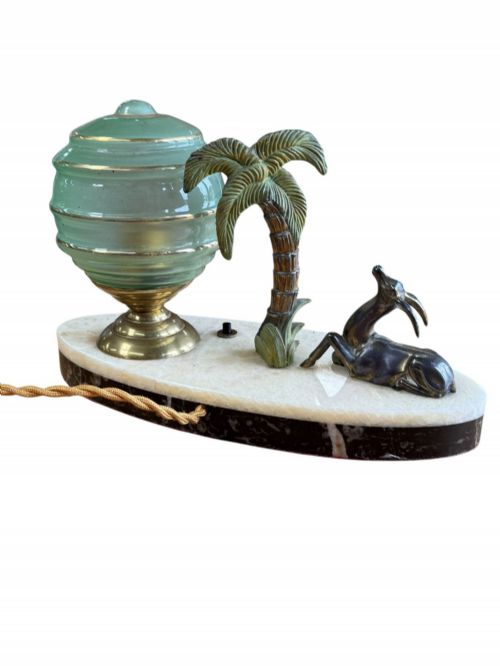
Many pieces combine decorative and functional roles, particularly the table lamps, oil lamps, and occasional tables. Sculptural items function primarily as display art for mantelpieces and cabinets.
Lighting adaptations integrate historical bases with functional wiring for modern interior use.