

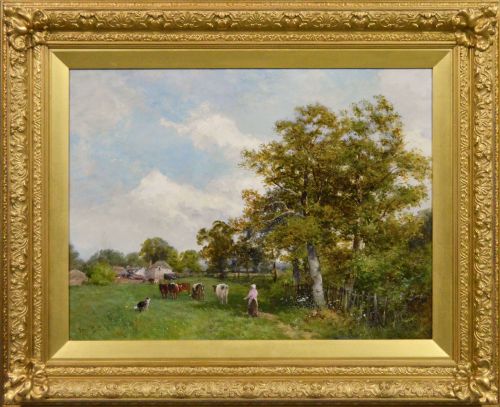
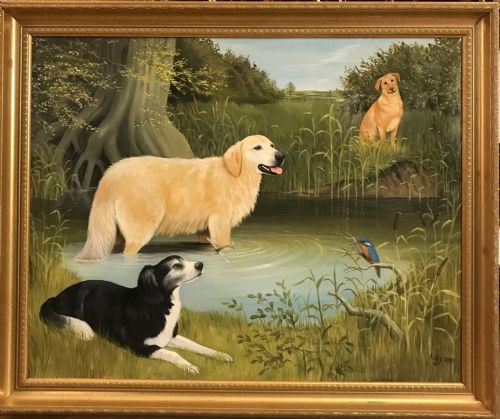


Green Landscape Dog Art
Green landscape dog art captures canine companions within pastoral and sporting settings, offering a timeless window into historic rural life.
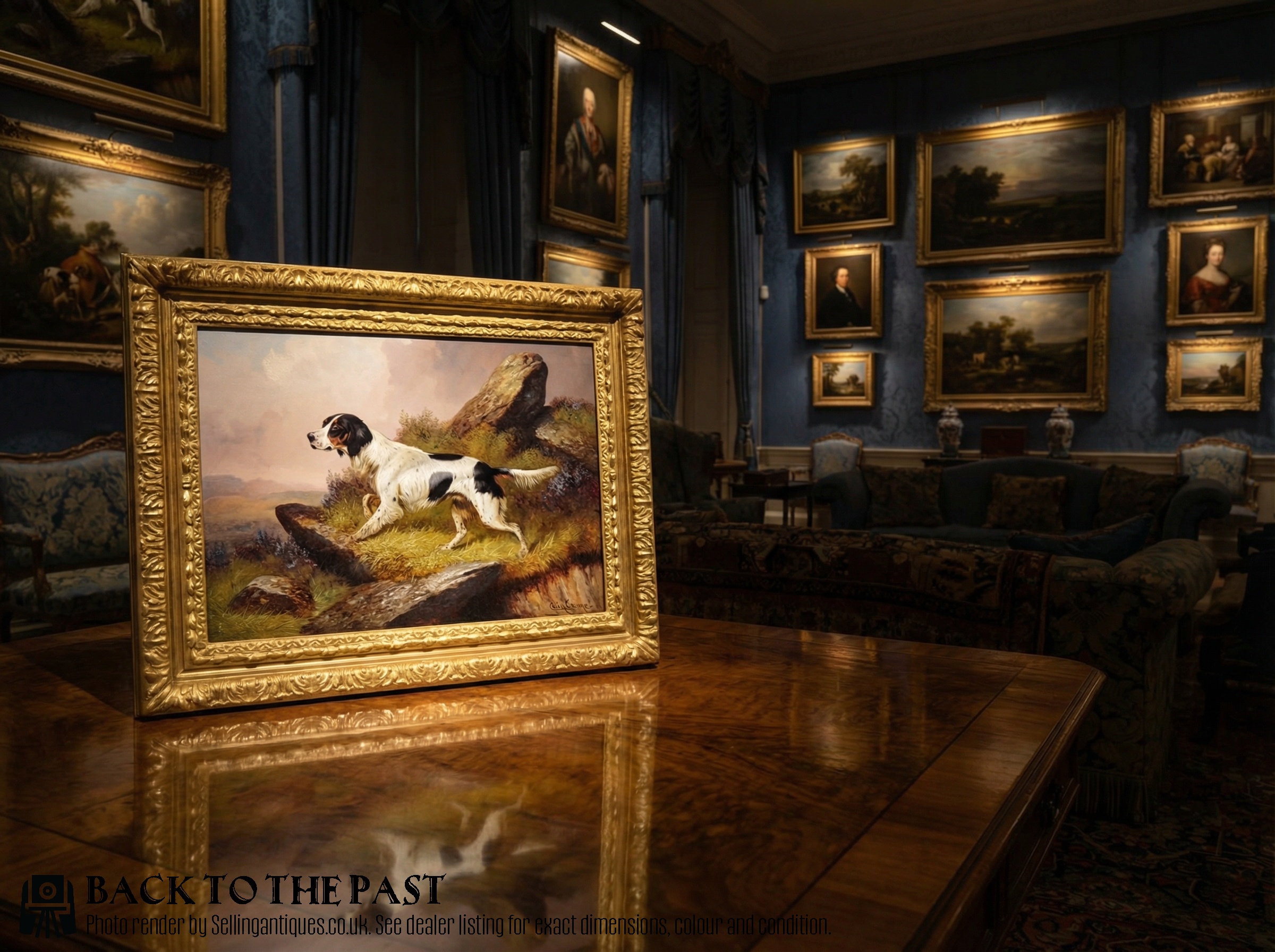
Green Landscape Dog Art
Green landscape dog art brings together canine subjects and verdant outdoor scenery, capturing animals at work and rest across fields, woods, and cottage gardens. When you examine green landscape dog art on this page, you encounter oil paintings and watercolours spanning the nineteenth and twentieth centuries.
The works range from detailed sporting scenes featuring setters, pointers, and spaniels to naive depictions of border collies and farm dogs. These pieces reflect diverse traditions including British sporting art, Victorian pastoral scenes, and the English naive school.
Makers represented in these listings include David Bates, Colin Graeme Roe, John Alfred Wheeler, Alfred Duke, Michael Lyne, Robert Cleminson, Arthur Claude Strachan, William Albert Clark, Samuel John Egbert Jones, and Dean Wolstenholme.
Materials and Methods
These works are executed primarily as oil paintings on canvas or watercolour paintings on paper, utilising oil paint and watercolours to build depth in foliage and animal coats. Artists applied pigment to canvas stretched over wood frames or paper supports to achieve lasting colour and texture.
Many of the canvases and watercolours are housed within gilt or gilded wood frames that complement the natural tones of the green landscapes and the warm hues of the dogs.
Green Landscape Dog Art Retail Price Guide 2026
Typical asking prices for green landscape dog art among the pieces listed under this phrase on Sellingantiques today, from the lower quarter to the upper quarter. They describe what is for sale here now, not the wider market.
The listings span the nineteenth and twentieth centuries, featuring works created between 1757 and 1960 using oil paint and watercolours.
Quality and Execution
Quality in these works rests upon the artist's ability to render the anatomy and expression of the dog with convincing realism alongside the atmospheric depth of the surrounding countryside. Works by established named painters typically demonstrate superior brushwork and compositional balance compared to anonymous naive school pieces.
The preservation of the original canvas, the stability of the oil paint or watercolour surface, and the condition of the gilded wood frame all influence the overall integrity of the piece.
David Bates·Colin Graeme Roe·John Alfred Wheeler·Alfred Duke·Michael Lyne·Robert Cleminson·Arthur Claude Strachan·William Albert Clark·Samuel John Egbert Jones·Dean Wolstenholme
The Green Landscape Dog Art Glossary
- Oil on Canvas
- A painting medium where pigments suspended in drying oil are applied to stretched woven fabric. This combination allows for rich blending of green landscape tones and detailed animal fur.
- Sporting Art
- Genre of art depicting field sports, hunting dogs, horses, and rural pursuits. These pieces record specific breeds like pointers, setters, and spaniels in action.
- Naive School
- Art produced by self-taught or informally trained painters who prioritized direct observation and narrative charm over academic perspective. These works often feature charmingly straightforward depictions of farm dogs.
- Gilded Wood
- Wood treated with a thin layer of gold leaf or metallic powder to create a decorative frame. Such frames were designed to enhance the visual weight of nineteenth-century paintings.
Green Landscape Dog Art: Frequently Asked Questions
What subjects appear in green landscape dog art?
These works primarily feature dogs such as setters, spaniels, terriers, and collies situated within natural rural settings like woods, fields, and cottage gardens. Human figures including sportsmen, children, and farm workers frequently accompany the animals.
The compositions range from working sporting dogs flushing game to quiet pastoral portraits of pets resting in the countryside.
How do I care for an oil painting on canvas?
Keep the canvas away from direct sunlight and damp environments to prevent the oil paint from fading or the wood stretcher from warping. Dust the surface gently with a dry, soft cloth without applying pressure.
Avoid using liquid cleaners or chemical solvents on the paint or the gilded wood frame.
What distinguishes Victorian sporting art?
Victorian sporting art focuses closely on the activities of country life, placing particular emphasis on working dogs, horses, and shooting pursuits. The artists aimed for anatomical accuracy in the animals while setting them in meticulously observed British countryside.
These paintings served both as records of prized working animals and as decoration for country houses.
How can I tell a watercolour from an oil painting?
Watercolour paintings are executed on paper and usually displayed behind glass to protect the delicate pigments from moisture and dust. Oil paintings utilise thick paint on canvas, presenting a textured surface that reflects light differently.
Oils do not require glass protection and often show fine crackle patterns in the dried paint layers over time.