



Framed Working Dog Painting
A framed working dog painting brings the energy of the field and the stable straight into the room.
Framed Working Dog Painting
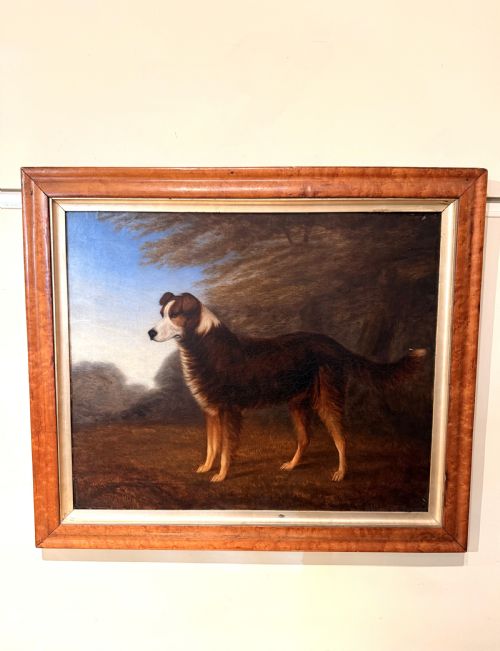
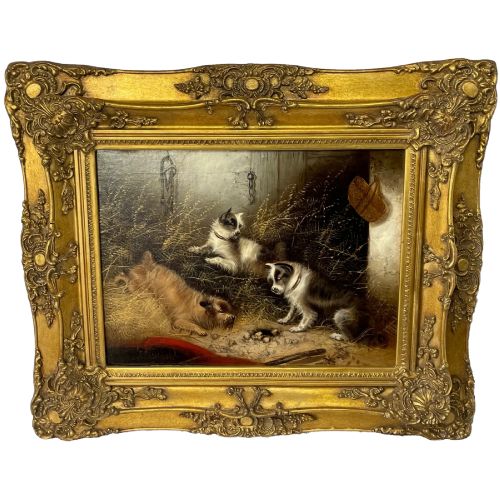
A framed working dog painting captures breeds like collies, setters, terriers, and spaniels in pastoral landscapes or engaged in tasks such as ratting and guarding. These works range from seventeenth-century portraits to Victorian rural realism and mid-twentieth-century canvases.
Most examples found here date from the Victorian era and the nineteenth century, reflecting a strong British tradition of sporting art. They frequently pair the dog with plough teams, landscapes, or specific quarry like rats and game.
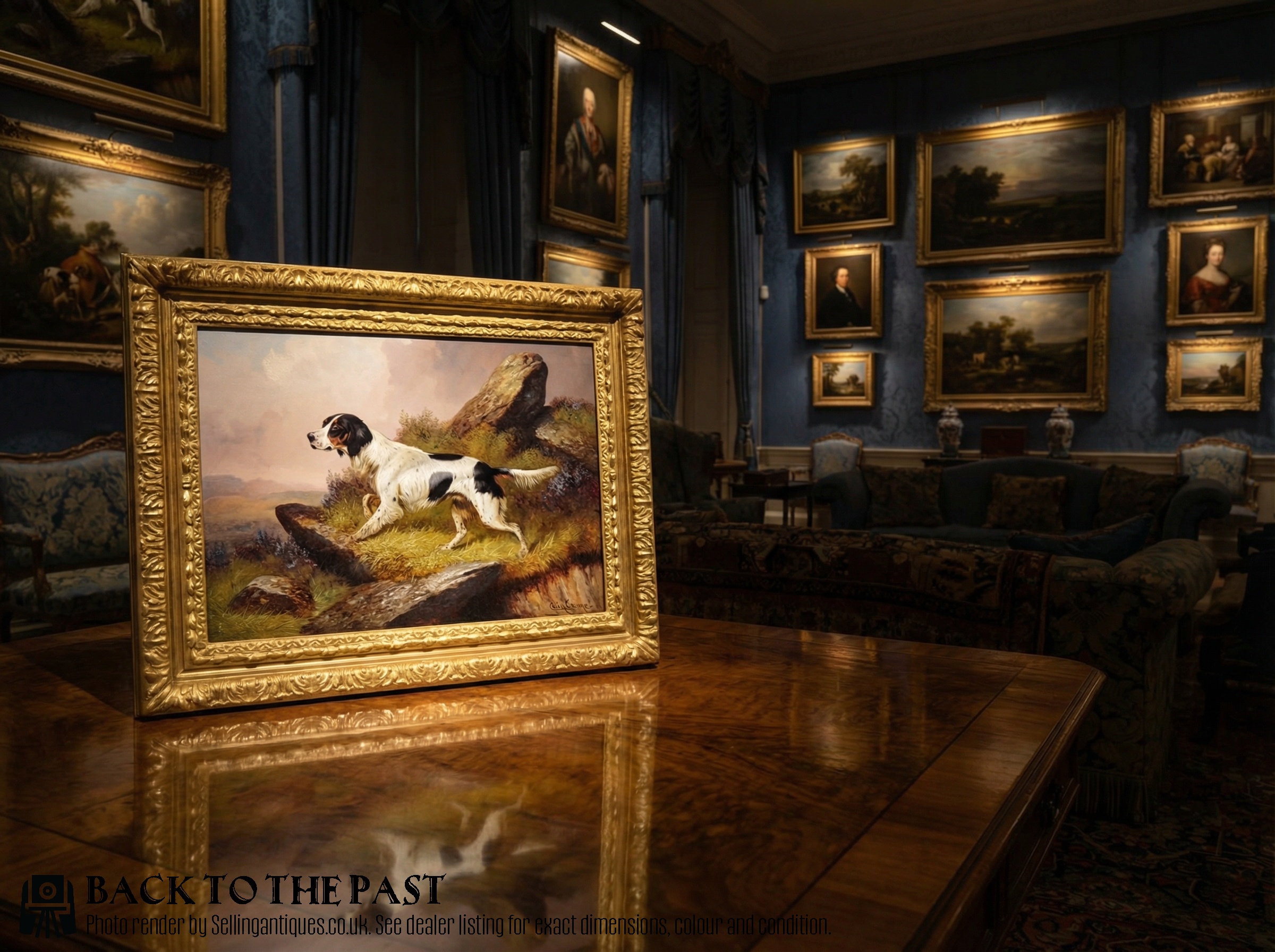
Mediums vary between oil on canvas and watercolour, housed within wood or gilded wooden frames. Subjects extend from solitary working pointers to multiple terriers on the scent.
Materials and methods
Artists relied primarily on oil paint applied to canvas, capturing the texture of canine coats and the light of outdoor landscapes. Watercolours on paper also appear, offering a lighter touch for detailed depictions of setters and spaniels.
Frames are constructed from wood, frequently finished with gilt or gilding to complement the traditional subjects. These surrounds range from simple wooden mouldings to elaborate gilded frames suited to nineteenth-century fine art.
Framed Working Dog Painting Retail Price Guide 2026
Typical asking prices for framed working dog painting among the pieces listed under this phrase on Sellingantiques today, from the lower quarter to the upper quarter. They describe what is for sale here now, not the wider market.
Materials across these listings span oil paint, canvas, wood, and gilt, recording centuries of traditional painting methods.
Assessing quality and execution
Quality rests on the artist's ability to render the anatomy and alertness of the dog, alongside the depth of the surrounding landscape. Works by named painters display greater confidence in brushwork and composition than anonymous school pieces.
The preservation of the oil paint and canvas, together with the condition and originality of the wooden or gilded frame, shifts the visual impact. Finer details in the animal's expression and the integration of the working scene elevate the piece.
John Emms·John Trivett Nettleship·Colin Graeme Roe·George Armfield·Arthur Alfred Davis·Edward Armfield·George Cole·George Wright
The Framed Working Dog Painting Glossary
- Oil on Canvas
- Pigment mixed with a drying oil binder, applied to stretched woven fabric. This medium allowed artists to build rich textures for animal fur and outdoor light.
- Sporting Art
- Depictions of hunting, shooting, fishing, and working animals. This genre forms a significant part of nineteenth-century British painting.
- Watercolour Painting
- Pigments suspended in a water-soluble vehicle, typically applied to paper. It offers a transparent, luminous quality seen in works by artists such as Arthur Alfred Davis.
- Gilded Wood
- Timber frames coated with a thin layer of gold leaf or gold paint. This finish enhances the formality of the presentation.
Framed Working Dog Painting: Frequently Asked Questions
What breeds appear in these paintings?
The works feature working breeds such as collies, setters, terriers, spaniels, and pointers. Artists documented these dogs in landscapes, often shown guarding, ratting, or working alongside plough teams.
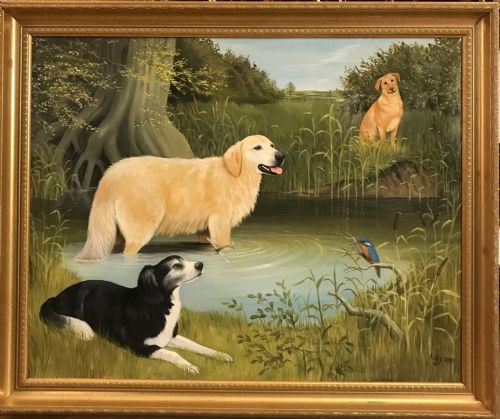
Labradors and golden retrievers also feature in mid-century examples within the selection.
How do I date a painting?
Dating relies on stylistic evidence, artist signatures, framing techniques, and canvas preparation. Victorian works often show specific genre scenes with detailed realism and heavier gilded wood frames.
Earlier pieces from the seventeenth century or later mid-century items display distinct clothing, framing styles, and brushwork conventions of their respective eras.
Are all pieces framed in wood?
The selection includes works housed in wood and gilded wood frames. These frames complement the oil on canvas or watercolour mediums used by the artists.
Some frames reflect the nineteenth-century taste for ornate gilded surrounds, while others utilise simpler wooden profiles.
Where were these artists working?
The creators of these works operated primarily within British and Northern European artistic traditions. Painters such as George Cole and John Emms worked within the framework of English school sporting art and rural realism.
Northern European workshops also contributed historical portraits to the available range.