
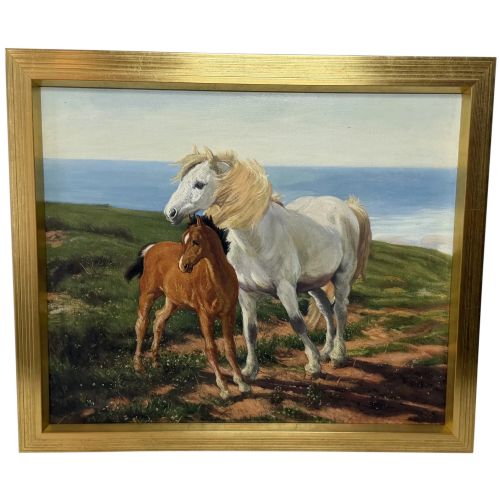


Green Grey Landscape Painting
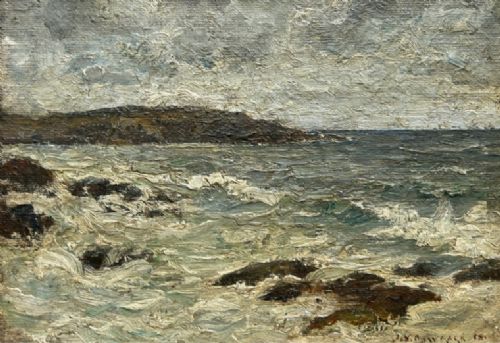
A green grey landscape painting captures subtle tonality, offering atmospheric depth through muted palettes.
Green Grey Landscape Painting
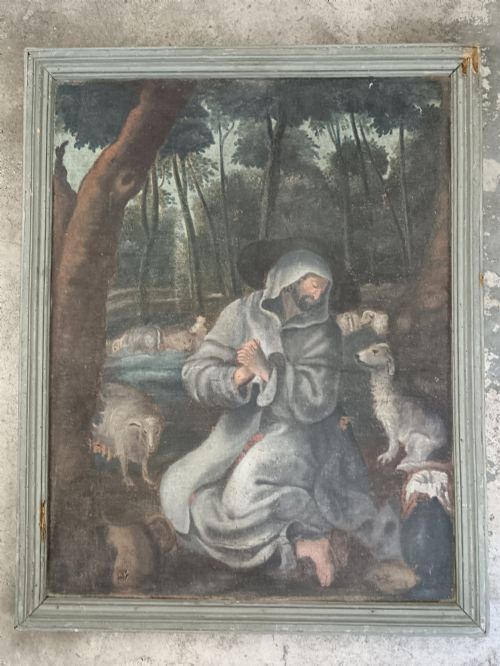
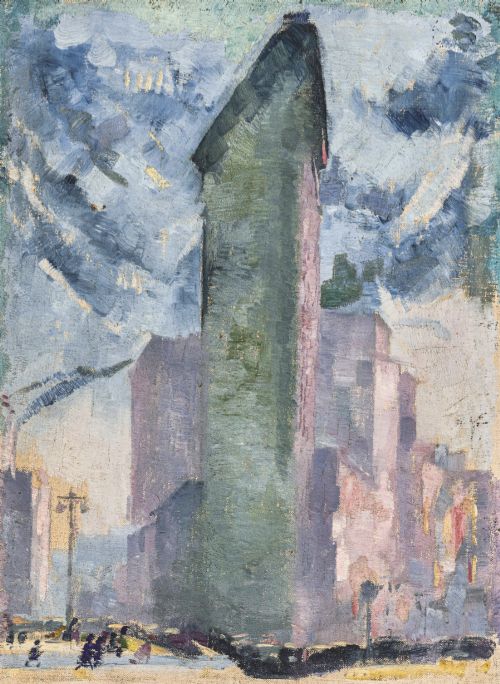
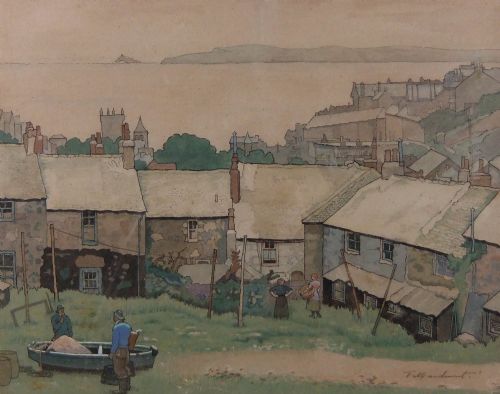
A green grey landscape painting encompasses works focused on pastoral scenery, coastal views, and rural expanses rendered in restrained colour schemes. Buyers seek these pieces for their muted visual weight and ability to introduce calm tonality into domestic interiors. The examples met on this page span the nineteenth century through the mid-twentieth century, capturing land and water through varied regional British and European viewpoints.
The objects take the form of framed wall art, ranging from intimate watercolours on paper to substantial oils on canvas and board. Most works depict specific localities, including Yorkshire dales, Scottish rivers, and Welsh countryside, recorded by period artists working outdoors or in studios. The prevailing aesthetic relies on weathered greens, slate greys, and earthy ochres rather than vivid pigments.
Materials and technique
Painters applied oil paint or watercolour using brushes on supports such as stretched canvas, wooden board, or heavy paper. Oil paint allowed artists to build rich impasto layers and opaque coverage, whilst watercolour washes utilised the reflective quality of white paper beneath translucent pigments.
Works on paper typically received protective framing behind glass, whereas oil paintings on canvas remained mounted in wooden frames suited to the period. The handling of medium defines the texture, balancing thick pigment application against delicate washes to evoke atmospheric weather conditions.
Listings feature works executed in oil paint, watercolour, and pastel on canvas, paper, and wood supports across nineteenth and twentieth-century periods.
Qualities of distinction
Compositional confidence separates accomplished works from ordinary topographical records, relying on balanced sightlines and purposeful brushwork rather than rigid documentation. The handling of light and shadow determines atmospheric success, particularly where muted palettes require subtle tonal transitions to hold the eye.
Condition of the support and pigment stability influence the longevity of the work, with untouched surfaces and period framing retaining historical integrity. The certainty of attribution or signature adds contextual weight to a piece, anchoring the depiction within a known maker's output.
Alfred Wolmark·Thomas Maidment·Hazel M. Barnett·Cuthbert Crossley·James Orrock·William Grant Murray·Robert Finley McIntyre·Alfred Grey RHA·Ernest Higgins Rigg·Henri Joseph Harpinies·Clifton Tomson·H.E. Tidmarsh·Stanley Orchart·Thomas James Lloyd·John Frederic Greenwood·Kershaw Schofield·Amos Green·John Abernethy Lynas-Gray·Claude Muncaster·Frank Shenton·Sonia Lawson RA·Henry John Sylvester Stannard·GM de L'Aubiniere
The Green Grey Landscape Painting Glossary
- Impasto
- Paint applied thickly to a canvas or board, standing in relief and retaining the marks of the brush or palette knife. This technique adds tactile dimension to foliage, water, or earth.
- Topographical
- Representing a specific actual place with descriptive accuracy rather than inventing an idealised scene. These views often document rural landmarks, rivers, and regional architecture.
- Watercolour
- A paint consisting of pigment suspended in a water-soluble binder, traditionally applied to paper. It relies on dilution and transparency to create luminous effects.
- Pentimento
- An alteration in a painting, evidenced by traces of previous brushwork, showing that the artist changed their composition during the process. It offers insight into the evolution of the work.
- Post-Impressionism
- An artistic movement extending impressionist methods while rejecting its limitations, favouring more structured forms and expressive use of colour. Works in this style emphasise symbolic content and personal vision.
Green Grey Landscape Painting: Frequently Asked Questions
What periods do these paintings come from?
The works span from the nineteenth century through the Victorian era and into the mid-twentieth century. Creators worked across successive decades, reflecting shifting regional styles.
Examples include Victorian watercolours and modernist oils from the nineteen-fifties and sixties. Each period brings distinct framing methods and support materials.
How should I hang a watercolour painting?
Watercolours require placement away from direct sunlight to prevent the fading of delicate pigments on paper. Glass protection shields the surface from atmospheric moisture and dust.
Ensure wall fixings match the weight of the framed piece and secure it firmly at eye level. Stable indoor humidity protects both the paper support and the period frame.
What is the difference between oil and watercolour?
Oil paint utilises a drying oil binder, allowing for thick impasto texture and the reworking of pigment over canvas or board. Watercolour employs water-soluble binders on paper, creating translucent washes.
Oils generally hang without glass protection, whereas watercolours require glazing. Both mediums capture atmospheric landscapes through entirely different optical properties.
How can I identify a regional British landscape?
Makers frequently inscribed titles, locations, or signatures onto the front or reverse of the canvas, board, or paper. Subjects often feature identifiable landmarks such as Yorkshire dales, Scottish rivers, or Welsh valleys.
Style and palette can also point towards regional schools of painting active during the nineteenth and twentieth centuries. Exhibition labels on the reverse often confirm the geographic setting.