
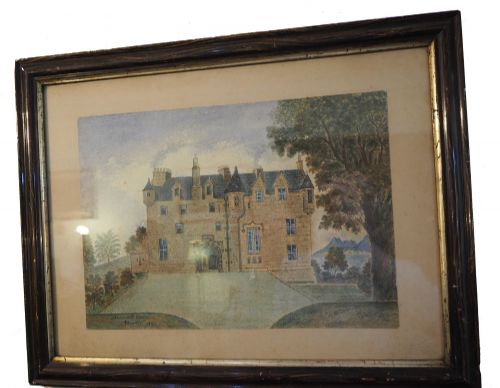


Architectural Landscape Watercolour Picture
An architectural landscape watercolour picture captures historic buildings and outdoor scenes with pigment on paper.
Architectural Landscape Watercolour Picture
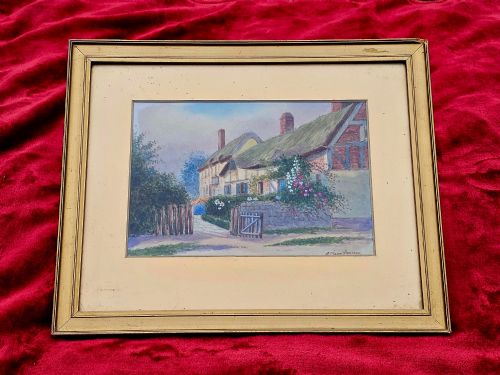
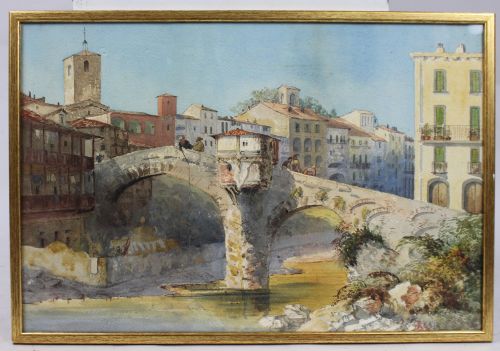
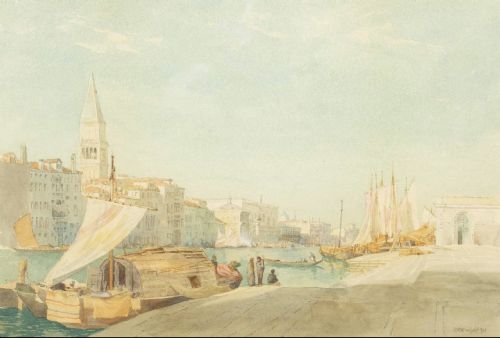
An architectural landscape watercolour picture combines detailed structures such as abbeys, cathedrals and street scenes with natural surroundings. These works range from nineteenth-century Italianate and Venetian views to twentieth-century English village and townscape depictions. Buyers encounter framed artwork executed on paper, often preserved beneath glass within wood or gilt wood frames.
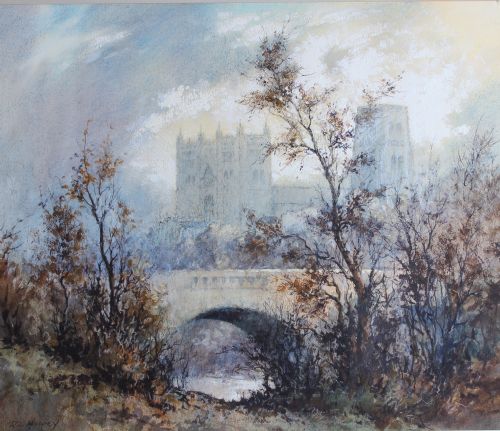
The selection spans periods from the nineteenth century through the mid-twentieth century, including Victorian and Edwardian examples alongside modern British pieces. Subjects extend from continental buildings and Grand Tour locations to familiar domestic landmarks like Durham Cathedral and York Minster. Each painting records specific locations through the medium of watercolour pigment applied to paper.
Materials and Technique
These pieces rely primarily upon watercolour paint and pigment applied directly to paper sheets. Artists frequently utilised pencil underdrawing to map out perspective and architectural elements before laying down washes of colour. Finished paintings are commonly housed behind glass in wood or gilt wood frames designed to protect the paper from environmental damage.
The technique involves building transparent or opaque layers of pigment to capture light upon stone, water and foliage. Handling varies from precise architectural delineation to impressionistic washes that define atmosphere and movement. The combination of paper support and watercolour pigment remains consistent across Victorian, Edwardian and mid-century examples.
Subjects represented across the collection include Venetian canals, Yorkshire abbeys, London arches and continental street scenes.
Standards of Execution
Quality rests upon the artist's command of perspective, handling of light, and precision in rendering complex masonry and spatial depth. Stronger examples demonstrate confident brushwork and accurate draughtsmanship in complex structures like Venetian canals or Gothic facades. Lesser works may exhibit static composition or heavy, opaque application that obscures the luminosity characteristic of the medium.
The preservation of the paper support and the clarity of the original pigment heavily influence overall merit. Works that retain vibrant colour without excessive fading or foxing command greater appreciation among collectors. Framing materials, ranging from simple wood mouldings to elaborate gilt surrounds, also contribute to the presentation and integrity of the surviving piece.
A. Marie Parsons·Robert Leslie Howey·Alfred George Morgan·Fred Lawson·Sir Thomas Newenham Dean·Rowland Henry Hill·Louie Stanley Maurice Prince·G Villiers Stuart·George Whyatt·Joseph W. Milliken·Edith E Caswall·Hercules Brabazon Brabazon·David Small·Tom Dudley·David Law·Wilfred Knox·Sonia Lawson·Peter Toft·John J. Hamer·Annie L. Lee·J. Tim Macdonald·Cuthbert Crossley·William Crouch·W D Scull·Helen Donald-Smith
The Architectural Landscape Watercolour Picture Glossary
- Watercolour
- A paint consisting of colour pigment suspended in a water-soluble vehicle, applied to paper. It allows for luminous washes and fine linear detail.
- Grand Tour
- A traditional trip of Europe undertaken by upper-class European young men of sufficient means. It generated a demand for topographical and architectural views.
- Diptych
- A painting divided into two separate hinged or matched panels. This format appears in paired landscape and architectural compositions.
- Gilt wood
- Wood coated with a thin layer of gold leaf or gold paint. It provides an ornate and protective border for antique framed artwork.
Architectural Landscape Watercolour Picture: Frequently Asked Questions
What periods do these watercolours date from?
The available pieces span the nineteenth century through the mid-twentieth century, encompassing Victorian, Edwardian and early modern periods. Artists worked across these decades recording both British and continental architecture.
Dates on the works range from the early eighteen-hundreds up to nineteen-sixty, reflecting shifting stylistic approaches to landscape and townscape painting.
Where were these architectural views painted?
Subjects include British locations such as York, London, Durham and various country estates. Continental destinations like Venice, Corfu and Italy also feature prominently.
Artists frequently travelled to record specific historic buildings, cathedrals, street scenes and coastal towns during journeys abroad and at home.
How should I frame and display paper watercolours?
Watercolour paintings on paper require protection behind glass to prevent atmospheric damage and fading from light exposure. Many pieces retain their original wood or gilt wood frames.
Display them away from direct sunlight and excessive moisture to preserve the integrity of the paper support and pigment.
Are these watercolours original signed works?
Many examples are original hand-painted watercolours bearing the signatures or attributions of the artists who created them. Documentation often includes specific dates and location titles.
Signatures help attribute pieces to known figures within British Impressionism, Victorian fine art and modern British movements.