


Expressionist British Landscape Artwork
Expressionist British landscape artwork captures the wild mood of the countryside through bold brushwork and striking colour.
Expressionist British Landscape Artwork
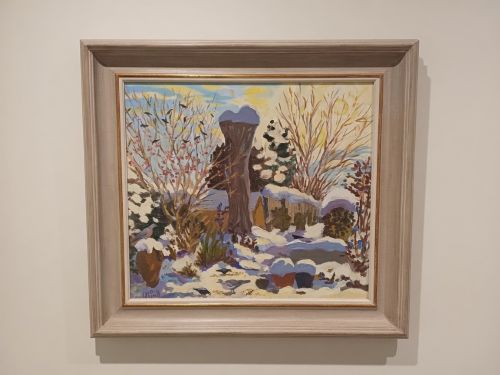
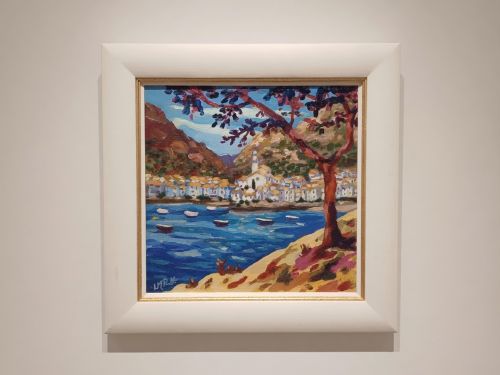
When you search for expressionist british landscape artwork, you encounter paintings that interpret scenery through emotion rather than strict realism. These pieces interpret Welsh villages, Cornish churches, and snowy fields through thick pigment and expressive gestures.
The selections on this page lean heavily into mid-twentieth-century modernism, alongside works created later than nineteen sixty. You find works ranging from early twentieth-century sketches to mid-century oil paintings and watercolours.
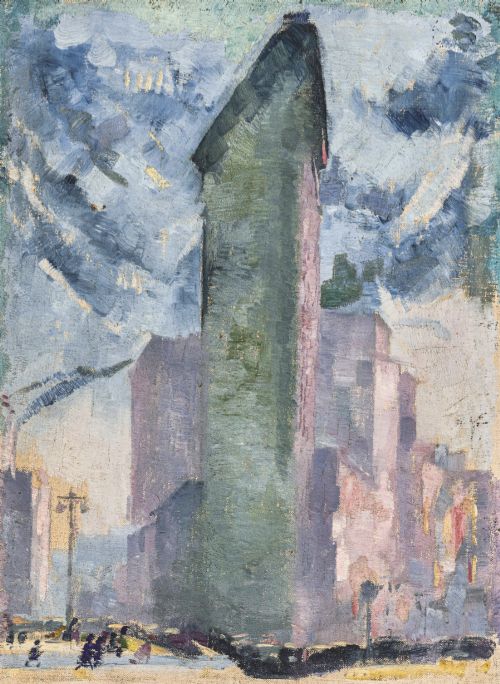
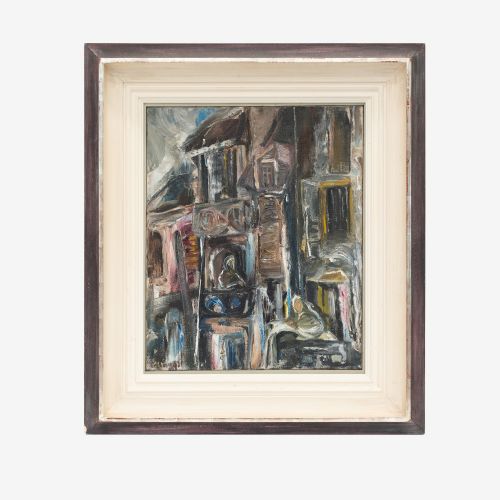
The subjects span urban views such as Paris and New York alongside rural Welsh valleys and Cornish churchyards. Each piece captures a specific place through a distinctly personal lens of colour and form.
Materials and Techniques
Painters work primarily with oil paint on canvas or paper, building thick textures that define the surface. Many of these works are presented within wood frames, often protected behind glass depending on the medium.
Watercolour appears alongside oil paint, offering a lighter application on paper for landscape studies. The physical support ranges from stretched canvas to simple paper sheets mounted securely within traditional frames.
Listings feature works created across several decades, spanning from nineteen ten through the nineteen fifties and sixties into later modern periods.
Assessing Quality and Execution
The strength of an expressionist landscape rests entirely upon the confidence of the brushwork and the harmony of the palette. Stronger examples demonstrate a bold command of space where paint application directly serves the emotional weight of the scene.
The integration of frame and artwork also influences the overall presence of the piece, as period framing often complements the mid-century aesthetic. Works that capture light and atmosphere with economy of line stand apart from more hesitant compositions.
Alfred Wolmark·Lilian Colbourn·Joan Gillchrest·Hazel M. Barnett·Donald Mcintyre·Sir William George Gillies·Sonia Lawson·Lillian M. Harrison
The Expressionist British Landscape Artwork Glossary
- Expressionism
- An artistic style where the artist depicts subjective emotions rather than objective reality through distorted forms and intense colour.
- Post-Impressionism
- A French art movement that heavily influenced British painters to explore structural brushwork and symbolic colour.
- Oil on Canvas
- A traditional painting medium utilising pigments bound with drying oils applied to a stretched woven fabric support.
- Mid-Century Modern
- A design and art movement spanning roughly the middle decades of the twentieth century, favouring simplified forms and modern abstraction.
Expressionist British Landscape Artwork: Frequently Asked Questions
What defines expressionist British landscape art?
These works focus on emotional resonance and atmospheric mood over photographic accuracy. Artists use bold brushstrokes and non-naturalistic colours to interpret rural or urban scenes.
The resulting paintings offer a personal window into locations across Britain, from Welsh valleys to Cornish villages, captured during the mid-twentieth century and beyond.
Are these paintings usually framed?
Many examples arrive ready to hang within period wood frames that suit their mid-century origins. Some works on paper or delicate watercolours also feature glass protection.
Checking the listing details confirms whether a particular piece includes its original or a complementary period frame.
How do I date these artworks?
Dates are established through artist signatures, biographical records, and stylistic markers typical of the nineteen fifties and nineteen sixties. Mid-century modernism and post-impressionist influences provide clear chronological anchors.
Signatures combined with recorded exhibition histories or artist lifespans help pin down the exact decade of creation.
Where should I hang an expressionist landscape?
These vibrant paintings suit spaces with good natural light that highlights the texture of the oil paint or the delicacy of the watercolour. Placing them away from direct sunlight protects the pigments over time.
They pair well with both modern minimalist interiors and traditional rooms, adding a strong focal point through their dramatic use of colour.