
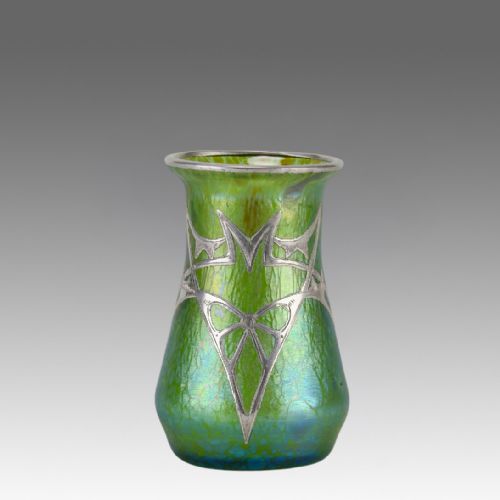
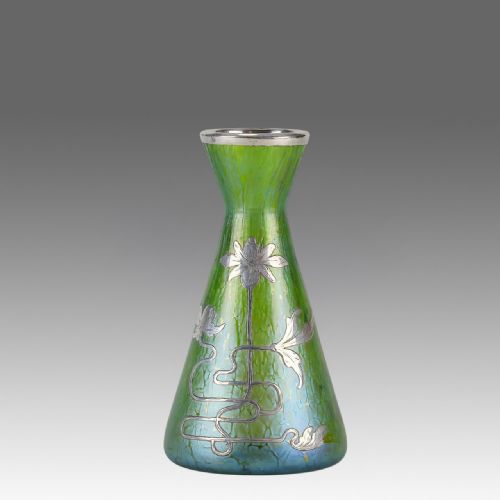


Green Glass Silver Vase
A green glass silver vase brings together vibrant coloured glass and precious metal mounts, offering an appealing contrast that collectors seek for display.
Green Glass Silver Vase
When you search for a green glass silver vase, you encounter pieces that combine blown or moulded green vessels with sterling silver mounts, overlays, or liners. The objects range from posy vases and flutes to larger mantle pieces produced across the Victorian, Edwardian, and early twentieth-century periods.
The version you are most likely to meet on this page is an early twentieth-century example showing Art Nouveau or Secessionist influence. These often feature iridescent or silvered glass decorated with delicate metalwork or collars.
Makers and manufacturers from Bohemia, England, and America produced these vessels to serve as decorative centrepieces. They reflect the shifting tastes of the nineteenth and twentieth centuries, moving from ornate Victorian designs to flowing organic lines.
How they were made
Glassmakers utilised techniques such as blowing and moulding to shape the vessels, often employing vaseline glass, iridescent finishes, or double-walled construction to achieve depth of colour. Some pieces incorporate silvered glass surfaces that reflect light in distinctive ways.
Silversmiths then applied sterling silver through mounts, rims, bases, or intricate exterior overlays that gripped the glass body securely. Workshops in cities such as Birmingham and Chester hallmarked these metal additions, while continental makers utilised distinct metal recipes and surface treatments.
Some Victorian posy vases were built so diminutive they could comfortably host a single daisy and still demand the attention of an entire mantelpiece.
What varies in quality
The distinction between ordinary production and finer work lies in the execution of the glass body and the weight of the silver. Thicker, heavier glass with complex iridescence or integrated metal overlays sits at the higher end of the range.
Proportion and craftsmanship dictate overall merit, particularly how neatly the metal mount fits the glass vessel. Pieces bearing clear hallmarks or attributed to notable glasshouses demonstrate superior design integrity compared to unmarked or generic items.
Johann Loetz·Loetz Witwe·Goldsmiths & Silversmiths·Alvin Corp
The Green Glass Silver Vase Glossary
- Silver overlay
- Metal applied directly to the exterior of a glass vessel, often in floral or geometric patterns. This technique requires precise adhesion between the silver and the curved glass surface.
- Vaseline glass
- A type of glass coloured with uranium dioxide, yielding a characteristic yellow-green hue that often glows under ultraviolet light. It frequently appears in Victorian and Edwardian decorative objects.
- Iridescent glass
- Glass treated with metallic salts while hot to produce a rainbow sheen on the surface. Makers like Loetz mastered this technique to catch the light.
- Posy vase
- A small vessel designed to hold a short bunch of flowers rather than a large arrangement. These often feature removable glass liners protected by silver frames.
- Silvered glass
- Glass blown with a double wall, into which a silver liquid was introduced and sealed to create a reflective mirror finish. This method gained popularity during the nineteenth century.
Green Glass Silver Vase: Frequently Asked Questions
How do I clean the glass safely?
Remove any detachable silver mounts or liners if possible before washing in lukewarm water with mild soap. Avoid harsh abrasives that might scratch the delicate glass surface or damage the silver.
Dry the pieces thoroughly with a soft cloth to prevent water spots, and take care around silvered or iridescent finishes which can be sensitive to moisture.
Are the silver parts hallmarked?
Many British pieces feature standard silver hallmarks indicating the assay office, year, and maker. Items originating from continental makers often display different stamps or simply bear silver purity marks.
Checking the metal components helps determine the period and origin, though some smaller mounts may remain unmarked.
What is vaseline glass?
Vaseline glass contains trace amounts of uranium to achieve its distinctive yellow-green colour. The material was popular in the Victorian era for decorative tableware and small vases.
Under ultraviolet light, this glass exhibits a bright green fluorescence, which helps confirm its identity.
Can I use these for fresh flowers?
Most of these vessels can hold water and flowers, particularly those designed with glass liners or robust inner chambers. Care should be taken with pieces featuring silvered interiors or delicate metal overlays.
Using a funnel helps protect exterior metalwork from moisture damage during filling and emptying.