






Green Glass Drinking Goblets
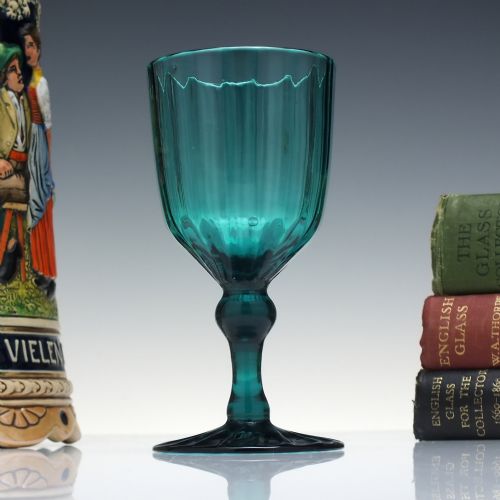
Green glass drinking goblets bring rich colour to the table, spanning Georgian rib-moulded bowls and Victorian enamelled vessels.
Green Glass Drinking Goblets
These green glass drinking goblets encompass functional vessels and formal rummers shaped across the Georgian, Victorian, and Edwardian eras. Buyers encounter pieces ranging from simple rib-moulded dram glasses to tall, finely engraved wine goblets in shades of turquoise, emerald, and Bristol green.
Object forms include wine glasses, rummers, and liquor glasses. The unifying thread is the use of coloured glass, spanning deep emerald tones and pale green hues.
Materials and construction
The primary material is lead glass or standard glass tinted during the melting process to create rich green, turquoise, and vaseline tones. Makers utilised traditional blowing techniques, often employing rib moulds to pattern the bowl while hot.
Surface decoration involves intaglio engraving and cutting to reveal lighter glass beneath, alongside polychrome enamel painting applied directly to the exterior. Hollow stems on roemers require careful manipulation during the blowing and forming stages.
Green Glass Drinking Goblets Retail Price Guide 2026
Typical asking prices for green glass drinking goblets among the pieces listed under this phrase on Sellingantiques today, from the lower quarter to the upper quarter. They describe what is for sale here now, not the wider market.
Some Victorian vaseline goblets glow a brilliant neon green under ultraviolet light due to the uranium oxide mixed into the batch.
Distinctions in quality
Quality rests in the precision of the glassblower's hand and the clarity of the coloured metal. Thin, even wall thickness on blown bowls and crisp definition in rib-moulded patterns separate superior pieces.
Enamelled and engraved decoration shows variance in the skill of the artist. Fine, detailed intaglio work or carefully fired polychrome enamel elevates a goblet above simpler, plain-walled vessels.
Stevens and Williams·Lobmeyer·Frits Hechert
The Green Glass Drinking Goblets Glossary
- Rib moulded
- A glass vessel blown into a small patterned mould to create raised vertical flutes on the body. This technique dates back to Georgian production methods.
- Roemer
- A traditional Germanic drinking vessel featuring a wide bowl atop a cylindrical hollow stem wrapped with prunts. These glasses frequently appear in green glass.
- Intaglio engraved
- A method where the design is ground into the glass surface using small rotating wheels rather than raised relief carving. It creates fine, matte details.
- Vaseline glass
- A yellow-green glass coloured with uranium oxide that exhibits a distinct fluorescent glow under ultraviolet light. Victorian makers utilised this material extensively.
- Prunt
- A small applied blob of molten glass added to the stem or base for decoration and grip. They are common on continental roemers.
Green Glass Drinking Goblets: Frequently Asked Questions
Can I use these goblets for wine?
These historical vessels function adequately for serving wine or cordials at the table. Their durable lead glass construction handles normal dining use when treated with care.
Hand-painted enamel pieces require more caution to preserve the coloured pigments. Many collectors reserve them for special occasions or display them as cabinet items.
How do I date an old green goblet?
Dating relies on observing the form, pontil mark, and manufacturing technique of the piece. Georgian examples often display rough snapped pontil marks and deeper rib-moulded bowls.
Victorian and Edwardian pieces introduce brighter vaseline tones, precise wheel cutting, and polychrome enamel decoration. Comparing the silhouette to documented period styles confirms the era.
Why is the glass green?
The green colour results from metal oxides added to the batch during melting, such as iron or copper. Different chemical combinations produce shades ranging from pale amber-green to deep emerald.
Uranium oxide creates the distinctive yellow-green hue seen in vaseline glass. These mineral additions became popular across the nineteenth century for decorative tableware.