


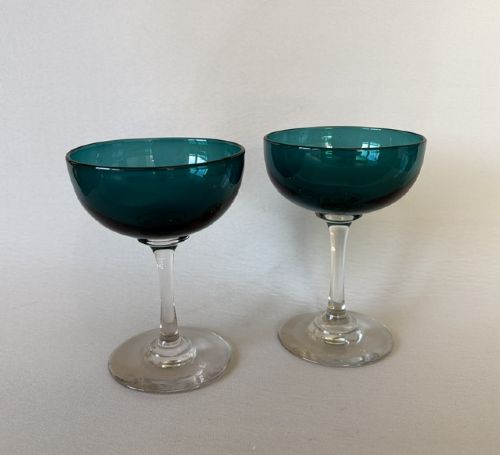



Green Stemware Set
A green stemware set brings rich colour to the table, and these period drinking vessels deliver genuine character for your gatherings.
Green Stemware Set
When you search for a green stemware set, you encounter drinking vessels originating from the Georgian, Victorian, Edwardian, and early twentieth-century eras. The selections on this page primarily consist of sets of wine glasses, champagne coupes, hock glasses, and cordial glasses in shades ranging from deep emerald to lighter Bristol green.
You are most likely to meet complete or partial sets numbering six or eight pieces, often featuring characteristic bowls supported by delicate stems. The forms span tulip shapes, intaglio engraved designs, and pieces embellished with enamel and gold leaf.
Makers and glasshouses from England, Germany, and beyond produced these items using traditional methods suited to each respective period. Collectors and hosts prize them for their striking visual presence and historical authenticity during dining occasions.
How they were made
Glassmakers utilised lead glass, crystal, and coloured glass, shaping the molten material through blown glass techniques to achieve desired forms like tulip-shaped bowls and slender stems. The green coloration was typically introduced directly into the glass batch during production.
Decoration required skilled artisan hands, employing intaglio engraving to cut intricate patterns into the surface or applying enamel and gold leaf details for ornamental richness. These traditional craftsmanship methods resulted in durable yet delicate tableware.
Green Stemware Set Retail Price Guide 2026
Typical asking prices for green stemware set among the pieces listed under this phrase on Sellingantiques today, from the lower quarter to the upper quarter. They describe what is for sale here now, not the wider market.
Listings feature green stemware spanning the Georgian era through to the early twentieth century, utilising blown glass, crystal, and lead glass.
What varies in quality
The distinction between standard table service and exceptional glassware lies in the clarity of the crystal, the uniformity of the green hue across the set, and the finesse of the stem proportions. Intricacy and precision in intaglio engraving or hand-enamelled decoration also elevate a service significantly.
Completeness matters greatly in sets, as matching groups of six or eight pieces maintain greater integrity than assembled lots. The weight and balance of the lead glass further indicate the level of craftsmanship invested by the original glasshouse.
Stevens & Williams·Theresienthal
The Green Stemware Set Glossary
- Coloured glass
- Glass that derives its hue from metallic oxides added during the melting process. This technique creates the rich green shades seen in historic drinkware.
- Intaglio engraved
- A method of decoration where designs are carved into the surface of the glass rather than raised above it. It creates subtle, frosted visual depth.
- Hock glass
- A tall-stemmed wine glass traditionally used for German white wines. These often feature coloured bowls designed to showcase the beverage.
- Champagne coupe
- A shallow, broad-bowled glass on a stem intended for sparkling wines. Victorian examples frequently utilise bold green glass bowls.
- Enamel decoration
- The application of fused glass powders onto the surface as coloured ornamentation. It adds tactile and visual contrast to the piece.
Green Stemware Set: Frequently Asked Questions
How were green wine glasses used historically?
These glasses served during formal dinners and social gatherings for pouring specific wines like hock or dessert vintages. The coloured bowls helped mask sediment in older vintages while adding visual drama to the table.
Hosts often matched particular glass shades to the courses served or the decorative scheme of the dining room. Their sturdy yet elegant construction meant they transitioned smoothly from sideboard to table.
Can I use antique stemware every day?
Many people enjoy integrating historic glassware into daily life, provided they handle the pieces with care and attention. Hand washing is essential to protect delicate stems and any surface enamel or gold leaf decoration.
Storing them securely in designated cabinets prevents accidental chipping while keeping the set visually accessible for special meals. Treating the glass gently preserves both the material and its historical integrity.
How do I identify a Victorian green glass set?
Victorian examples often exhibit robust lead glass construction paired with deep emerald or Bristol green tones. Forms typically lean toward heavy proportions, tulip bowls, or characteristic nineteenth-century cutting styles.
Examining the pontil mark on the base or the weight of the crystal helps distinguish genuine nineteenth-century production from later reproductions. The manufacturing techniques visible in the glass matrix offer further chronological clues.
What is the difference between crystal and glass?
Crystal contains added mineral content such as lead oxide, which increases the weight, brilliance, and resonance of the material. This composition allows artisans to cut finer details without compromising structural strength.
Standard glass lacks these specific mineral additives, resulting in a lighter feel and different light refraction properties. Both materials were utilised across different periods depending on the desired quality of the tableware.