


Green Gilt Frame Art
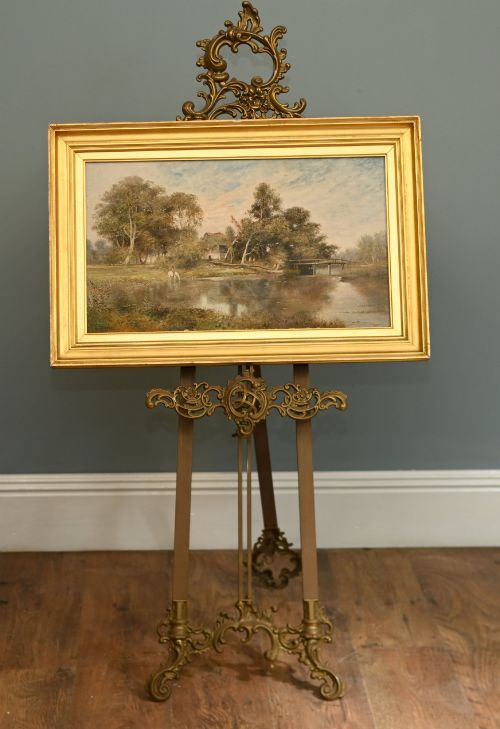
Green gilt frame art brings together historic paintings and ornamental borders finished in gold leaf, offering buyers a distinct focal point for traditional interiors.
Green Gilt Frame Art
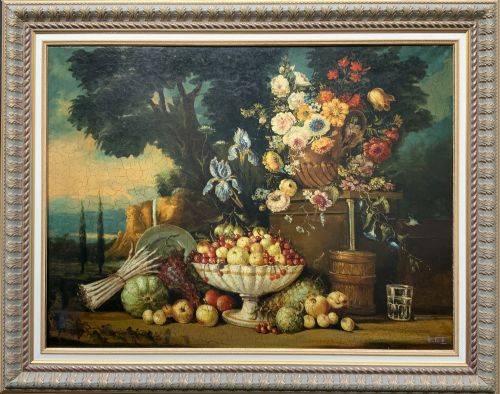
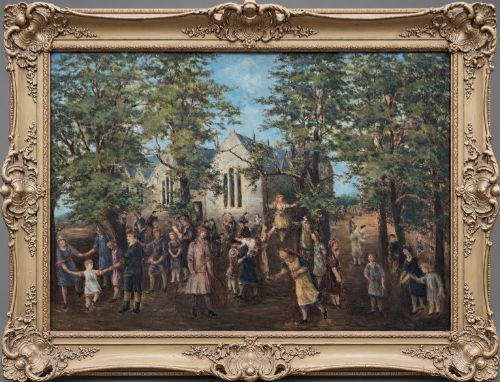
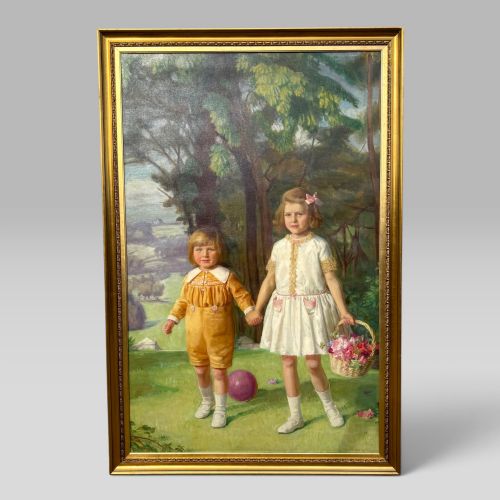
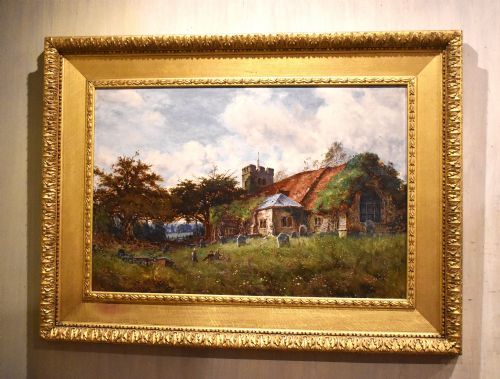
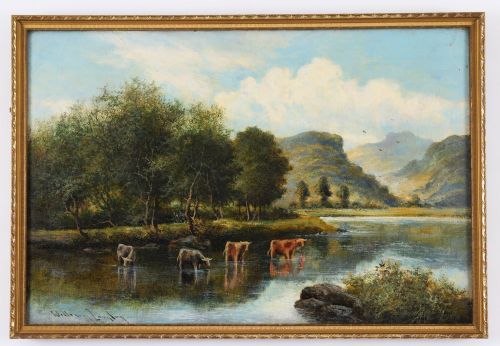
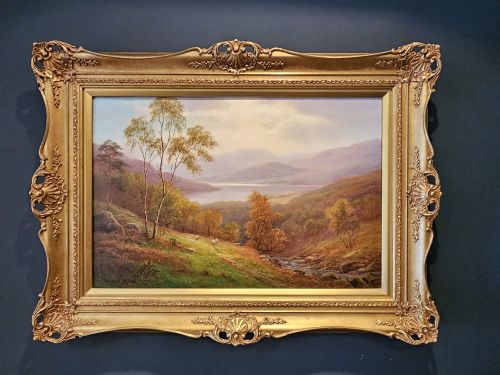
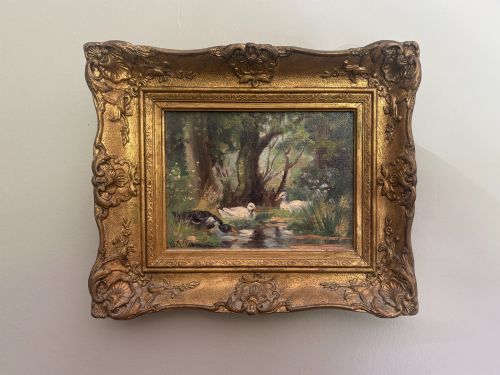
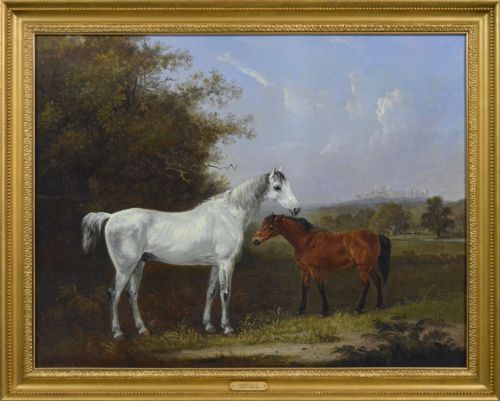
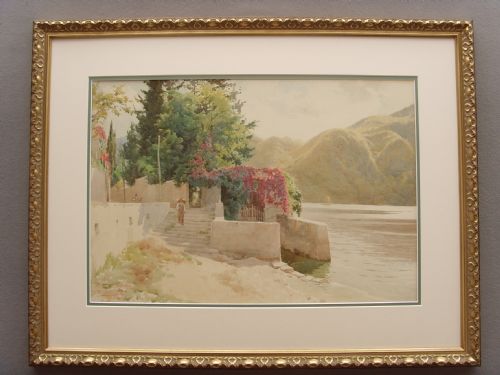
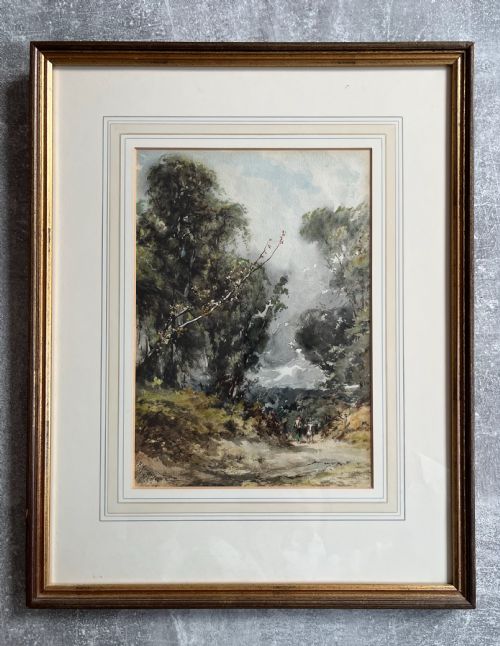
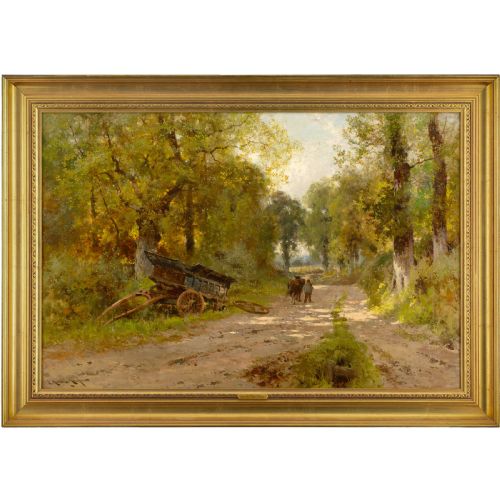
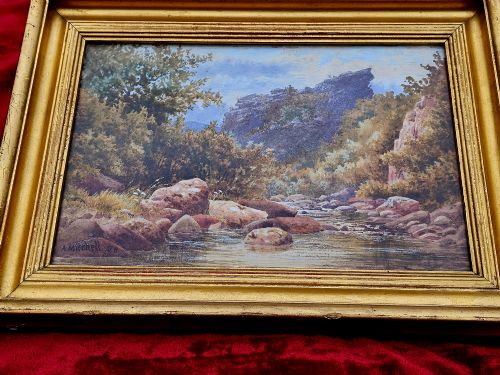
Green gilt frame art encompasses oil paintings, watercolours, and pastels housed within decorative timber mouldings treated with green paint and gold leaf. The selection on this page draws heavily from nineteenth-century and early twentieth-century British and European schools, featuring pastoral landscapes, coastal views, and portraits.
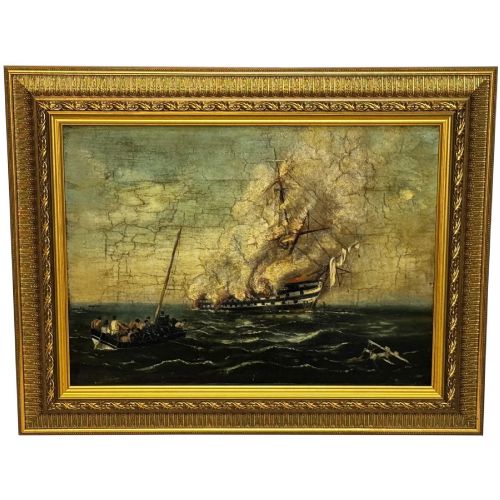
Buyers encounter framed works spanning periods from the Georgian era through to mid-century modern pieces. Common subjects include bucolic scenes with figures, still lifes with fruit or flowers, and maritime views executed in oil on canvas or board, alongside delicate works on paper.
How they were made
The underlying supports combine traditional stretched canvas, wood panels, and heavy paper or card, upon which artists applied oil paint, watercolour, or pastel. Canvases are secured within timber stretchers, while watercolours and pastels typically employ glass protection over paper.
Frames are constructed from wood, utilising carved or moulded profiles finished with layers of gesso, green pigment, and applied gilt metal leaf or gold paint. The interaction between the painted green body and the gilded highlights creates a contrasting border that frames the central image.
Listings feature works spanning the nineteenth and twentieth centuries, utilising oil, watercolour, and pastel on canvas, board, and paper.
What varies in quality
The craftsmanship of the frame dictates much of the visual impact. Hand-carved wooden mouldings with applied gold leaf and deep patination elevate a piece beyond simple decorative wall art, whereas mass-produced modern substitutes lack depth.
Richard Sebastian Bond·William Beattie-Brown·George Fotherly Hargitt·John Horace Hooper·A. Marie Parsons·Sidney A. Court·Kershaw Schofield·Valentine Green·George Houston·Thomas W Lascelles·Gabriel Mathieu·David Bates·William Broome·Walter Heath Williams·Antonio DeVity·Konstantin Stoitzner·Jean-Gabriel Domergue·Edward Ladell·James Howe·Carl Felkel·Ernest Arthur Rowe·Harald Foss·George Oyston·Sir Alfred East·Frederick James Kerr
The Green Gilt Frame Art Glossary
- Gilt wood
- Wood surfaces decorated with gold leaf or powdered gold applied over a prepared gesso base. This technique provides the metallic sheen seen on historic picture frames.
- Oil on canvas
- Pigment suspended in a drying oil medium applied to a woven fabric support stretched over a wooden frame. It remains a durable and stable medium utilised across centuries of fine art.
- Mezzotint
- A printmaking process of the intaglio family where the plate is roughened to produce dark tones and scraped to create light areas. It allows for subtle tonal gradations in portraiture.
- Gesso
- A paint mixture consisting of a neutral binder mixed with chalk, gypsum, or pigment. It acts as a smooth foundation layer on wooden frames before gilding.
- Watercolour
- A paint where the colourants are suspended in a water-soluble vehicle. Works on paper utilising this medium require protective glass framing.
Green Gilt Frame Art: Frequently Asked Questions
How do I date an antique oil painting?
Dating relies on examining the canvas preparation, stretcher construction, and stylistic clues within the brushwork. Artists' signatures and labels on the reverse also offer definitive periods.
Material analysis of the pigments and the framing style help narrow the decade of creation when documentation is absent.
Are these frames original to the paintings?
Many pieces retain their period frames, which show matching wear and construction techniques consistent with the era of the artwork. Replacements do occur over centuries of curation.
Matching the moulding style and gilding wear helps determine if a frame has been paired with the canvas at a later date.
How should I care for green gilt frame art?
Keep framed artwork away from direct sunlight and fluctuating humidity to protect both the canvas support and the delicate gilded wood. Gentle dusting with a dry microfibre cloth preserves the finish.
Avoid using liquid cleaners on the gilt surfaces, as moisture can lift the gold leaf and damage the underlying gesso.
What subjects are most common in these listings?
Pastoral landscapes, coastal views, and floral still lifes dominate the historic selections. Portraiture also appears frequently, executed by both named artists and regional schools.
These subjects reflect the aesthetic preferences of nineteenth and early twentieth-century collectors who favoured naturalistic scenes.