




Green Garden Urn
A green garden urn brings weight and colour to a terrace, and the pieces found here range from nineteenth-century cast iron to Japanese bronze.
How they were made
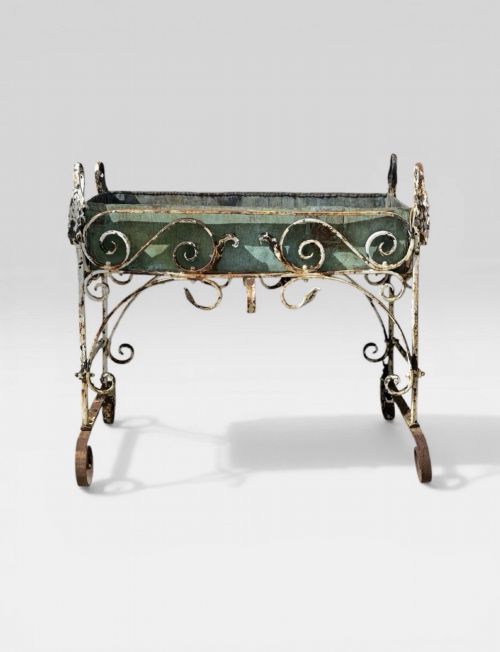
Cast iron and bronze vessels rely on traditional foundry casting, producing thick walls and crisp decorative details that weather decades outdoors. Wrought iron planters utilise hand-forged bars joined to create open or skeletal frames.
Terracotta and glazed earthenware pieces are shaped from clay and fired in kilns, sometimes featuring hand-carved elements such as handles or relief heads. Surface finishes include lead glazes, drip glazes, and applied layers of paint that age over time.
What varies in quality
The distinction between ordinary utility vessels and superior garden ornaments lies in the crispness of the casting and the artistic ambition of the form. Pieces cast with intricate details, such as figurative handles or animal motifs, demonstrate greater workshop skill.
Material thickness and structural integrity separate robust metal urns from lighter decorative items. Original surfaces, untouched patinas, and surviving matching pairs hold greater visual weight than mismatched components or modern replacements.
Green Garden Urn Retail Price Guide 2026
Typical asking prices for green garden urn among the pieces listed under this phrase on Sellingantiques today, from the lower quarter to the upper quarter. They describe what is for sale here now, not the wider market.
Listings feature cast iron, copper, terracotta, bronze, and zinc across periods from the early nineteenth century to the mid-twentieth century.
The Green Garden Urn Glossary
- Verdigris
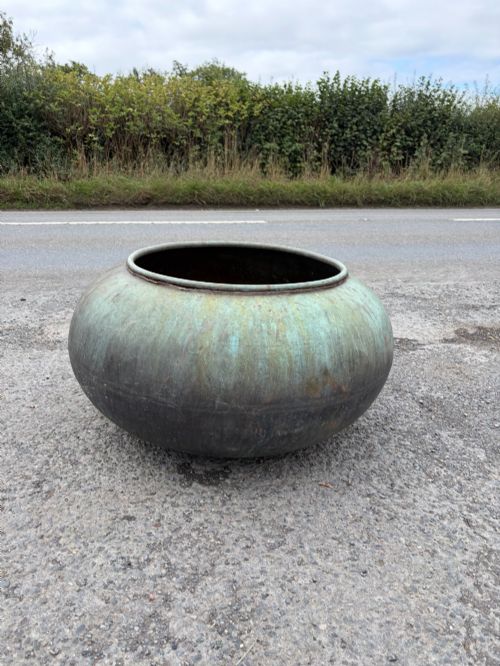
- A green patina formed naturally on copper, brass, or bronze through atmospheric oxidation. This surface layer protects the underlying metal and signals considerable age.
- Usubata
- A traditional Japanese bronze vessel designed for flower arrangements, often utilised in gardens as an ornamental urn. These pieces frequently feature distinctive patinated finishes.
- Cast iron
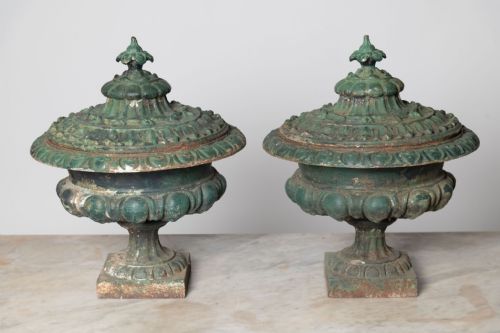
- An iron-carbon alloy poured into moulds to create heavy, durable garden ornaments. It permits complex surface decoration that survives centuries of outdoor exposure.
- Terracotta
- Fired unglazed clay ranging in colour from orange-brown to red. It is porous, allowing air and moisture to reach plant roots.
- Drip glaze
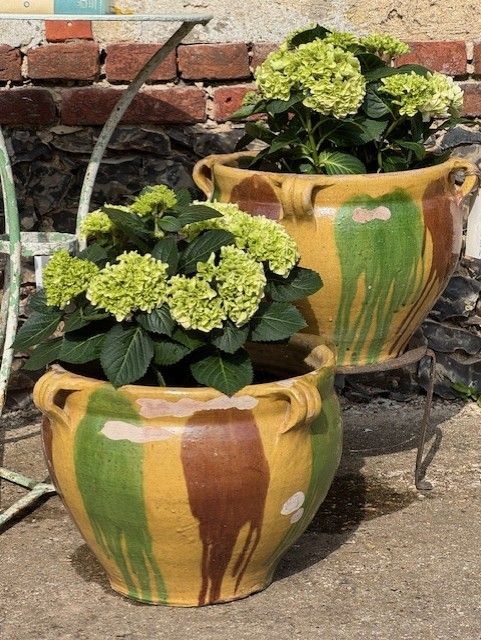
- A ceramic technique where glaze is applied in a manner that causes it to run down the sides during firing. This creates mottled, uneven colour patterns unique to each vessel.
Green Garden Urn: Frequently Asked Questions
Can cast iron urns stay outside all winter?
Cast iron is remarkably durable and withstands cold temperatures, but trapped wet soil can freeze and expand, potentially cracking the metal. Elevating the base on pot feet prevents moisture retention.
Ensuring proper drainage holes remain clear allows excess rainwater to escape freely during heavy downpours.
How do I clean verdigris without damaging the metal?
Washing with plain water and a soft brush removes loose dirt while preserving the historical green patina. Harsh chemical cleaners strip the protective surface layer.
Applying a light coat of natural wax helps seal copper and bronze surfaces against further atmospheric corrosion.
Are terracotta urns frost proof?
Traditional nineteenth-century terracotta absorbs moisture and is vulnerable to frost shattering if left damp in sub-zero conditions. Moving unglazed pots into a greenhouse or shed during winter prevents damage.
Wrapping the exterior with horticultural fleece offers partial protection for larger vessels that cannot be easily relocated.
How can I tell a Victorian cast iron urn from a later copy?
Victorian castings typically display deep, hand-chased detail and heavier metal walls than twentieth-century reproductions. Seams on older pieces are often hand-finished rather than mass-ground.
Examining the paint layers beneath the surface frequently reveals multiple generations of historic decoration.