




Outdoor Terracotta Planter
An outdoor terracotta planter brings weathered warmth to a terrace, offering a porous home for mature planting that improves with age.
Outdoor Terracotta Planter
When you search for an outdoor terracotta planter, you encounter robust vessels designed for garden display across the nineteenth and twentieth centuries. These pieces encompass large oil jars, campana urns, strawberry pots, and troughs shaped from fired clay.
The selections available here range from austere Victorian designs to rustic Mediterranean forms and Italianate garden ornaments. Many examples arrive paired, providing symmetrical accents for entrances or stone pathways.
Alongside standard earthenware, the selection includes salt-glazed stoneware and cast elements associated with garden architecture. These vessels function practically to house mature flora while serving as permanent landscape focal points.
Materials and Manufacture
Potters shaped these vessels from local clay and terracotta, utilising traditional throwing or moulding techniques suited to heavy garden use. The porous nature of the fired material allows air and moisture to reach plant roots effectively.
Certain vessels received salt glazing during firing to produce a harder, vitrified surface resistant to frost and moisture penetration. Other pieces incorporate cast iron elements or carved details applied directly to the handles and bodies.
Faux bois strawberry planters deceive the eye with ceramic tree bark, proving gardeners have loved clever agricultural disguises for centuries.
Variations in Quality
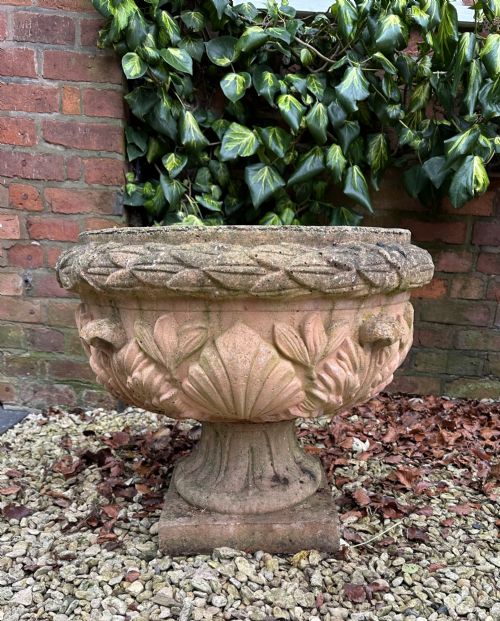
Quality rests in the crispness of the modelling, particularly where handles feature carved heads or detailed scrollwork. Superior vessels display a balanced weight and an even kiln-firing that prevents structural weakness.
The depth of the natural patination and surface weathering dictates the visual appeal of older garden pots. Pieces that have weathered outdoors develop mineral crusts and moss growth that enhance their architectural presence.
Compton Pottery·Guichard Carriès
The Outdoor Terracotta Planter Glossary
- Campana urn
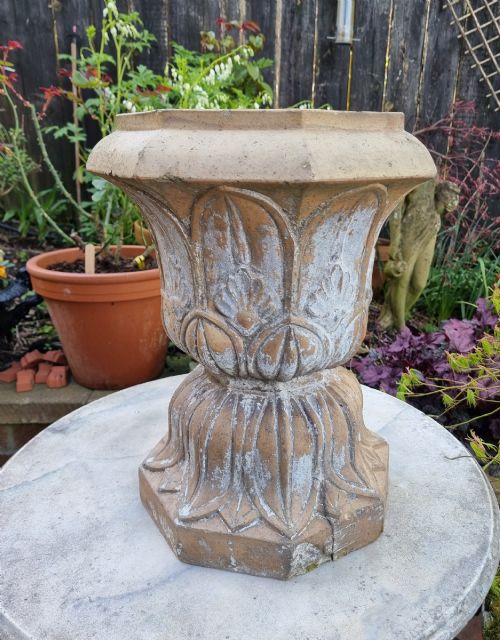
- A bell-shaped garden vessel with a flared rim, frequently mounted on a square foot and plinth base. This classical form became a staple of Victorian and Edwardian garden landscaping.
- Salt-glazed stoneware
- Pottery fired at high temperatures with salt thrown into the kiln, producing a dense, glassy finish. This treatment protects the clay body from frost damage during winter months.
- Faux bois
- An artistic technique mimicking wood grain and natural timber textures upon ceramic or concrete surfaces. Strawberry planters in the evidence employ this rustic style.
- Pancheon
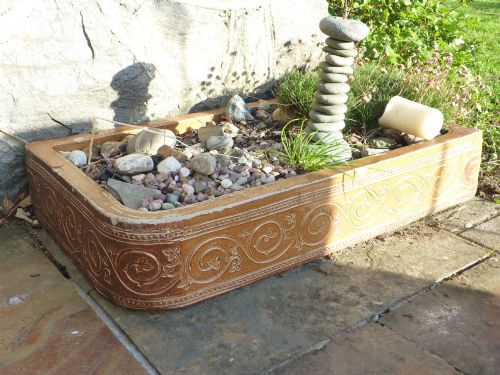
- A broad, shallow earthenware vessel traditionally used in dairies before finding a secondary life as a wide garden planter. These heavy bowls offer ample root space for spreading plants.
- Plinth
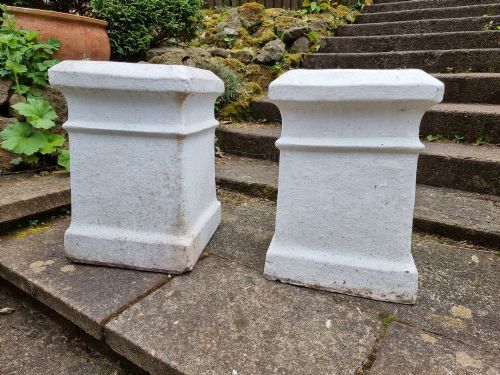
- A heavy stone, terracotta, or iron base designed to elevate garden urns and planters above ground level. Raising the vessel improves drainage and highlights its silhouette.
Outdoor Terracotta Planter: Frequently Asked Questions
Can outdoor terracotta planters stay outside in winter?
Most durable terracotta and salt-glazed vessels tolerate winter conditions if they possess adequate drainage holes and sit elevated on pot feet.
However, severe frost can crack saturated low-fired earthenware, making storage in a shed or greenhouse prudent during freezing weather.
How do I plant an antique garden urn?
Line the lower section of the urn with broken crocks or gravel to ensure the drainage hole remains unblocked by soil. Fill the interior with a well-draining compost mix suited to your chosen flora.
Select trailing plants or structural shrubs that complement the classical proportions of the vessel without obscuring its form entirely.
What causes white crust on terracotta pots?
The white crystalline deposit is efflorescence, caused by soluble salts migrating through the porous clay body as internal moisture evaporates.
This natural process is harmless to plants and contributes to the desirable weathered patina associated with antique garden ornaments.
How do I distinguish Victorian urns from later pieces?
Victorian examples often display heavier walls, hand-modelled details, and deeper mineral patination acquired through decades of exposure to the elements. Later twentieth-century pieces generally show more uniform clay coloration and machine-standardised finishing.
Examining the interior surfaces and drainage hole construction reveals clues regarding the manufacturing period.