
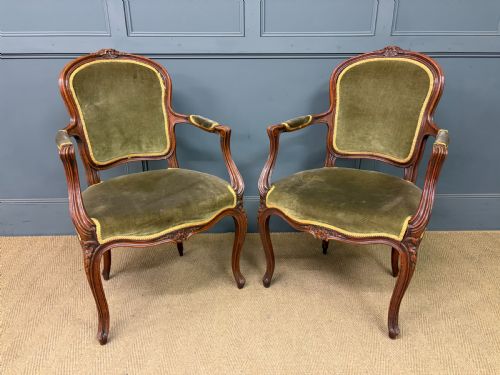
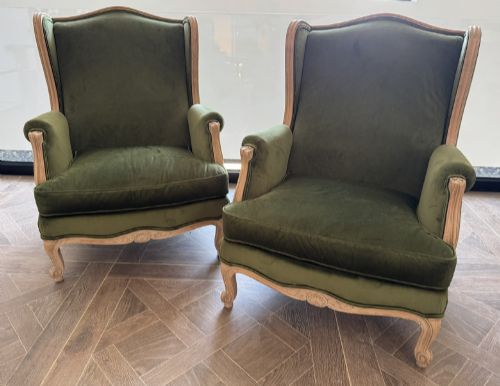
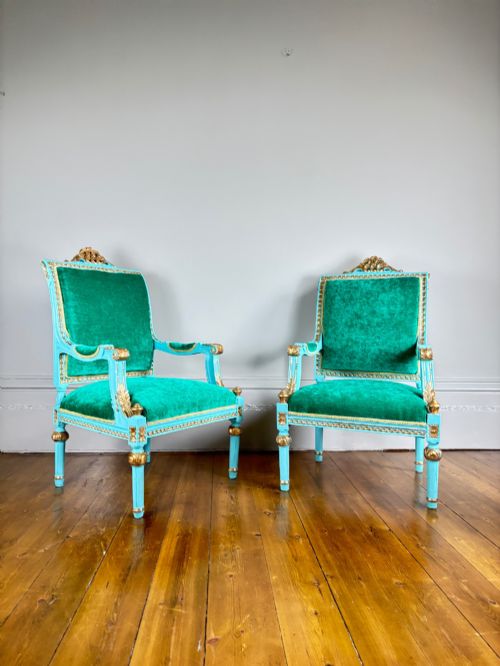
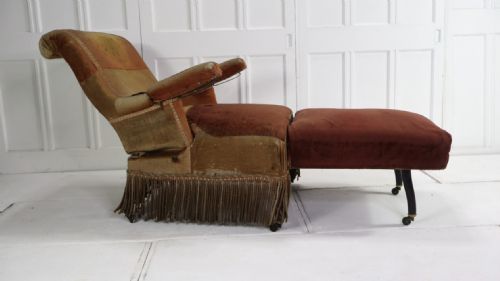


Green French Armchairs
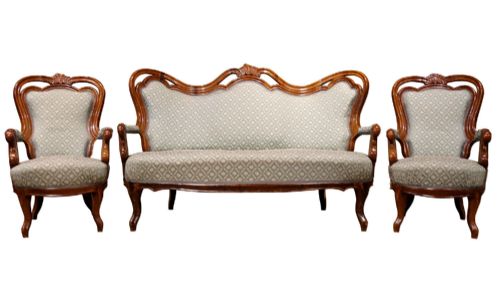
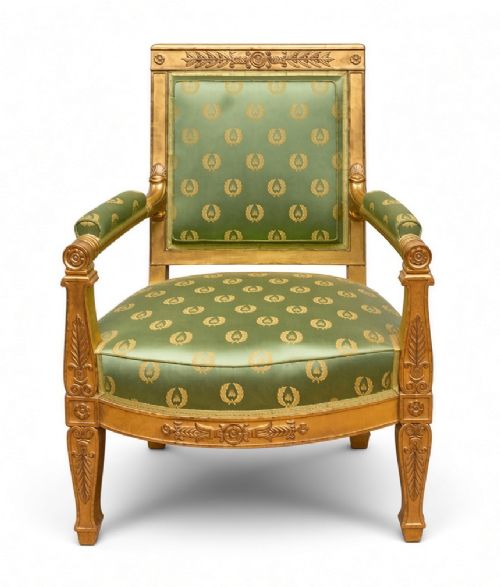
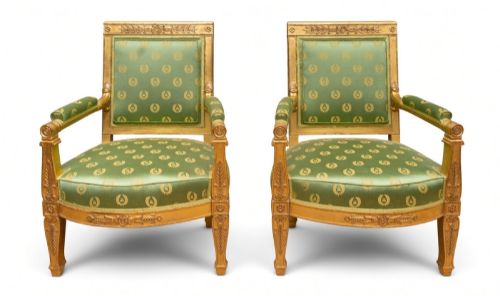
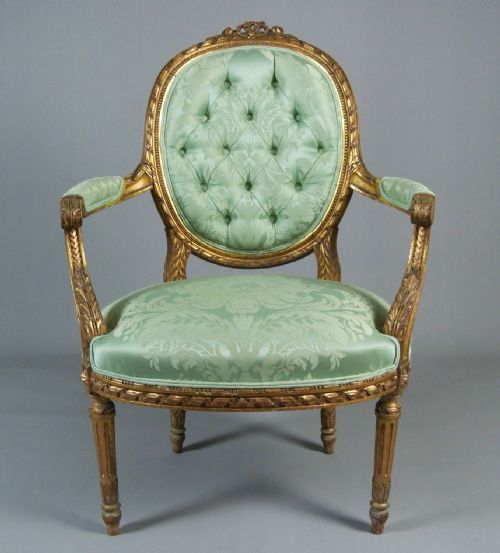
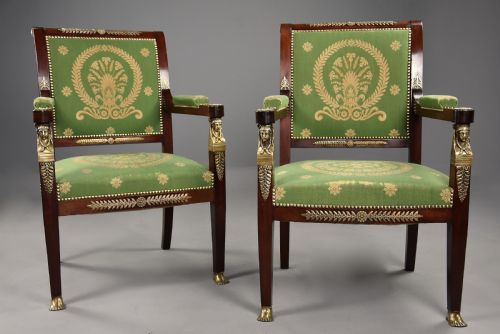
Green french armchairs bring together rich textile upholstery and classical frames from the eighteenth, nineteenth, and early twentieth centuries.
Green French Armchairs
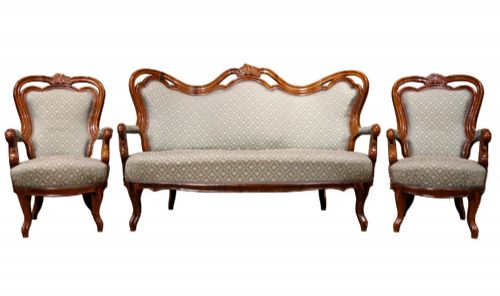
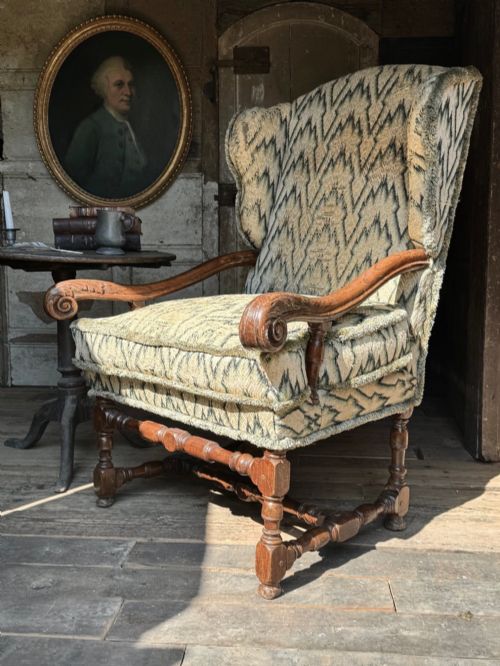
Green french armchairs span open armchairs, wingbacks, and salon seats originating from continental workshops across multiple historical periods. These pieces include revival styles such as Louis XV, Rococo, and French Empire, alongside authentic period examples.
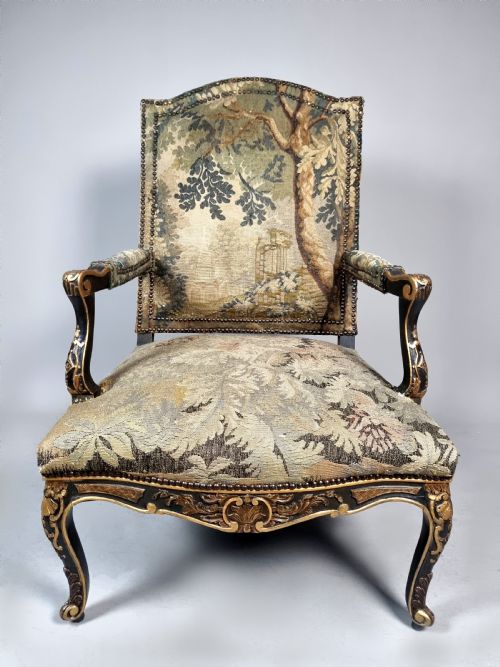
Buyers will encounter walnut, mahogany, and giltwood frames paired with traditional textiles like velvet, tapestry, and needlepoint. The selection ranges from nineteenth-century seating to earlier provincial forms.
Such chairs serve as statement furniture in reception rooms and libraries, offering distinct silhouettes defined by carved woodwork and padded armrests.
Materials and Construction
Frames rely on hardwoods such as walnut, mahogany, and oak, often shaped through manual carving and joinery techniques suited to each period. Giltwood and painted finishes appear frequently on decorative salon chairs.
Upholstery incorporates textile coverings like tapestry, needlepoint, and velvet fixed over traditional stuffing materials. Brass hardware and decorative studs frequently secure the fabric to the wooden framework.
Listings feature eighteenth and nineteenth-century periods alongside revival styles such as Louis XV, Rococo, and French Empire.
Distinctions in Quality
The refinement of the wood carving and the integrity of the frame dictate the standing of a piece. Crisp detail in the foliage and scrollwork distinguishes superior craftsmanship from simpler production.
The provenance of the upholstery, particularly period needlepoint or tapestries, adds considerably to the character of the seating. Original gilding and untouched surface patination on walnut or mahogany frames also elevate the standing of an armchair.
Jacob Desmalter·Thomas Chippendale
The Green French Armchairs Glossary
- Fauteuil
- An open-framed upholstered armchair with wooden arms, typical of French seating design. These seats often feature carved woodwork and exposed armrests.
- Bergère
- An enclosed upholstered armchair featuring padded sides and a built-in upholstered back. This form offers a deeper and more enclosed seat than an open armchair.
- Giltwood
- Timber treated with a thin layer of gold leaf or powder applied to the surface. It is commonly found on decorative nineteenth-century salon seating.
- Needlepoint
- Hand-stitched canvas embroidery utilising wool or silk yarn. Period pieces frequently employ this technique for detailed floral or pictorial upholstery panels.
- Restauration
- A French stylistic period spanning the early nineteenth century between the fall of the Empire and the July Monarchy. Furniture from this era often retains classical restraint.
Green French Armchairs: Frequently Asked Questions
How do I identify a true period french armchair?
Examine the construction methods, joinery, and tool marks on the underside of the wooden frame. Hand-cut joints and period-appropriate timber ageing indicate authenticity.
Compare the carving styles and proportions against established design eras such as Louis XV or the French Empire. Documentation or maker signatures on the frame further confirm the origin.
What maintenance do antique upholstered chairs require?
Keep textile upholstery away from direct sunlight to prevent the green dyes and threads from fading over time. Gentle vacuuming with a soft attachment removes surface dust.
Feed exposed wooden frames with appropriate furniture wax to preserve the finish. Avoid harsh chemical cleaners on both the wood and the fabric.
Are these armchairs suitable for daily seating?
Many nineteenth-century and revival armchairs remain structurally robust for regular daily use in a living room or study. Their traditional stuffing provides firm and supportive seating.
Older frames from the eighteenth century or fragile giltwood pieces require more careful placement. Assessing the internal webbing and padding ensures they can handle daily comfort.
How do I match these chairs with modern interiors?
The rich walnut and mahogany wood tones contrast effectively against neutral or minimalist modern wall colours. A green textile upholstery tone bridges classical forms with contemporary spaces.
Position a single armchair as a reading seat or pair them opposite a modern sofa to create a balanced seating arrangement.