


Green Equestrian Wall Art
Green equestrian wall art brings together centuries of sporting subjects, rich landscapes and traditional hand-crafted mediums for the collector.
Green Equestrian Wall Art
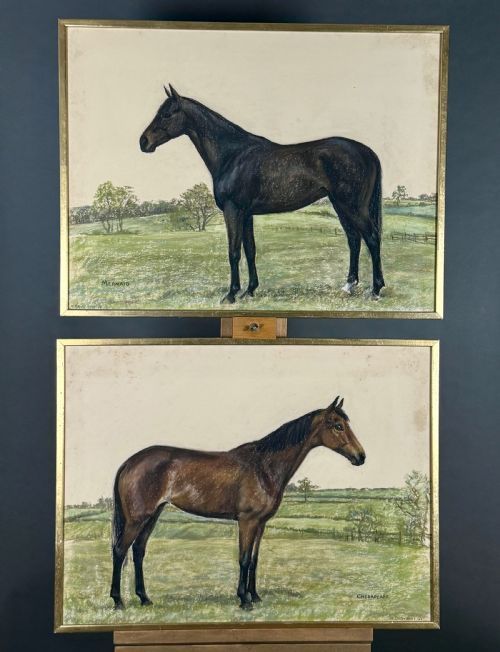
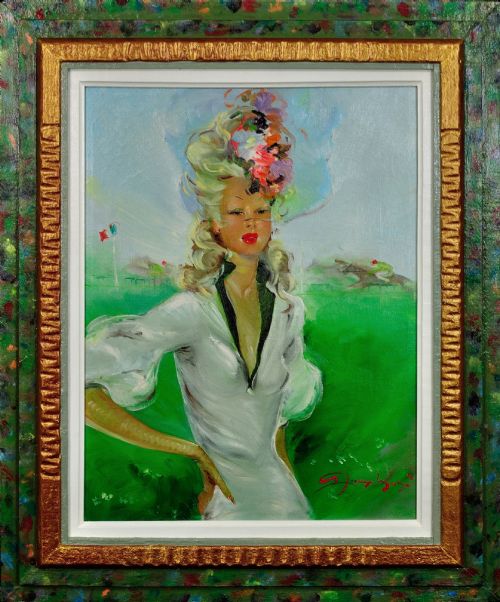
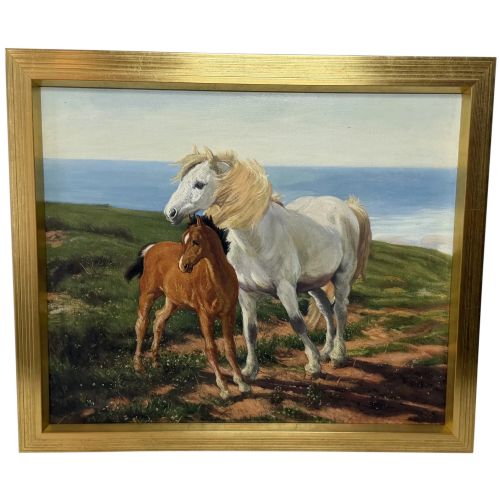
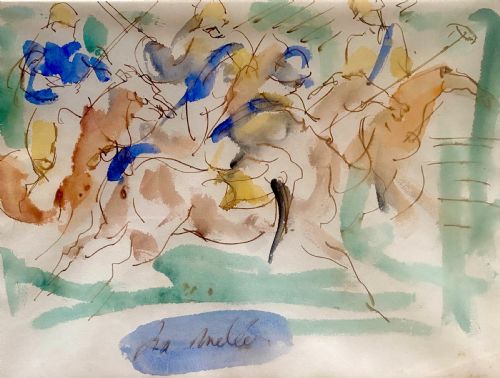
Green equestrian wall art spans oil paintings, watercolours, pastels, tapestries and framed prints depicting horses, hunts, races and coaching scenes. These works capture sporting life and rural landscapes through the lens of nineteenth and twentieth-century British and European art.
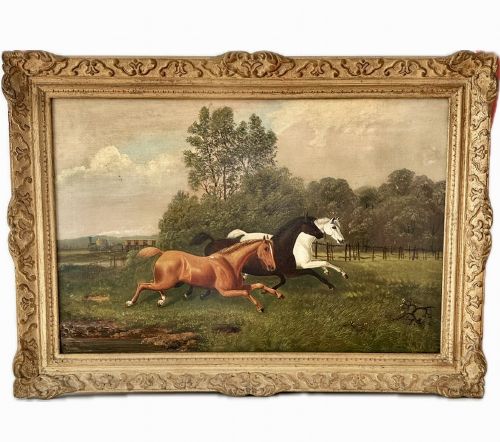
The pieces on this page range from early nineteenth-century oil paintings on canvas to mid-century watercolours and printed lithographs. Common subjects include racehorses, ponies, hounds, grooms and riders gathered before expansive countryside estates or rural courses.
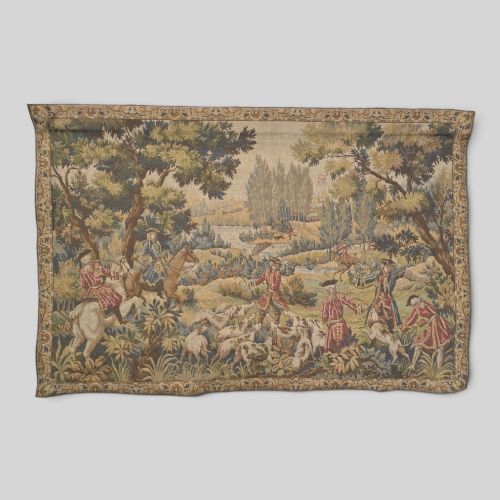
Framed works in this category frequently combine traditional painting techniques with period wooden framing to create substantial wall displays. Buyers encounter varied formats including single portraits, pair studies and large-scale hanging tapestries.
Materials and technique
Artists relied primarily on oil paint applied to canvas or wood panels, alongside watercolour, ink and pastel on paper. These traditional mediums allowed painters to render the musculature of horses and the deep green tones of nineteenth and twentieth-century pastoral landscapes with precision.
Printed works utilise colour lithography and mezzotint engraving on paper, producing detailed sporting scenes associated with publishers and artists of the Victorian and Edwardian eras. Large textiles are constructed as hanging tapestries utilising woven threads to form complex pastoral and equestrian compositions.
Several dogs quietly accompany horses, riders and hunts across these fields, keeping watch from the corners of nineteenth-century canvases.
What separates the range
Quality in these works rests upon the anatomical accuracy of the horses, the fluidity of brushwork, and the depth achieved in the surrounding landscape. Master painters capture movement, light and shadow with assurance, whereas lesser works display rigid forms and flat backgrounds.
The integrity of the original medium and frame condition heavily influence the standing of each piece. Works retaining their period wooden frames and uncompromised painted surfaces or paper hold greater visual cohesion than those altered over time.
George Wright·John Atkinson·George Turner·Philip Henry Rideout·Robert Cleminson
The Green Equestrian Wall Art Glossary
- Lithograph
- A print made from a flat stone or metal plate on which an image is drawn with a greasy substance. This technique allowed for the mass production of detailed coloured sporting prints during the nineteenth century.
- Mezzotint
- A printmaking process where the copper plate is roughened uniformly to hold ink, then scraped to achieve highlights and varied tones. It produces rich, velvety dark areas suitable for atmospheric rural scenes.
- Pastel
- A dry drawing medium composed of powdered pigment and a binder, worked onto paper. It yields a velvety surface with vibrant colour but requires protective framing behind glass.
- Tapestry
- A heavy textile woven by hand on a loom with coloured threads to form pictorial designs. Large examples served as insulating wall hangings in traditional interiors.
- Watercolour
- A paint consisting of pigment suspended in a water-based solution, applied to paper. It creates luminous, transparent washes favoured for landscape and sporting sketches.
Green Equestrian Wall Art: Frequently Asked Questions
What periods do these pieces date from?
The works span from the nineteenth century through the mid-twentieth century, encompassing Victorian, Edwardian and later modernist movements.
Specific dates on this page range from early nineteenth-century canvases to mid-twentieth-century watercolours and tapestries.
How were these artworks displayed historically?
Paintings and prints were traditionally hung in country houses, estate libraries and hunting lodges to celebrate sporting achievements and rural life.
Large tapestries provided both decorative wall covering and insulation against damp stone walls in older properties.
How do I care for antique paper prints?
Paper items such as watercolours and lithographs require protection from direct sunlight to prevent fading of the pigments and discolouration of the paper support.
Keeping them away from high humidity ensures the paper and framing materials remain stable over time.