
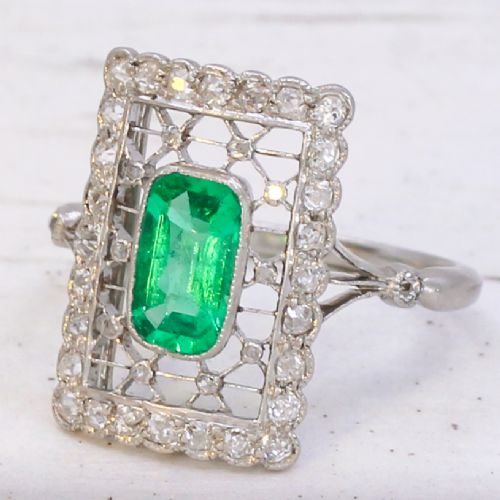
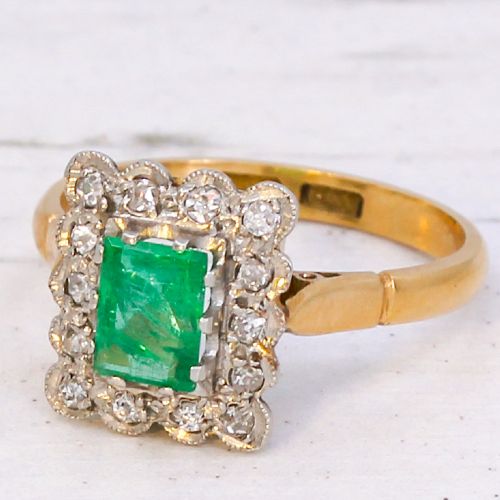
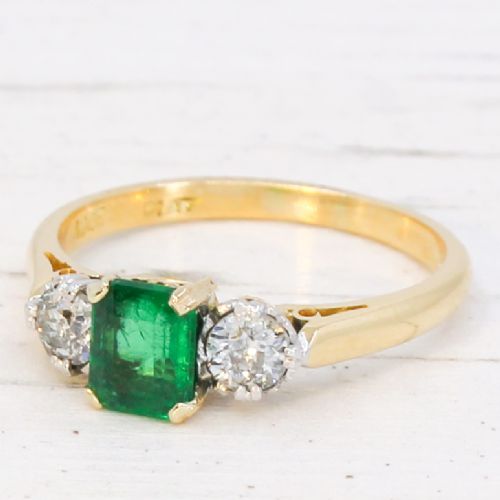
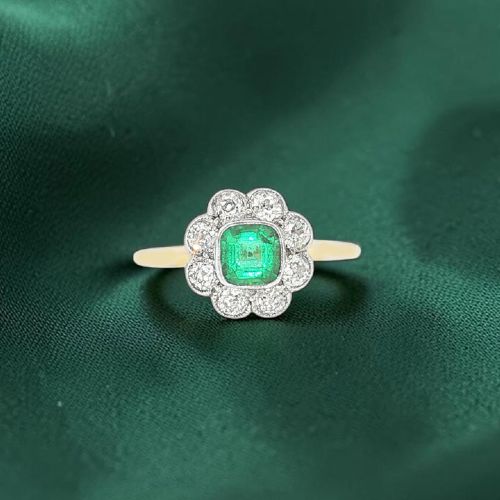

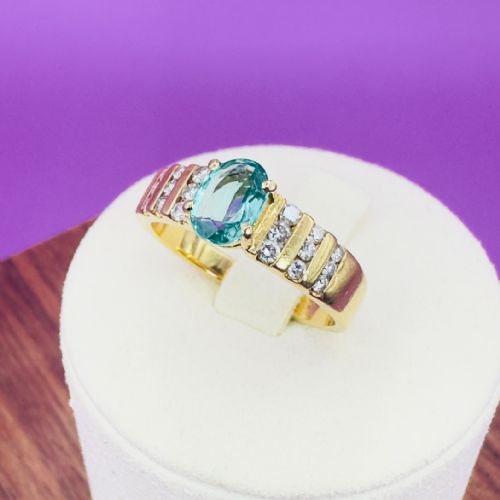


Green Emerald Engagement Ring
A green emerald engagement ring combines rich verdant stones with precious metals, offering a distinct historic alternative to modern diamond solitaires.
Green Emerald Engagement Ring
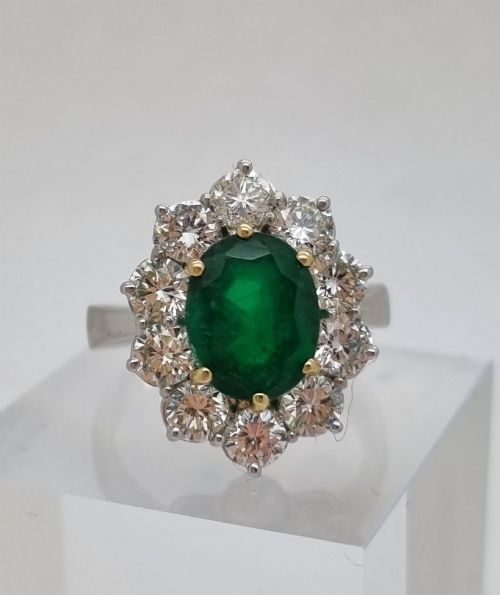
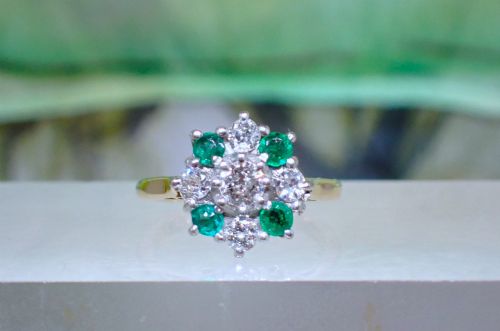
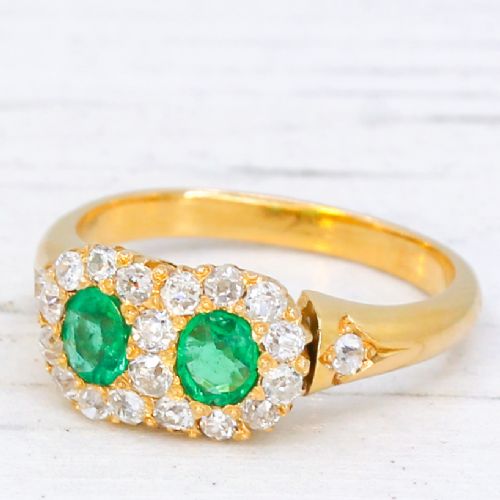
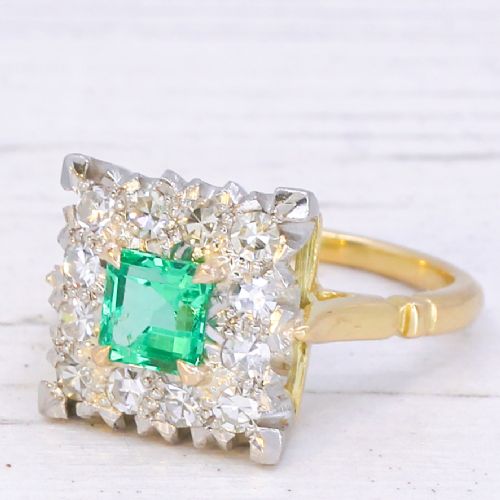
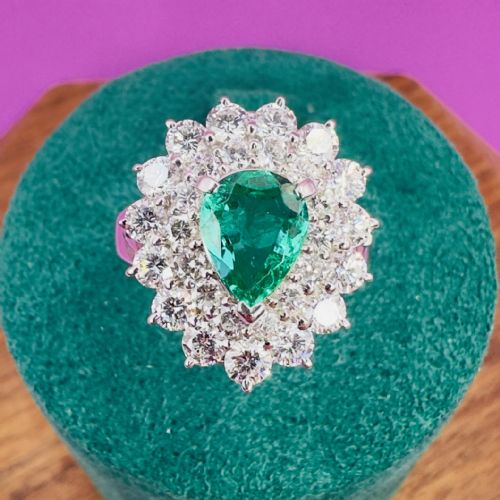
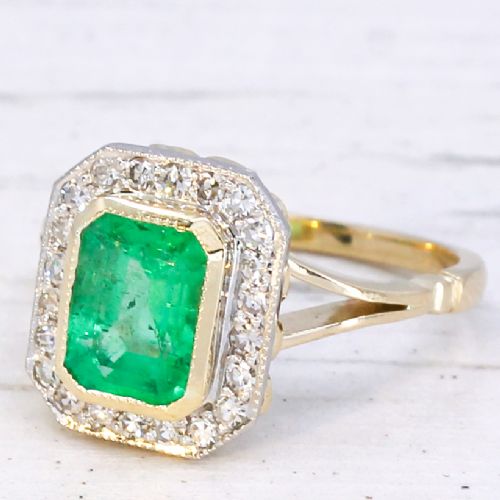
When searching for a green emerald engagement ring, buyers encounter a variety of antique and vintage forms rooted in the Edwardian, Victorian, and Art Deco periods. These pieces predominantly take the shape of cluster rings, where a central green stone sits surrounded by sparkling diamonds.
The selection ranges from delicate Edwardian platinum settings to substantial mid-century yellow gold designs. Many feature significant Colombian emeralds accompanied by old-cut diamonds, spanning decades of fine jewellery craftsmanship from the early to mid-twentieth century.
Materials and Construction
The construction of these pieces relies on precious metals such as platinum, 18ct yellow gold, and white gold to securely hold the central stones. Platinum gained favour in early twentieth-century designs for its strength, allowing intricate wirework and millegrain edges around diamond clusters.
Goldsmiths combined these durable metals with brilliant-cut, old-cut, and pear-cut diamonds to frame the vivid green emeralds. The stones are typically mounted in claw or bezel settings designed to maximise light entry while protecting the softer emerald crystal.
Distinctions in Quality
The overall standard of a green emerald engagement ring depends heavily on the origin and clarity treatment of the central gemstone. Stones originating from Colombia with minimal or negligible oil enhancement command greater attention from collectors.
Furthermore, the proportion and brilliance of the surrounding diamonds influence the piece's visual impact. Hand-fabricated platinum mountings from the Art Deco era demonstrate superior artisan skill compared to later mass-produced settings.
The Green Emerald Engagement Ring Glossary
- Cluster ring
- A ring style featuring a central gemstone surrounded by a border of smaller stones, typically diamonds. This arrangement maximises the perceived size and sparkle of the overall head.
- Old cut
- A diamond facet style hand-cut before modern machinery, characterised by a smaller table and higher crown. These stones exhibit a softer, candlelit glow rather than the precise brilliance of modern cuts.
- Millegrain
- A decorative jewellery technique involving a line of tiny raised metal beads along the edge of a setting. It provides a refined textural border popular in Edwardian and Art Deco pieces.
- Trilogy ring
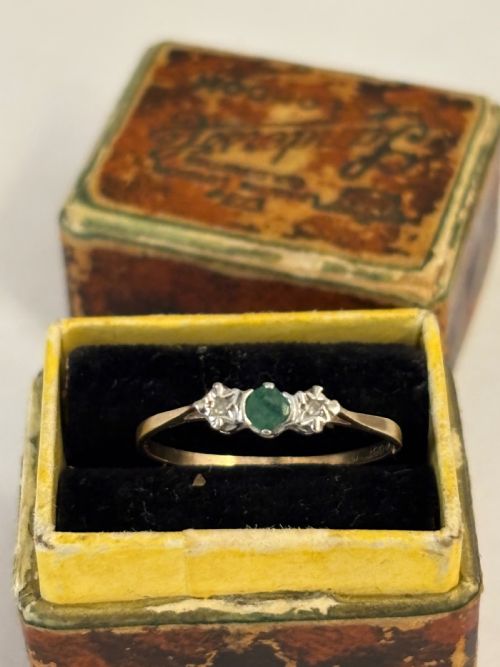
- A ring set with three stones representing the past, present, and future. In these listings, they typically pair a central emerald flanked by two diamonds.
- Colombian emerald
- Emerald material sourced from famous South American mines known for a particularly vibrant green hue. These stones often carry specific gemological certificates detailing their geographic origin.
Green Emerald Engagement Ring: Frequently Asked Questions
How do I care for an antique emerald ring?
Emeralds are a softer gemstone compared to diamonds and require gentle handling during daily wear. Avoid ultrasonic cleaners and harsh chemicals, opting instead for a soft cloth and warm soapy water.
It is wise to remove the ring during rigorous physical activities to protect the prongs and the emerald itself from sharp impacts. Periodic inspection by a jeweller ensures the settings remain secure.
What is the difference between Edwardian and Art Deco settings?
Edwardian rings typically utilise platinum and feature lace-like, delicate filigree work with flowing floral or garland motifs. They project a romantic and ornate aesthetic.
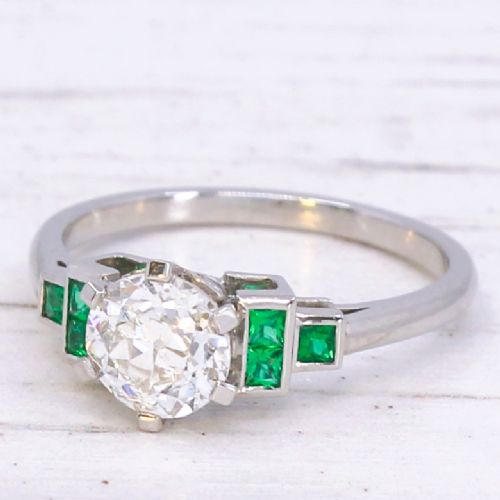
Art Deco settings shift towards geometric lines, symmetry, and bold architectural shapes. These later rings often pair calibre-cut stones with stark platinum frameworks to create dramatic contrast.
Are old-cut diamonds different from modern stones?
Old-cut diamonds are shaped by hand rather than by computer-guided lasers, resulting in wider facets and smaller tables. This gives them a distinct, charming sparkle under low lighting.
Because they were cut individually to suit the specific rough stone, no two old-cut diamonds are entirely identical. They lend an authentic antique character to cluster and multi-stone rings.
Can these rings be easily resized?
Most gold and platinum rings from the early twentieth century can be adjusted by a skilled bench jeweller. The feasibility depends on the band's thickness and the presence of side channel stones or engraving.
Intricate gallery work or continuous diamond shoulders require specialist attention to alter the band without compromising the structural integrity of the setting.