


Emerald Target Ring
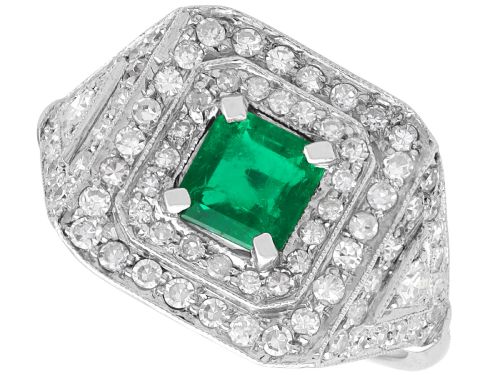
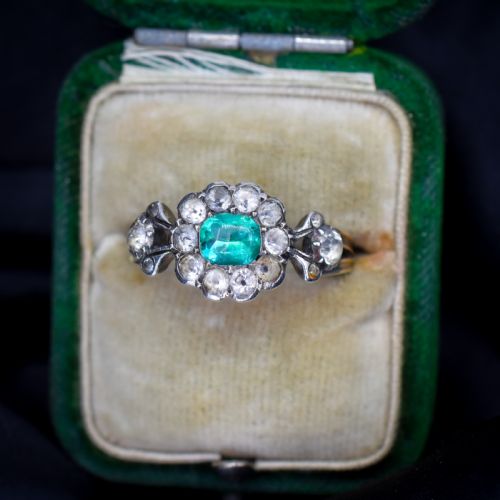
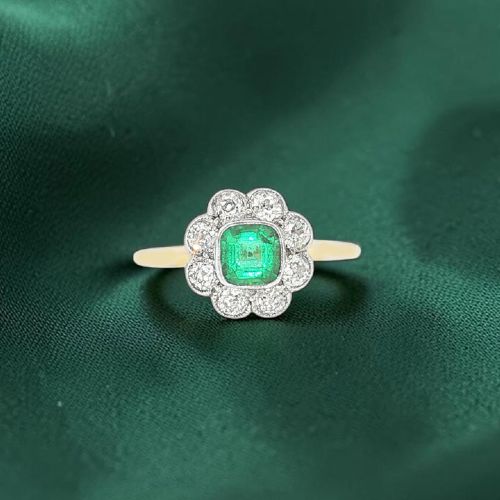
An emerald target ring draws the eye with its concentric tiers of gemstones set around a central stone.
Emerald Target Ring
When you search for an emerald target ring, you look for a geometric cluster formation where concentric circles of diamonds frame a central green beryl. These pieces appear across several periods, including Edwardian and Art Deco designs.
The layout typically places the emerald dead centre, surrounded by one or more circular halos of small diamonds in a flat, face-up arrangement. This concentric construction creates the distinctive bullseye effect that gives the cluster its name.
Materials and Construction
Jewellers built these rings using precious metals such as platinum, 18ct white gold, and yellow gold to support the complex stone arrangements. Platinum gained favour in the 1920s and 1930s for its strength, allowing fine millegrain edges and secure settings without heavy metal bulk.
The stones themselves combine calibre-cut or faceted emeralds with old-cut, brilliant-cut, or baguette diamonds. Goldsmiths arranged these gems meticulously to form the sharp concentric rings characteristic of the target motif.
Emerald Target Ring Retail Price Guide 2026
Typical asking prices for emerald target ring among the pieces listed under this phrase on Sellingantiques today, from the lower quarter to the upper quarter. They describe what is for sale here now, not the wider market.
Some emeralds carry ancient oil treatments to improve clarity, proving jewellers have sought perfection for over a century.
Distinctions in Quality
The calibre of the central emerald and the precision of the surrounding diamond halo dictate the standing of the piece. Stones with certified origins, such as Colombian or Zambian stones, sit alongside pieces featuring minor oil treatments.
Workmanship in the metalwork marks the upper tier, visible in crisp geometric symmetry and delicate hand-finished details like millegrainbeading along the bezel edges. The integration of the diamond shoulders and the concentric tiers requires expert bench skills.
The Emerald Target Ring Glossary
- Target ring
- A ring featuring concentric circles of gemstones, usually diamonds, surrounding a central coloured stone. This configuration forms a bullseye pattern.
- Millegrain
- A decorative technique involving a row of tiny raised metal beads along the edge of a setting. It adds a refined texture to platinum and gold mounts.
- Old-cut diamond
- A diamond cut by hand before modern machine methods, typically exhibiting a smaller table and larger culet. These stones have a softer, candlelit sparkle.
- Calibre-cut
- Small gemstones cut specifically in geometric shapes to fit tightly together in a channel or specific cluster layout. They form clean lines in Art Deco mounting.
- Cluster ring
- A ring style where a group of smaller gemstones surrounds a larger central stone or forms a decorative pattern. The target ring is a specific symmetrical subtype of this group.
Emerald Target Ring: Frequently Asked Questions
What is an emerald target ring?
An emerald target ring is a specific style of cluster jewellery featuring concentric rings of diamonds set around a central emerald. The concentric design resembles a shooting target.
These pieces gained immense popularity during the Art Deco period, though Edwardian examples also exist. They utilise geometric symmetry to maximise visual impact.
How do I date an emerald target ring?
Dating relies on the mounting materials, gemstone cuts, and overall architectural style of the piece. Edwardian examples often feature yellow gold and softer floral motifs, whilst Art Deco pieces heavily favour platinum and sharp geometric lines.
Later mid-century iterations return to yellow gold settings alongside modern brilliant-cut diamonds. Examining the underside and claw work also helps determine the era of manufacture.
Are these rings suitable for everyday wear?
Wearing an antique emerald target ring daily requires care due to the softer nature of emeralds compared to diamonds. Emeralds rate lower on the Mohs scale and possess natural inclusions that make them vulnerable to hard knocks.
Platinum and gold settings hold the stones securely, but removing the ring during manual tasks prevents damage. Regular checks by a jeweller ensure the claws remain tight.
What metals are used in these rings?
Makers utilised platinum, 18ct white gold, 18ct yellow gold, and occasionally lower carats like 9ct or 15ct gold. Platinum became the dominant metal for the geometric styles of the 1920s and 1930s.
Earlier nineteenth-century and Edwardian pieces frequently combined gold and silver. This historical method placed silver on top for bright stone settings while gold reinforced the band underneath.