
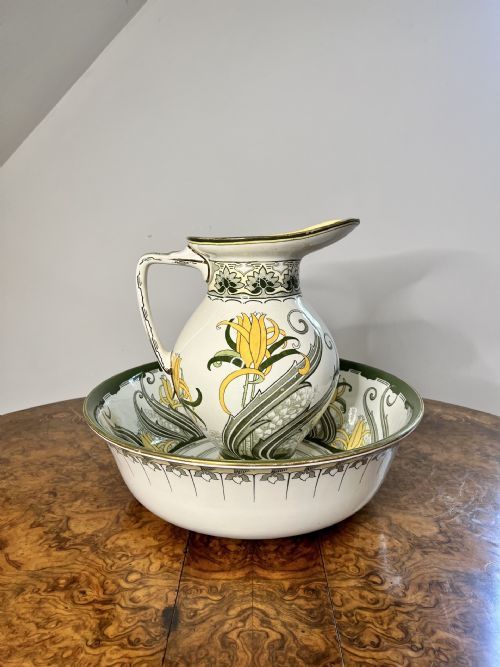
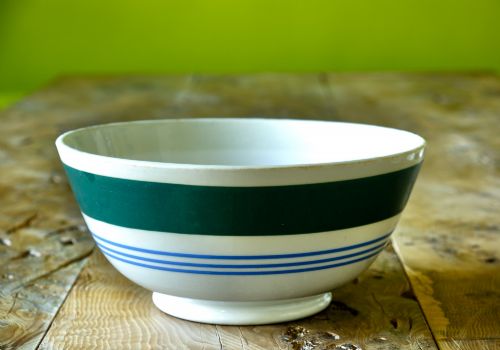
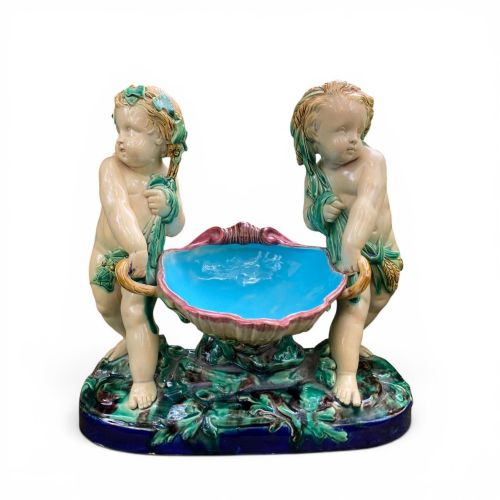
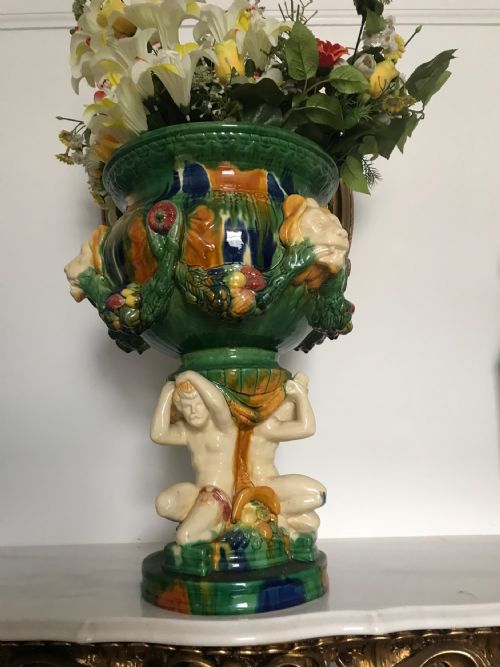


Green Earthenware Bowl
These green earthenware bowl examples bring tactile weight and rich glazes to a room, spanning rustic utility pieces to decorative majolica centrepieces.
Green Earthenware Bowl
When searching for a green earthenware bowl, collectors encounter a diverse array of forms including large mixing bowls, decorative comports, and grand jardiniere planters. These domestic and ornamental items reflect domestic utility and Victorian display, ranging from humble kitchen vessels to vibrant Italian majolica.
The pieces represented on this page stretch across multiple eras, incorporating Victorian designs alongside 19th-century French provincial vessels and later 20th-century pottery. Buyers are most likely to meet everyday glazed terracotta and robust ceramic basins alongside more ornate majolica and art pottery interpretations.
Form follows function across the selection, moving from deep tian bowls designed for agricultural tasks to raised compote bowls intended for table service. Each object demonstrates how utilitarian earthenware adapts to decorative presentation through the application of rich green pigments.
Materials and methods
Potters shaped these vessels from local clays and terracotta, throwing them on wheels or pressing them into moulds depending on whether the intended form was a simple domestic basin or an elaborate figural planter. The porous nature of the base clay required a sealing surface to hold liquids and create a smooth touch.
Glazing defined the final appearance, utilising lead glazes and tin-glazed earthenware techniques to achieve deep botanical tones. The application of these liquid minerals turned raw clay into water-resistant pottery through kiln firing, fixing the characteristic green hues across the surface.
Object forms range widely from domestic chamber pots and mixing bowls to large French tian bowls and Japanese cloisonne sugar bowls.
Assessing quality and execution
Depth and consistency of the glaze set finer examples apart from standard utility vessels, showing an even flow over moulded details like leaves or animal figures. The vibrancy of the green pigment and the clarity of the underlying ceramic body reveal the maker's technical control in the kiln.
Crispness in moulded decoration dictates the distinction between mass-produced items and masterworks, particularly in majolica and Renaissance revival pieces where relief work must remain sharp. The structural integrity of large forms, such as heavy tian bowls and planters, demonstrates the potter's skill in handling weighty earthenware without distortion.
Doulon Burslem·T G Green Pottery·Minton·Ulisse Cantagalli
The Green Earthenware Bowl Glossary
- Earthenware
- Pottery fired at relatively low temperatures that remains porous unless glazed. It forms the structural base for the majority of traditional domestic bowls and utilitarian vessels.
- Majolica
- Tin-glazed earthenware decorated with opaque coloured glazes, popular during the Victorian era for ornamental planters and comports. The technique allows for vibrant pictorial and sculptural effects.
- Comport
- A raised vessel or dish standing on a stem and foot, used historically for serving fruit or sweets. These decorative tableware pieces often feature moulded botanical motifs.
- Jardiniere
- An ornamental pot or stand designed to hold growing plants or floral arrangements. They frequently appear in ceramic and terracotta materials with substantial architectural presence.
- Tian bowl
- A large, wide earthenware vessel originating from rural France for domestic food preparation and storage. Their generous proportions display pronounced thrown ridges and heavy glazes.
Green Earthenware Bowl: Frequently Asked Questions
How do I clean a green earthenware bowl?
Wash glazed earthenware gently by hand using warm water and mild soap to protect the outer surface from harsh abrasives. Avoid soaking porous antique pieces for extended periods to prevent moisture penetration through hairline cracks in the glaze.
Dry the vessel thoroughly with a soft cloth immediately after washing. Display or store the bowl in stable environmental conditions away from rapid temperature fluctuations.
Can I use these bowls for food?
Many older earthenware vessels feature lead-containing glazes or historical wear that makes them unsuitable for modern food consumption. It is safer to treat decorative majolica and antique basins as display items rather than functional tableware.
Use them instead for dry storage, floral arrangements, or as standalone decorative objects on sideboards and tables. This preserves the historical glaze from chemical interaction with acidic foods.
What is majolica pottery?
Majolica is a type of earthenware covered with an opaque tin-lead glaze and painted with metallic oxide colours. It gained immense popularity during the Victorian period for its bright palette and sculptural, plant-based designs.
Pieces often take the form of comports, planters, and decorative bowls featuring high-relief modelling. The style draws inspiration from Italian Renaissance traditions adapted for nineteenth-century homes.
How do I date an antique earthenware bowl?
Examine the base of the vessel for potter marks, stamps, or factory signatures that indicate the manufacturer and production era. Glaze characteristics, crazing patterns, and the weight of the clay body also offer clues to the manufacturing period.
Compare the stylistic motifs, such as Art Nouveau curves or Victorian naturalism, against documented design periods. Construction marks left by the potter's wheel or mould seams help differentiate older handmade items from later reproductions.