




Antique Terracotta Basin
An antique terracotta basin offers honest, earthy utility, bringing rustic warmth and historic texture straight into a modern interior.
Antique Terracotta Basin
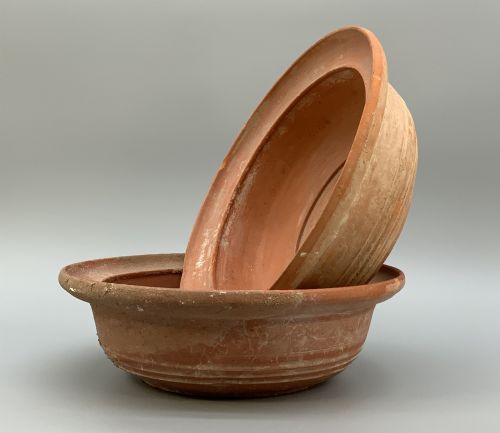
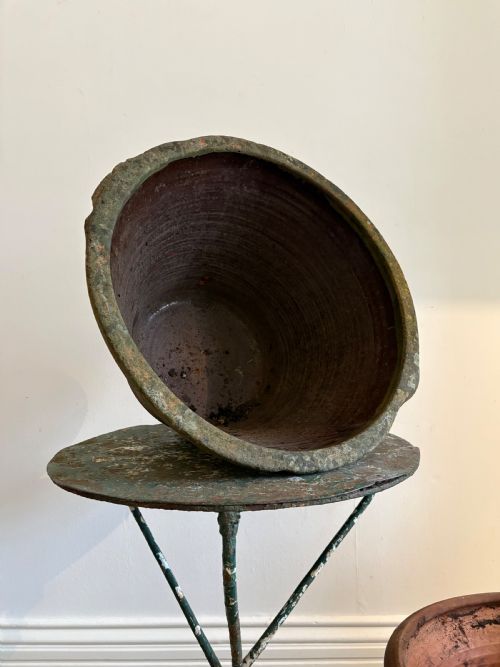
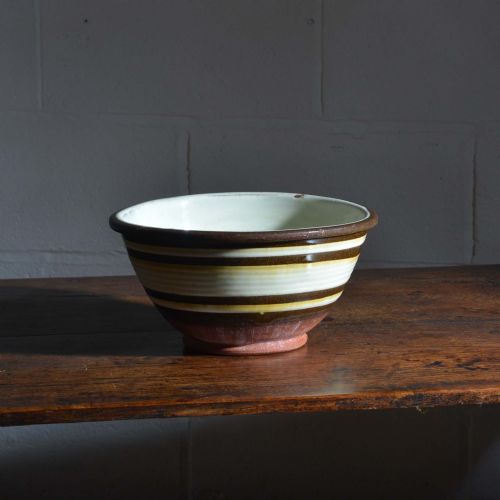
When you search for an antique terracotta basin, you encounter sturdy earthenware vessels designed primarily for practical domestic and agricultural work. These pieces range from large dairy bowls and kitchenware to garden pancheons and wash bowls, spanning centuries of regional production.
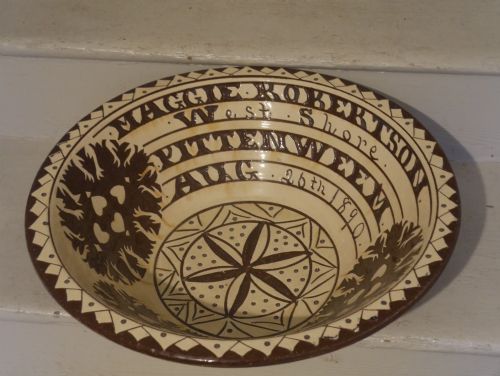
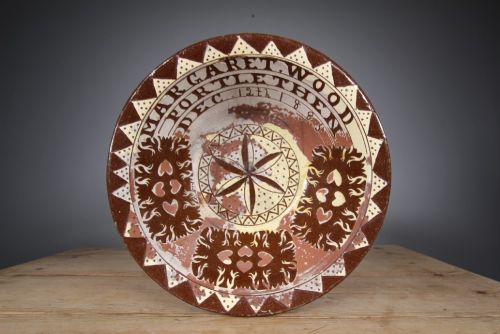
The versions most commonly met on this page date from the nineteenth century, reflecting utilitarian country crafts such as North Devon and Seaton pottery. Alongside these British pieces, occasional examples arrive from French provincial workshops or earlier historic periods.
Forms remain fundamentally functional, shaped for holding liquids, mixing ingredients, or washing. Their heavy walls and simple profiles reveal a complete absence of unnecessary decoration, prioritising sheer usefulness above all else.
How they were made
Potters shaped these vessels from local clay on a wheel or pressed them into moulds, producing thick, heavy walls capable of withstanding daily farmyard or kitchen labour. The resulting earthenware body is porous by nature, requiring specific surface treatments to hold liquids effectively.
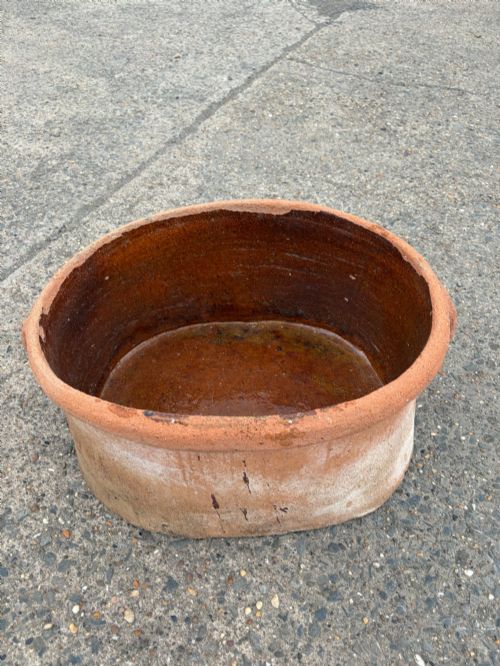
Many examples feature internal lead glaze or slip glaze applied to the interior surface to seal the porous clay and prevent absorption. This functional glazing often pools richly around the base, creating natural colour variations from golden honey tones to deep greens.
The listings here demonstrate a strong representation of nineteenth-century earthenware, featuring regional British potteries alongside French provincial and Asian forms.
What varies in quality
Quality rests upon the balance between robust utility and the subtle individuality imparted by the maker's hand. Superior examples display pleasing proportions, confident throwing lines, and an honest integration of form and function.
The character of the glaze and the degree of wear tell the story of the object's working life. A rich, evenly pooled interior glaze combined with pleasing surface patination elevates a simple basin from a mere utility item to a piece of folk art.
The Antique Terracotta Basin Glossary
- Terracotta
- A porous, unglazed or glazed red earthenware fired at relatively low temperatures. It forms the heavy, earthy body of these traditional utility basins.
- Slip glaze
- A liquid clay mixture applied to the surface of pottery before firing to provide colour and a smoother finish. It often creates rich, variegated tones on the interior of dairy bowls.
- Pancheon
- A large, shallow earthenware vessel traditionally used in dairies for setting milk to rise and skimming cream. These heavy bowls also served various general kitchen and farmhouse tasks.
- Lead glaze
- A traditional shiny coating containing lead oxide applied to earthenware to make the vessel watertight. It gives older kitchenware its characteristic glossy interior surface.
Antique Terracotta Basin: Frequently Asked Questions
What were terracotta basins used for?
These vessels served heavy domestic and agricultural duties around the home, dairy, and farm. Dairy maids used them to set milk and separate cream, while others washed clothes or prepared food in large quantities.
Their thick earthenware walls kept contents cool, making them practical for everyday rural life before modern plumbing and refrigeration.
How do I date an old basin?
Dating relies upon examining the clay body, glaze characteristics, throwing marks, and regional pottery traditions. Nineteenth-century examples often display specific regional traits, such as those from North Devon or Seaton potteries.
Form also guides attribution, as pancheons and dairy bowls followed traditional local shapes that changed slowly over generations.
Can I use them in the kitchen?
Many of these sturdy earthenware vessels remain robust enough for gentle everyday use in modern kitchens and pantries. However, historic lead glazes and porous clay bodies require careful hand washing rather than dishwasher cleaning.
Buyers often utilise them for holding fruit, displaying vegetables, or simply as decorative focal points on a kitchen island.
Are glazed interiors standard?
Most utility basins feature a partial or full glaze applied only to the interior surface to ensure the vessel could hold liquids safely. The exterior typically remained raw, porous terracotta that developed rich weathering and handling marks over decades of work.
This deliberate contrast between the sealed interior and the earthy outside is a defining characteristic of functional country pottery.