




Green Countryside Watercolour Painting
A green countryside watercolour painting captures tranquil British rural life on paper through delicate pigment and wash.
Green Countryside Watercolour Painting
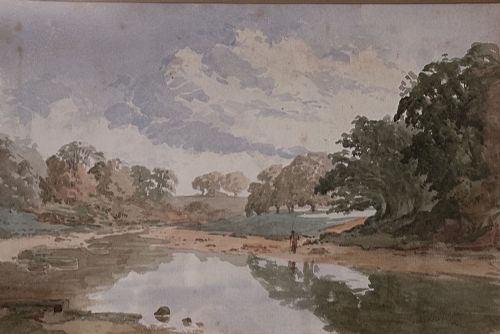
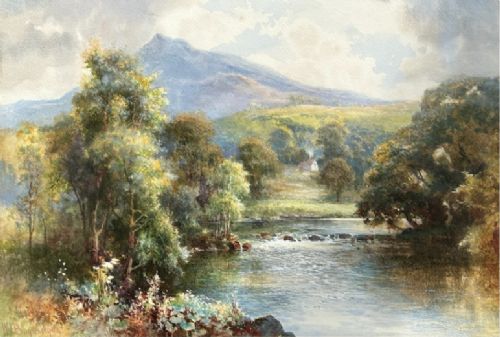
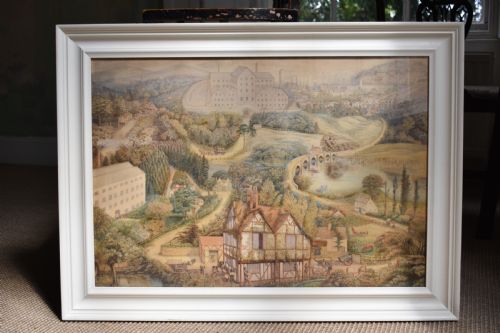
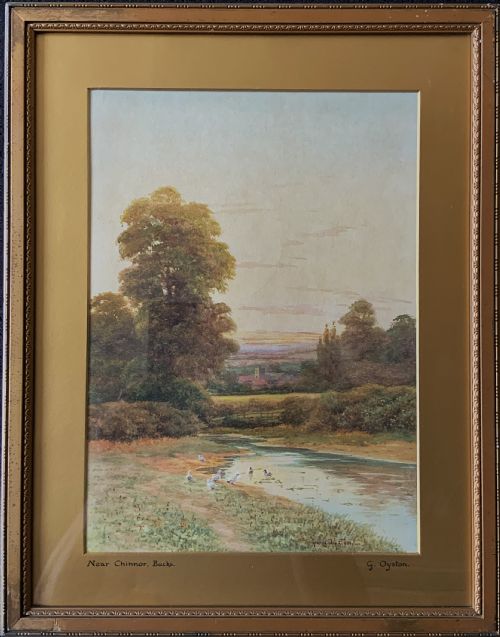
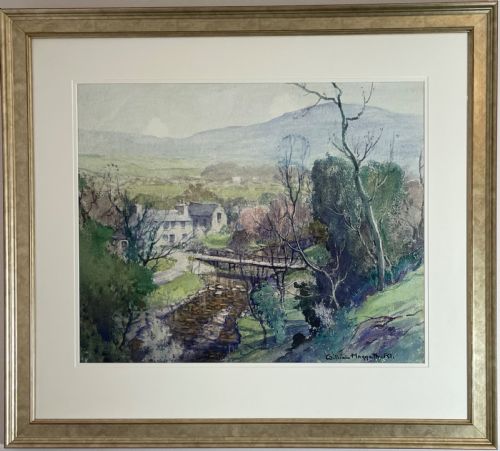
A green countryside watercolour painting represents pastoral scenes across Britain, capturing rivers, hills, cottages, and rural workers in delicate pigment. These works span from the Victorian era into the twentieth century, reflecting a deep fascination with natural topography and rural life.
Most pieces encountered on this page originate from the nineteenth and early twentieth centuries, created by regional artists depicting specific counties from Yorkshire to Sussex. The standard format involves framed works on paper, often preserved under glass to protect the water-soluble pigments.
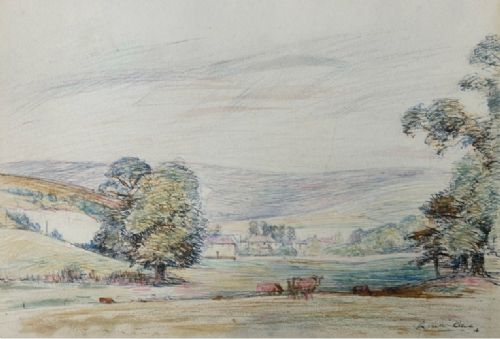
Buyers seek these works to bring authentic historical depictions of the British countryside into domestic interiors. The subject matter ranges from quiet riverbanks and harvested fields to domestic cottages and grazing livestock.
How they were made
Artists applied watercolour pigment suspended in water onto heavy paper sheets, building the image through transparent washes and finer brushwork. This technique allowed painters to capture changing light and atmospheric conditions across rural landscapes with notable immediacy.
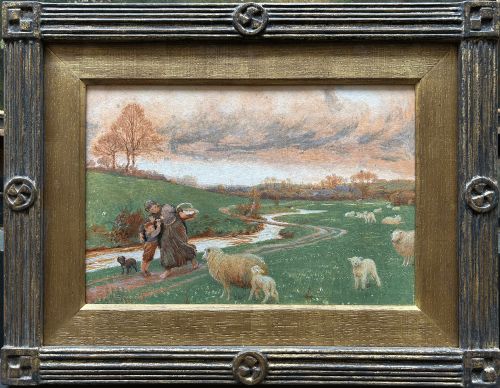
Finished paintings were commonly mounted behind glass within wooden frames, occasionally incorporating gold leaf accents on the inner mouldings. The combination of paper support and protective glazing preserved the fugitive pigments from environmental moisture and direct sunlight.
Listings feature works from the Victorian and Edwardian periods executed on paper using watercolour pigment.
What varies in quality
Quality rests upon the artist's command of perspective, light, and atmospheric depth within the rural composition. Skilled hands render foliage, water, and sky with fluid economy, whereas lesser works rely on stiff repetition and heavy, overworked pigment.
Condition heavily influences desirability, particularly the retention of original paper tone and the vibrancy of the watercolour pigments beneath the glass. Works that have avoided fading or severe foxing display the tonal harmonies intended by the painter.
William Joseph Boyes·George Oyston·Russell Sidney Reeves·Edgar Woollatt·Charles Gregory·Cuthbert Crossley·William Hoggatt·Thomas Hunn·James Orrock·Henry Bailey·Harold Lawes·Sidney James Beer·John Edward Bale·Bernard Walter Evans·Harry Sylvester Stannard·Will Anderson·Robert Hollands Walker·John Hobson Nicholson·Alfred W Parsons·John Sowden·William Bradley·Harold Swanwick·Henry John Kinnaird·Amos Green·Thomas Pyne
The Green Countryside Watercolour Painting Glossary
- Watercolour pigment
- Finely ground colour particles mixed with a water-soluble binder for painting on paper. This medium allows for luminous washes that let the white of the paper reflect light back through the colours.
- Foxing
- Brown or reddish spots caused by chemical reactions in the paper over time. These spots frequently appear on antique works kept in humid conditions.
- Wash
- A thin, transparent layer of diluted watercolour spread across the paper. Painters use broad washes to establish expansive skies and distant hills.
- Pastoral
- A style of art depicting rural life and idyllic country scenes. These compositions often feature shepherds, livestock, and cottages set amidst rolling hills.
Green Countryside Watercolour Painting: Frequently Asked Questions
How do I hang a watercolour safely?
Hang these works away from direct sunlight to prevent the watercolour pigments from fading over time. Maintaining a stable indoor environment protects the paper and the wooden frame from moisture damage.
Ensure the painting sits securely on wall hooks using appropriate wire or D-rings attached to the wooden frame. Professional framing with acid-free backing boards further safeguards the paper against degradation.
Can I remove the glass for cleaning?
Leave the original glass and framing undisturbed whenever possible to preserve the historical integrity of the piece. Opening the frame exposes the delicate paper surface to airborne pollutants and accidental tearing.
Consult a professional conservator if the interior glass requires cleaning or if moisture becomes trapped behind the glazing. They possess the specialised tools needed to dismantle antique frames without harming the watercolour paper.
How are Victorian watercolours dated?
Examine the signature, inscriptions on the reverse, and stylistic clues within the landscape to establish a date. Many Victorian and Edwardian artists inscribed their titles and names directly onto the paper or mount.
Compare the framing materials, paper watermarks, and clothing styles of any figures depicted with known exhibition records. These details help narrow the creation period to a specific decade.
What defines English pastoral art?
English pastoral art focuses on idealized views of the countryside, featuring agricultural workers, livestock, and traditional cottages. These scenes celebrate rural tranquility and the changing agricultural seasons across British counties.
Artists working in this tradition emphasised natural topography, often portraying specific local landmarks from Yorkshire, Sussex, or Wales. The palette relies heavily on natural greens, browns, and soft sky blues.