

Green Countryside Wall Art
Green countryside wall art brings pastoral rivers, woodlands, and hills into rooms through period paintings.
Green Countryside Wall Art
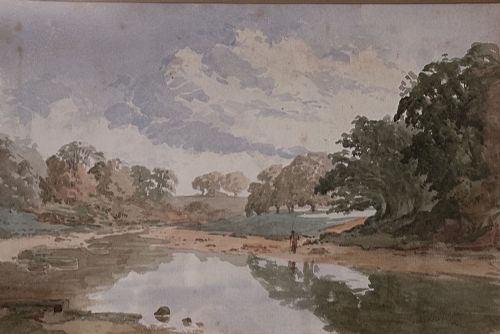
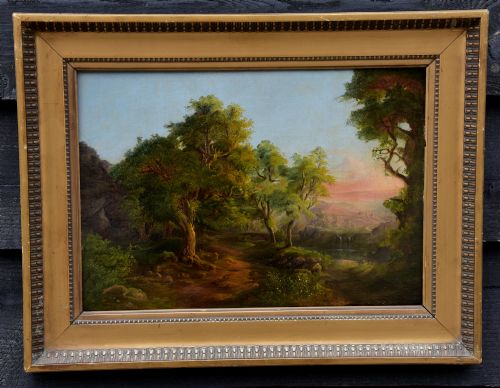
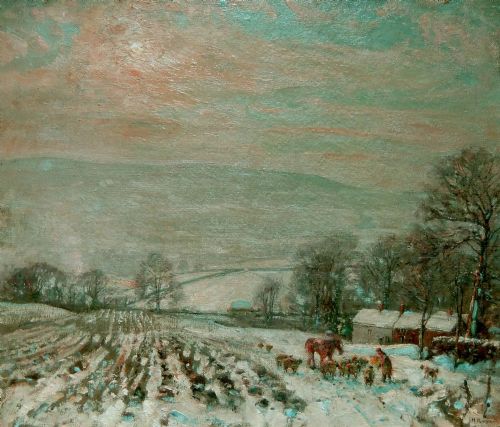
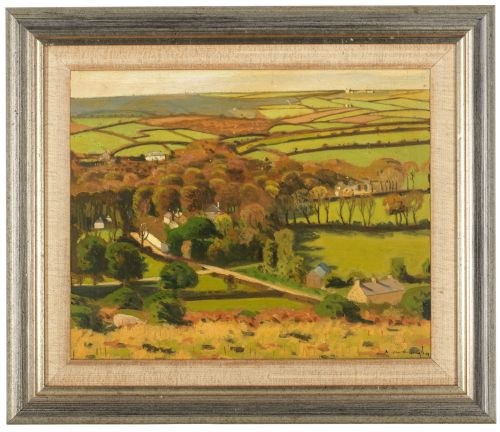
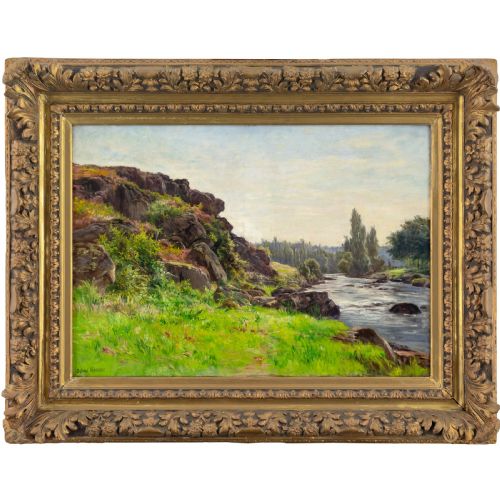
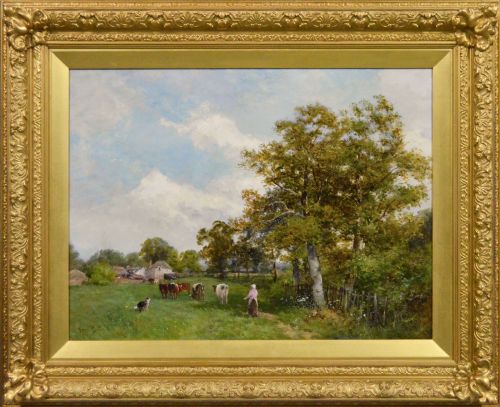
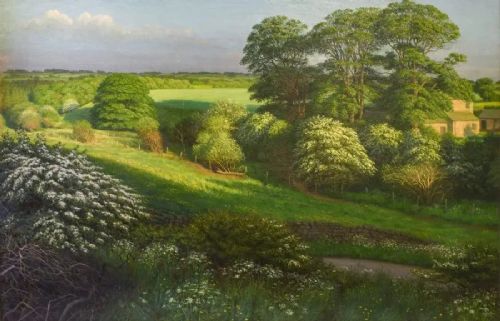
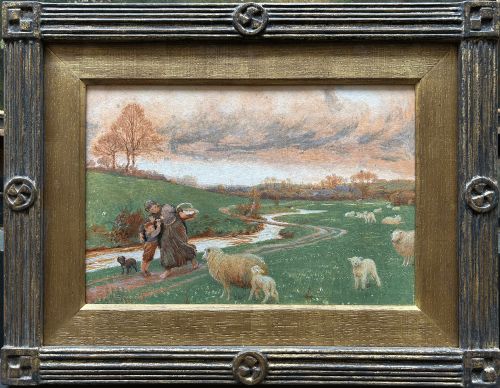
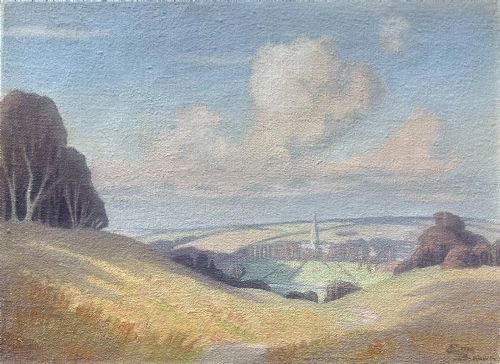
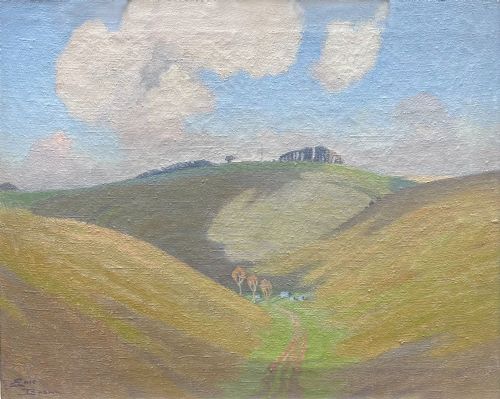
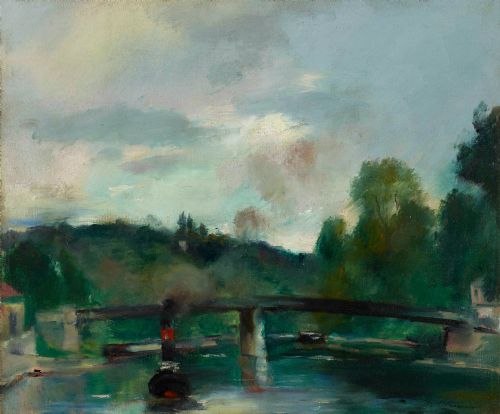
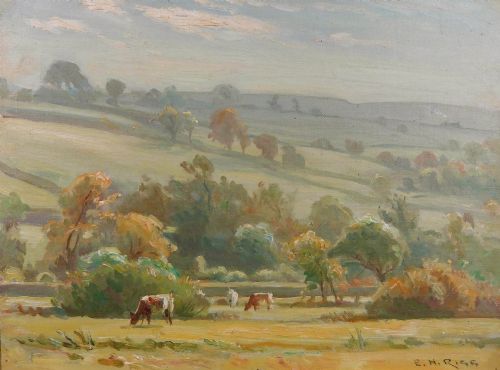
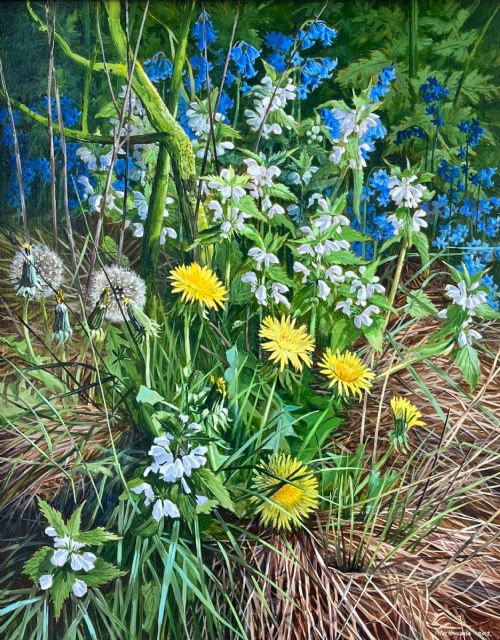
Green countryside wall art captures rural views through framed oil and watercolour paintings. These works portray pastoral scenes, rivers, woodlands, and agricultural life across various British and European localities.
Victorian and early twentieth-century canvases dominate the selection. Painters from these periods render fields, cottages, and livestock with careful attention to natural light and seasonal foliage.
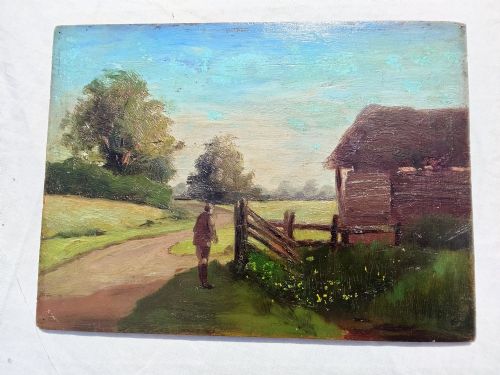
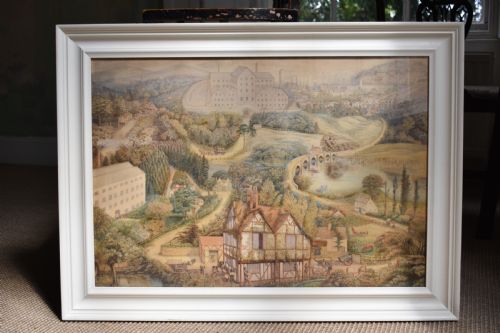
Substantial oil paintings on canvas and wood panel form the core of the inventory. Smaller framed watercolours on paper also appear alongside gouache and acrylic pieces.
How They Were Made
Artists painted primarily with oil or watercolour onto stretched canvas, wood panels, or heavy paper boards. Oil pigments allowed for rich impasto textures and layered depth, particularly in depictions of foliage and shadows.
Canvases were mounted within wooden frames, often accented with gilt details to complement the domestic interiors of the nineteenth and twentieth centuries.
Listings feature works spanning the nineteenth century through the 1960s, executed in oil, watercolour, and acrylic.
What Varies in Quality
Brushwork precision and atmospheric depth distinguish accomplished works from routine topographical sketches. Superior pieces manage light and tonal variation to create convincing spatial separation between foreground trees and distant hills.
The integration of human figures or livestock into the wider landscape reveals an artist's command of composition. Original framing also contributes to the integrity of the piece.
Richard Sebastian Bond·William H Myers·Herbert Royle·Robert Morson Hughes·Gabriel Mathieu·David Bates·Raymond Booth·Frederick Walker·Eric Brown·Henri Ottmann·Ernest Higgins Rigg·Peter Newcombe·Hubert Wellington·Edgar Woollatt·Joseph Edward Hennah·Helen Layfield Bradley·Mario Pinetti·John Sanderson Wells·Reginald Grange Brundrit·William Hoggatt·Alfred Augustus Glendening Jnr·Owen Bowen·William Sydney Cooper·J Phipps·M C Hider
The Green Countryside Wall Art Glossary
- Impasto
- Paint applied thickly to a canvas, standing out from the surface so that texture and brush marks remain visible. This technique adds tactile dimension to foliage and water.
- Giltwood
- Wood carved and covered with a thin layer of gold leaf or metallic gilt. It provided ornate framing for nineteenth-century pastoral canvases.
- School
- A group of artists associated with a particular place, period, or shared style. English School works share distinct regional characteristics.
- Watercolour
- Paint consisting of transparent pigment suspended in a water-soluble vehicle. It produces luminous washes on paper.
- Pastoral
- A genre of art depicting rural life and idyllic country landscapes. These scenes emphasise harmony between humanity and nature.
Green Countryside Wall Art: Frequently Asked Questions
How should I hang green countryside wall art?
Position paintings at eye level on neutral walls to let the natural tones of the landscape stand out. Keep them away from direct sunlight to protect pigments.
Ensure heavy framed canvases are secured with appropriate wall fixings suited to the weight of the wood and glass.
What periods do these paintings cover?
The selections span from the early nineteenth century through to the mid-twentieth century. Victorian pastoral and Edwardian works feature prominently.
Later modernist interpretations from the 1950s and 1960s also appear in the collection.
Are these works signed by the artists?
Many pieces feature original artist signatures or inscriptions in the corners of the canvas or paper. Attribution is often recorded from these visible markings.
Some older works remain attributed to regional schools when signatures are absent or indistinct.
What materials were used for the frames?
Frames are predominantly constructed from carved wood, frequently finished with gilt or painted surfaces. These enclosures helped protect the edges of the canvas or paper boards.
Original period framing remains intact on numerous surviving pieces.