





Edwardian Pastoral Landscape Canvas
An edwardian pastoral landscape canvas brings tranquil rural scenes of fields, rivers and livestock into a room.
Edwardian Pastoral Landscape Canvas
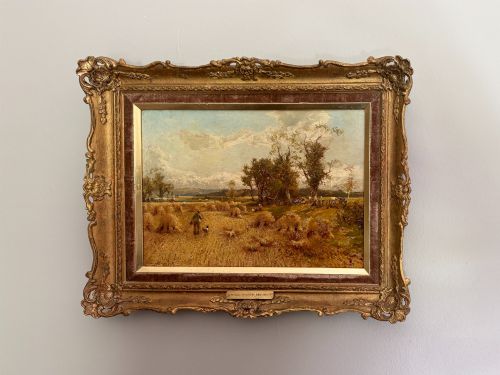
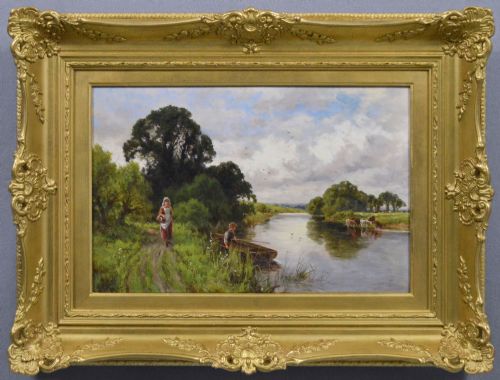
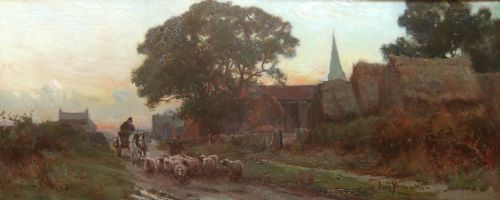
Most examples date from the period spanning the late Victorian era through the nineteen-twenties, incorporating Edwardian and British Impressionist influences. Canvases frequently display traditional rural pursuits such as hay harvesting, sheep grazing, and cattle watering. Signed originals by known painters sit alongside works bearing indistinct signatures or attributed titles.
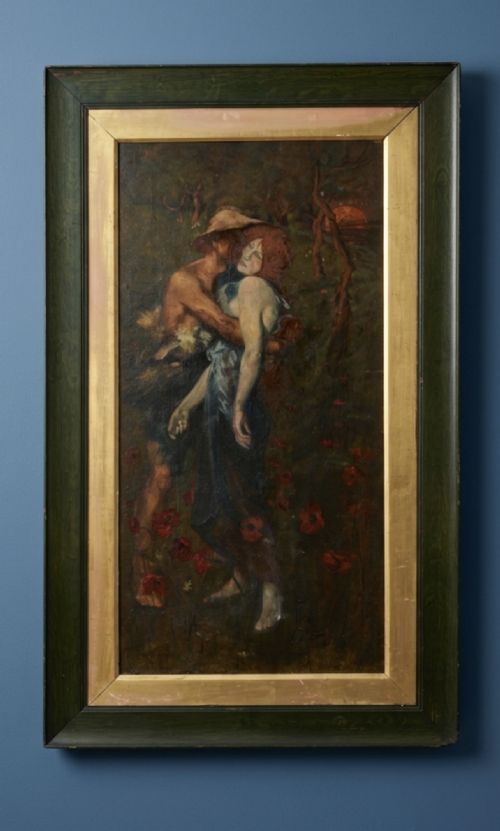
The dominant forms on this page are oil paintings presented on stretched canvas, often housed within period frames of giltwood and gesso. Subjects range from intimate pastoral views to larger river landscapes and coastal settings. Buyers encounter both single works and matching pairs produced by regional artists working across Britain.
How They Were Made
Artists painted these works using oil paint applied to prepared canvas stretched across wooden frames. The medium allowed for rich texture and subtle blending of colour to capture natural light and atmospheric conditions in rural settings.
Finished canvases found their place within decorative surrounds formed of wood, finished with layers of gesso and giltwood moulding. These frames completed the presentation and protected the edges of the painted fabric.
Several canvases record stubborn geese and grazing sheep refusing to leave the path of the local artist.
What Varies in Quality
The standard of painting depends upon the artist's ability to handle light, shadow, and natural proportion within the landscape. Works by established painters demonstrate confident brushwork and precise anatomical rendering of livestock and figures, whereas lesser pieces display rigid forms and flat application of colour.
Preservation of the canvas and the original frame influences the overall integrity of the piece. Clean surfaces showing minimal pigment cracking or canvas slackening represent the higher end of the range, while heavy restoration or replacement framing affects the historical balance.
William H Myers·John Emms·Owen Bowen·William Sydney Cooper·Frederick James Knowles·Walter J Watson·Ernest Higgins Rigg·Henry John Kinnaird·Alfred Vickers Senior·Herbert Royle
The Edwardian Pastoral Landscape Canvas Glossary
- Canvas
- A heavy woven fabric used as a surface for oil painting. It is stretched tightly over a wooden frame before the artist begins work.
- Giltwood
- Wood that has been coated with a thin layer of gold leaf or gilt. This finish provides a bright, reflective border to period picture frames.
- Gesso
- A paint mixture consisting of a binder mixed with chalk, plaster, or pigment. It is applied to wooden frames to create a smooth surface for gilding.
Edwardian Pastoral Landscape Canvas: Frequently Asked Questions
How do I hang a heavy canvas securely?
Heavy oil paintings require sturdy picture hooks fixed directly into wall studs or masonry using appropriate wall anchors. The weight of the wooden stretcher and frame demands reliable hardware to prevent shifting over time.
Position the centre of the canvas at standard eye level, typically around eye height from the floor. Ensure the wall space receives indirect natural light to protect the oil pigments from excessive heat and direct sun exposure.
What subjects appear most often in these paintings?
Cattle, sheep, and horses feature regularly alongside figures engaged in farming activities like hay harvesting and feeding livestock. River views and cottage settings also appear frequently across the collection.
Artists favoured tranquil rural locations in Yorkshire, Kent, and Wales. These settings provided the ideal backdrop for capturing traditional countryside routines before mechanisation altered rural life.
How should I clean an antique oil painting?
Dust accumulation on the canvas surface requires gentle removal using a soft, dry brush without applying pressure. Avoid using water, household cleaners, or moisture on the painted surface.
Professional conservators should handle deeper cleaning, varnish removal, or canvas repair. Attempting home remedies can damage the delicate oil layers and historic pigments.
Can I identify the period from the frame?
Original giltwood and gesso frames often match the era of the canvas, displaying period moulding styles and decorative motifs. Edwardian frames tend to feature specific plaster relief patterns common to early twentieth-century workshops.
Replacement frames occur frequently as owners update presentations over the decades. Checking the corner joints and the back of the wooden stretcher helps determine if the frame and painting have remained together.