


Green Coastal Watercolour Artwork
Green coastal watercolour artwork captures maritime scenes and coastal landscapes through delicate pigment washes on paper, offering buyers a genuine piece of British topographical history.
Green Coastal Watercolour Artwork
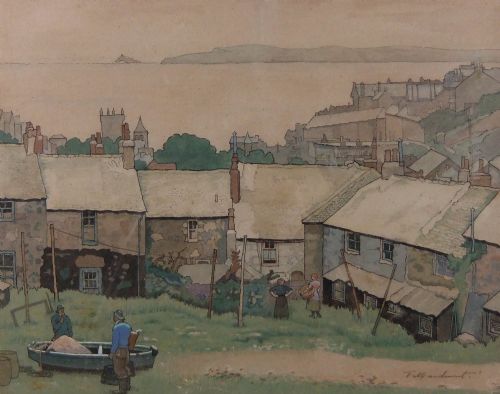
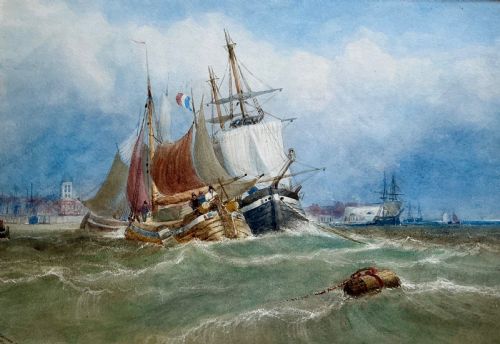
Green coastal watercolour artwork encompasses original paintings on paper depicting coastal scenes, harbours, and fishing villages rendered primarily in watercolour pigment. These pieces range from the 19th Century and Victorian eras through to the mid-20th Century, capturing British and Irish shores.
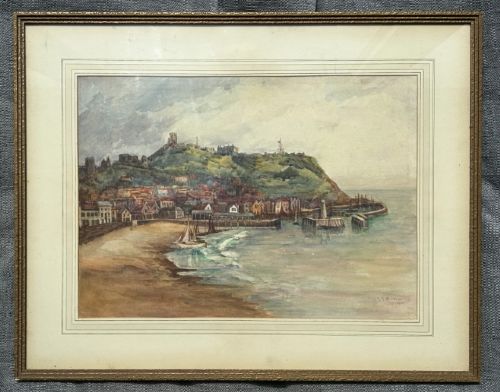
The selections encountered here frequently showcase specific coastal locations such as Scarborough, Whitby, Runswick Bay, and St Ives. Artists working within British Impressionism, the Newlyn School, and the St Ives School dominate these offerings, providing topographical records of seaside life.
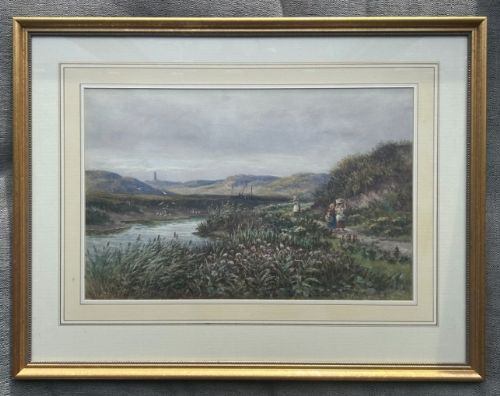
Buyers will find framed paintings protected by glass and wood frames that preserve the fragile paper medium. These works present maritime subjects, from rugged cliffs and castle ruins to quiet harbour beaches populated by figures.
Materials and technique
These works rely upon watercolour paint and pigment applied directly to paper supports. The technique allows for transparent washes that capture coastal light and atmospheric sea conditions.
Finished works are typically mounted behind glass and housed within wooden frames to protect the sensitive paper surface from moisture and physical damage over the decades.
Listings feature works executed on paper using watercolour pigment, spanning from the 19th Century to the 1960s.
Distinctions in quality
Quality rests upon the artist's handling of pigment and light to convey the atmosphere of the coast. Masterful control of watercolour washes distinguishes works with strong topographical clarity from simpler sketches.
The preservation of the paper and the vibrancy of the pigments over time affect the visual impact of each piece. Original framing and signed provenance further elevate the standing of individual watercolours.
Thomas Maidment·Henry Barlow Carter·Frank Wood·John Hobson Nicholson·Frederick Williamson·Ralph Todd·Walter Henry Sweet·Frank Rousse·Joseph William Carey
The Green Coastal Watercolour Artwork Glossary
- Watercolour painting
- A work of art executed with water-soluble pigments on paper. This medium allows for luminous washes that define historical coastal scenes.
- Framed painting
- An artwork enclosed within a protective wooden moulding and glass cover. This presentation safeguards delicate paper watercolours from environmental degradation.
- British Impressionism
- An artistic movement focusing on light and everyday subjects. Practitioners applied fluid brushwork to record coastal atmospheres and harbour life.
- Newlyn School
- An art colony based in Cornwall focusing on naturalistic depictions of rural and coastal subjects. Artists captured local fishermen and coastal communities directly from life.
Green Coastal Watercolour Artwork: Frequently Asked Questions
How should I display a watercolour?
Hang your watercolour away from direct sunlight to prevent the pigments from fading over time. Maintaining stable indoor humidity also protects the fragile paper support.
Ensure the frame remains properly sealed behind glass to keep atmospheric pollutants and dust away from the painted surface.
What periods are most common?
The selection spans from the 19th Century and Victorian periods through the Edwardian era and into the mid-20th Century. Early pieces often reflect traditional maritime art, while later works lean towards British Impressionism.
Twentieth-century examples frequently showcase regional schools like the Newlyn School and St Ives School.
Are these paintings original?
The listings consist of original watercolour paintings created by hand on paper rather than mechanical reproductions. Many pieces bear the original artist signature or period attribution.
Each work serves as a unique historical record of British and Irish coastal landscapes.
How do I identify coastal locations?
Artists often titled their watercolours directly on the mount or noted specific landmarks such as Whitby Abbey, Bamburgh Castle, or Scarborough Bay within the composition. Examining these geographical clues helps place the artwork topographically.
Signature styles associated with regional art colonies also provide context for where the piece was painted.