

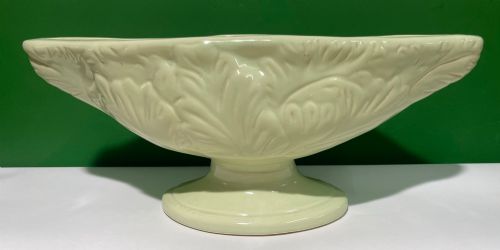
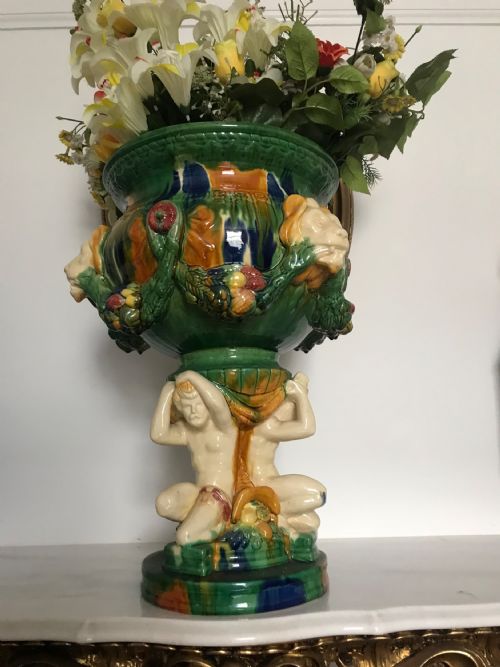


Green Ceramic Pedestal
These green ceramic pedestal pieces bring striking colour and elevated form to a room, drawing the eye with rich lead glaze and porcelain.
Green Ceramic Pedestal
When you search for green ceramic pedestal, you encounter an array of elevated vessels, comports, and jardiniere stands designed for display. These objects combine green lead glaze, porcelain, and earthenware to create raised focal points for interiors.
The pieces on this page span the Victorian era, 19th century, and early twentieth century. You will frequently find styles ranging from Victorian Naturalism and Art Nouveau to Italian Renaissance Revival and Chinese Export.
Forms include large planters on figural base stands, comports, and centrepiece bowls. Many feature elaborate details such as lions head decoration, figural supports, or botanical motifs like begonia leaves.
How they were made
Maker workshops utilised earthenware and porcelain as the foundational bodies for these elevated vessels. Artisans applied rich lead glazes and enamel finishes to achieve the characteristic vibrant green tones seen across the pieces.
Techniques involved moulding complex forms, such as figural base stands and pierced lattice bowls, followed by careful glazing and firing. Gilding was occasionally added to highlight raised decorative elements and structural details.
Green Ceramic Pedestal Retail Price Guide 2026
Typical asking prices for green ceramic pedestal among the pieces listed under this phrase on Sellingantiques today, from the lower quarter to the upper quarter. They describe what is for sale here now, not the wider market.
Materials recorded across the inventory include porcelain, earthenware, glazed ceramic, lead glaze, gilding, and enamel.
What varies in quality
The standard of execution in the moulding and the depth of the glaze set the finest examples apart. Superior pieces display crisp detailing in figural bases and botanical leaves, whereas lesser works show softer definition.
Artistry in hand-painted enamel and the application of gilding distinguish factory production. Works bearing recognizable workshop attributions or artist signatures demonstrate higher refinement in design.
Ulisse Cantagalli·Julius Dressler·Minton·Royal Worcester·Albert Carrier
The Green Ceramic Pedestal Glossary
- Comport
- A raised dish or bowl on a foot or pedestal, traditionally used for serving fruit or sweetmeats at dessert.
- Jardiniere
- An ornamental pot or stand for holding plants or flowers, often designed to match a separate pedestal base.
- Majolica
- A type of earthenware coated with an opaque white tin glaze and painted with metallic oxide colours, widely produced in the nineteenth century.
- Earthenware
- Porous pottery fired at lower temperatures, requiring a glaze to render it impermeable to liquids.
- Lead glaze
- A glossy coating containing lead oxide applied to ceramics before firing, producing a smooth and vitreous finish.
Green Ceramic Pedestal: Frequently Asked Questions
What were green ceramic pedestals used for?
These elevated vessels served primarily as decorative centrepieces, comports for dining tables, or jardiniere stands for displaying indoor plants. They added both height and rich colour to formal Victorian and Edwardian interiors.
Larger figural stands and planters were positioned on floors or furniture to showcase botanical arrangements or act as sculptural art pieces in their own right.
How do I identify a majolica pedestal?
Majolica pieces are characterised by colourful lead glazes applied over moulded earthenware bodies, often featuring naturalistic subjects such as leaves, figures, or animals. The glazes pool in recessed areas to create rich tonal variations.
Examining the underside often reveals factory marks, registry diamonds, or impressed numbers that help confirm the period of manufacture.
What is the difference between a compote and a comport?
These terms generally refer to the same form of raised footed dish used for serving fruit or sweets, with comport being the standard British English term and compote more common in North American usage.
Both describe an elevated vessel supported by a pedestal base, appearing frequently in nineteenth-century ceramic tableware.
How do I care for antique glazed ceramics?
Antique glazed ceramics and porcelain require gentle handling and should be cleaned only with a soft, dry cloth to remove dust. Avoid using water, detergents, or chemical cleaners, which can damage aged glazes or delicate gilding.
Display the pieces away from direct sunlight and areas subject to sudden temperature fluctuations to protect the ceramic body and glaze integrity.