


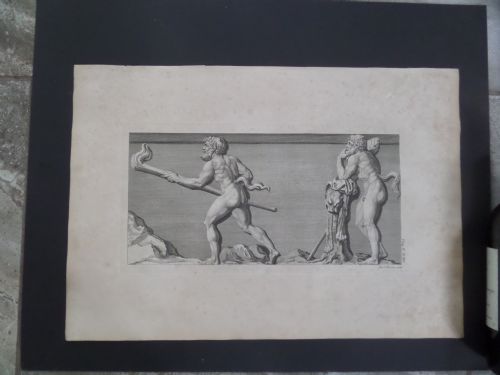

Greek Mythology Relief Print
A greek mythology relief print captures neoclassical sculpture and architectural detail through eighteenth-century copperplate engraving on paper.
Greek Mythology Relief Print
A greek mythology relief print on this page takes the form of an eighteenth-century engraving on paper, recording ancient Greek gods, architecture, and mythical figures from the Antiquities of Athens. These large plates translate neoclassical relief sculpture and architectural details into stark ink lines for study and display.
Buyers meet works originating from the eighteenth century, dominated by neoclassical visual vocabulary and subjects such as Zephyros, Boreas, satyrs, and winged gods. The imagery derives directly from classical Athenian antiquities, translated through the hands of period printmakers.
The aesthetic is distinctly architectural and sculptural, treating mythological subjects with the precision of archaeological documentation. Every print reflects the eighteenth-century fascination with classical Greek heritage, rendered in monochrome ink on heavy paper.
How they were made
These works rely on copperplate engraving, where lines are cut directly into metal plates using a sharp tool called a burin. Ink is forced into the recessed grooves before the plate runs through a press under high pressure to transfer the image onto paper.
The primary materials recorded are ink and paper, forming a monochrome medium that relies entirely on line density, hatching, and cross-hatching to create depth and shadow. The heavy paper stock holds the sharp impression of the engraved lines without losing fine detail.
Satyrs and winged winds share the paper with strict architectural blueprints, proving eighteenth-century Athens enthusiasts liked their gods with a side of masonry.
What varies in quality
The clarity of the ink impression dictates the visual strength of each sheet, separating crisp early strikes from tired later impressions where fine architectural lines begin to blur. Paper condition and tone also play a role, as uniform margins and stable paper integrity preserve the original composition.
The precision of the engraving work itself defines the upper tier, where complex mythological figures and architectural elements maintain sharp definition across large formats. The skill of the individual hand behind the plate determines how successfully stone relief translates onto paper.
James Basire·Edward Rooker
The Greek Mythology Relief Print Glossary
- Engraving
- A printmaking technique where an artist cuts lines directly into a metal plate with a burin. The resulting grooves hold the ink for printing.
- Neoclassical
- The dominant style of the eighteenth century that revived classical Greek and Roman motifs, proportions, and subject matter in art and architecture.
- Antiquities
- Ancient relics, sculptures, and architectural remains originating from classical civilisations such as Greece and Rome. They served as primary visual references for eighteenth-century artists.
- Monochrome
- An artwork executed in a single colour, which in these listings consists of black or dark ink on white or toned paper.
Greek Mythology Relief Print: Frequently Asked Questions
What is a greek mythology relief print?
A greek mythology relief print is an eighteenth-century engraving on paper depicting classical deities, architectural elements, and mythical scenes from Athens.
These plates record neoclassical sculpture and archaeological discoveries using ink on paper.
How were these prints created?
Artists cut designs directly into copper plates using sharp metal tools before applying ink and running them through a printing press.
The resulting works rely on fine ink lines on paper to render three-dimensional relief sculptures in two dimensions.
What subjects appear in these works?
The subjects include Greek gods such as Zephyros and Boreas, mythological figures like satyrs, and architectural studies from ancient Athens.
Every scene reflects eighteenth-century neoclassical documentation of classical Greek antiquity.
How should I frame an antique print?
Protect antique paper by using acid-free mount board and framing materials that keep the sheet away from direct contact with glass.
Keep the print out of direct sunlight to prevent the ink and paper stock from fading over time.