



Grand Tour Marble Urn
Grand tour marble urn pieces are souvenir vessels brought back from classical sites by travellers, combining ancient Roman forms with nineteenth-century decorative arts.
Grand Tour Marble Urn
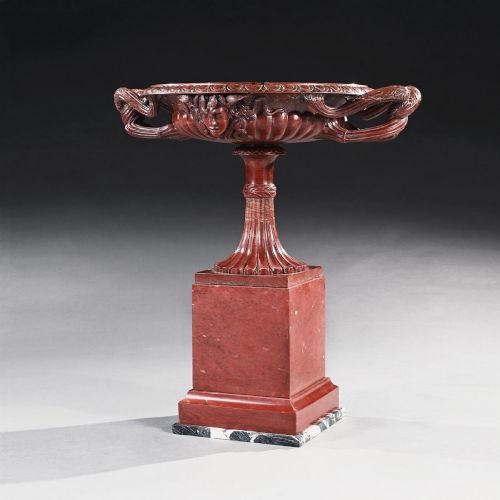
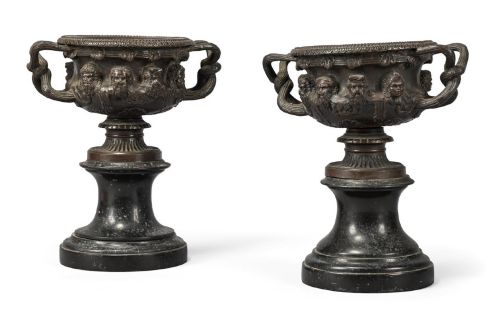
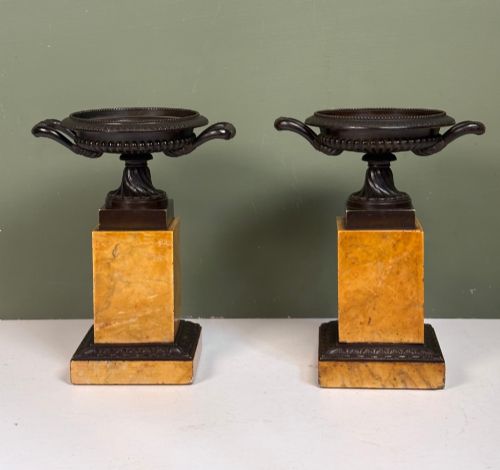
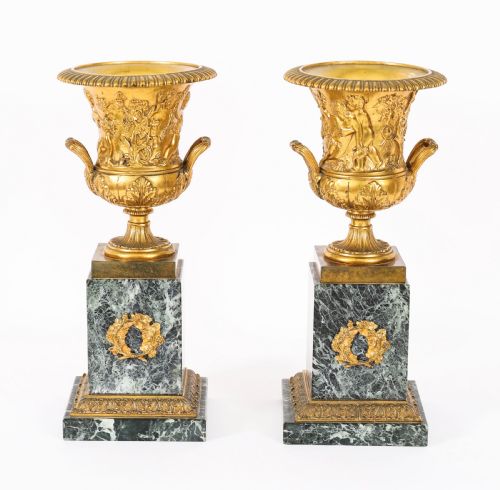
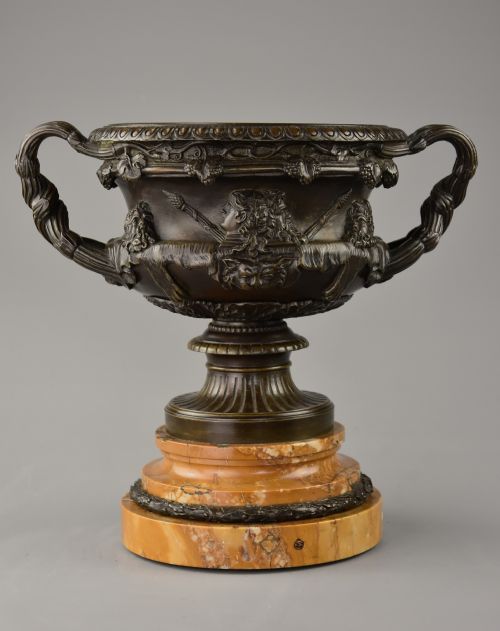
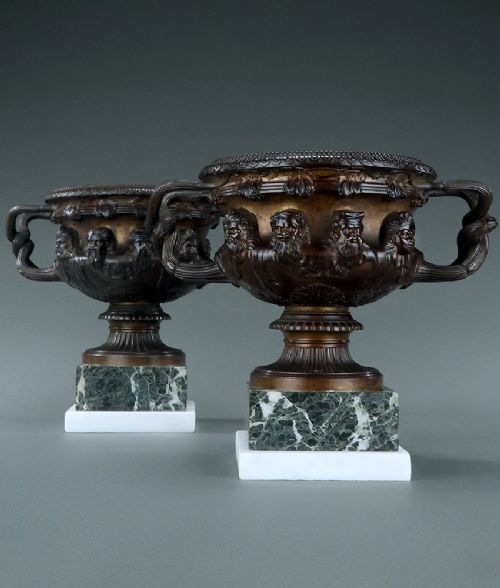
A grand tour marble urn is typically a decorative vessel, tazza or campana vase produced during the nineteenth century as a souvenir of classical travels through Italy. These items emulate famous antiquities such as the Warwick vase, the Albani vase and the Borghese vase, modelled closely on ancient Roman and Greek prototypes.
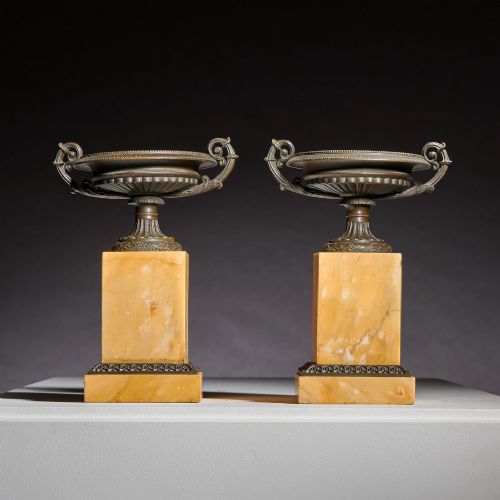
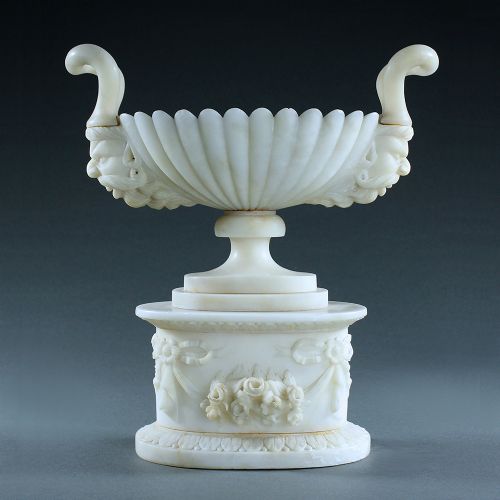
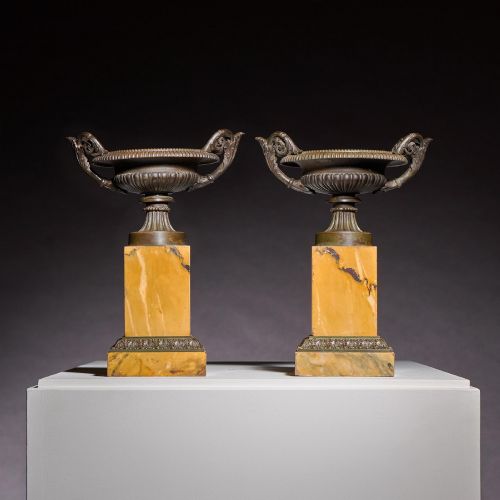
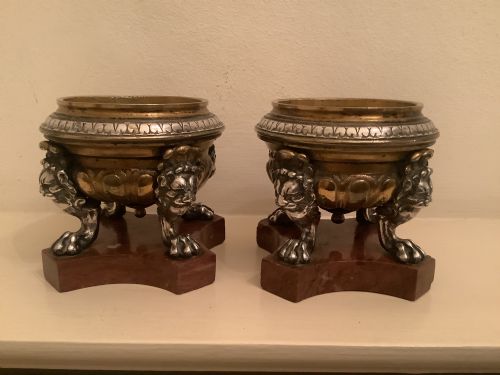
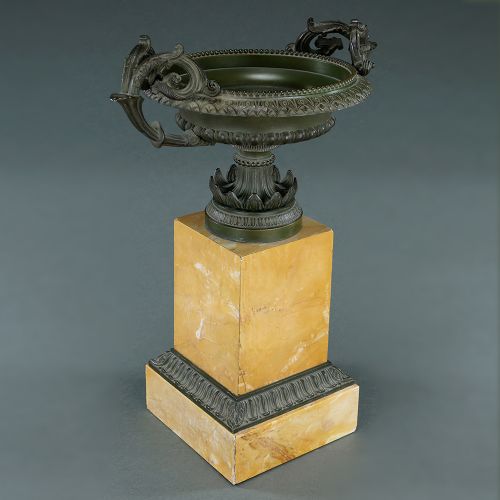
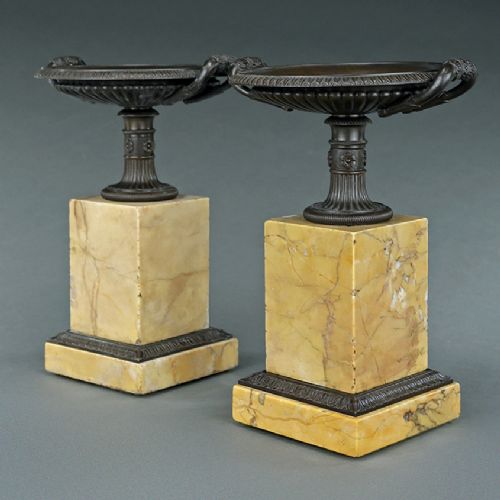
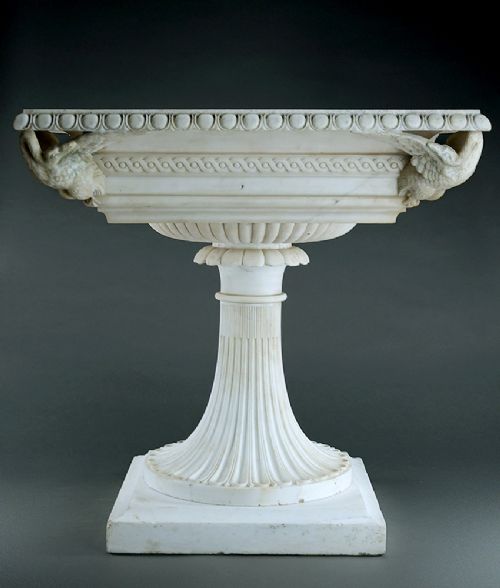
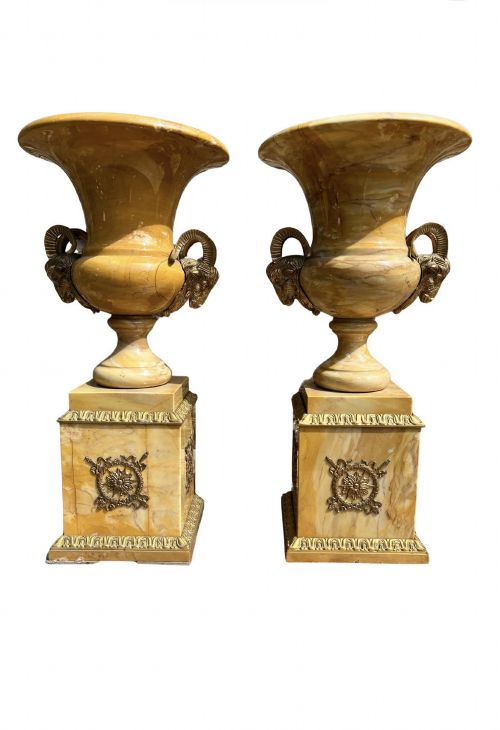
The objects seen here span several distinct forms, including lidded cassolettes, pedestal bowls, inkwells and two-handled urns mounted on heavy square plinths. Most examples combine carved stone bodies with cast metal mounts, reflecting the neoclassical taste that dominated European drawing rooms during the Victorian era and the Regency period.
Travellers acquired these souvenirs in Rome, Florence and Naples, where local artisans worked in marble, alabaster and bronze. The selection on this page centres primarily on nineteenth-century interpretations, though occasional eighteenth-century specimens appear alongside later twentieth-century decorative vases.
How they were made
The stone elements of a grand tour marble urn were turned on lathes or hand-carved from solid mineral blocks, utilising characteristic geological materials such as Sienna marble, rosso antico, alabaster, Blue John and black marble. Artisans selected these figured stones for their rich natural colouration and veining, which imitated the prized marbles of antiquity.
Metal components, including handles, bases, rims and applied cherubs or Bacchus figures, were produced through the lost-wax casting method in bronze or brass. These metal mounts were frequently fire-gilded with ormolu, silvered or given a dark chemical patination to contrast with the polished stone bodies.
Grand Tour Marble Urn Retail Price Guide 2026
Typical asking prices for grand tour marble urn among the pieces listed under this phrase on Sellingantiques today, from the lower quarter to the upper quarter. They describe what is for sale here now, not the wider market.
Some miniature souvenir tazzas were small enough to fit inside a gentleman's travelling trunk alongside his pocket watch.
What varies in quality
Quality in these pieces rests upon the crispness of the bronze chasing and the precision with which the stone is turned and polished. Finer examples exhibit deep, sharply defined relief work on the cast metal figures and foliate mounts, whereas simpler items rely on smoother, unadorned surfaces.
Benedetto Boschetti
The Grand Tour Marble Urn Glossary
- Campana vase
- A bell-shaped vessel with a flared rim and a pedestal foot, modelled after ancient terracotta and marble garden vases found at archaeological sites.
- Tazza
- A shallow bowl or cup raised on a high stem and foot, frequently utilised as a decorative centrepiece or souvenir display object in neoclassical interiors.
- Ormolu
- Finely ground gold amalgam applied to a bronze base through heat-gilding, creating a bright metallic finish characteristic of French and Italian luxury objects.
- Cassolette
- A decorative lidded vase or urn designed to hold perfumes or incenses, featuring a reversible cover that allows the vessel to serve as an open bowl.
- Rosso antico
- A deep red antique marble highly prized by classical sculptors and nineteenth-century lapidaries for its intense colour and smooth texturing.
Grand Tour Marble Urn: Frequently Asked Questions
What is a grand tour urn?
A grand tour urn is a decorative souvenir produced in Europe, primarily during the nineteenth century, for travellers touring the archaeological sites of Italy.
These pieces copy ancient Roman and Greek monuments seen abroad, serving as ornamental table or mantelpiece displays.
How were grand tour urns used?
These vessels were strictly ornamental, designed to display the owner's classical learning and refined taste within a nineteenth-century drawing room or library.
Certain lidded versions functioned as cassolettes or inkwells, though most remained purely decorative objects on marble plinths.
What stones are used in these urns?
Artisans utilised a wide variety of decorative stones, including yellow Sienna marble, deep red rosso antico, Ashford black marble and translucent alabaster.
These minerals were chosen for their distinct natural veining and historical association with ancient Roman architecture.
How do I date a marble urn?
Dating relies on the style of the bronze mounts, the turning technique of the marble and the patination of the metal components.
Most examples date from the nineteenth century, reflecting Regency and Victorian interpretations of neoclassical design.