



Grand Regency Table
A grand regency table brings substantial scale and classical proportion into a room, offering a centrepiece built for formal display and heavy use.
Grand Regency Table
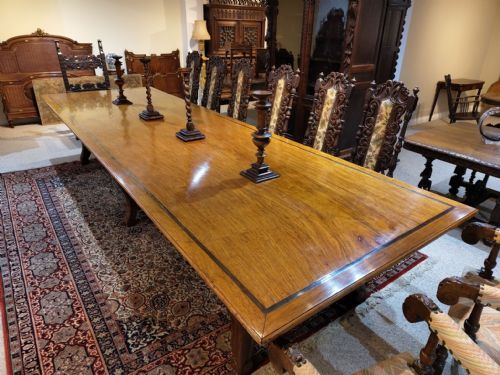
When you search for a grand regency table, you encounter large dining tables, centre tables, and serving tables drawn primarily from the nineteenth century and the Regency period. These pieces carry the architectural weight and neoclassical styling typical of the era, frequently executed in robust forms.
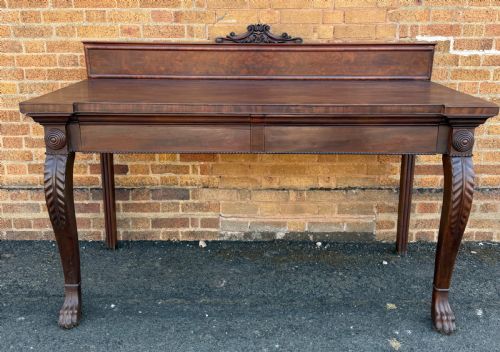
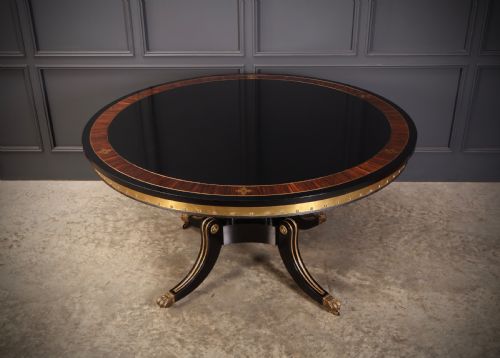
The versions most common on this page include round tilt-top dining tables and imposing serving tables, alongside occasional smaller iterations in ebonised wood or mahogany. They serve as functional furniture that commands a room through sheer presence and material quality.
How they were made
Makers utilised dense timbers such as mahogany and rosewood for the structural carcasses, often pairing them with intricate veneers and brass inlays. Ebonised wood and parcel gilt surfaces provide high-contrast detailing that defines the aesthetic.
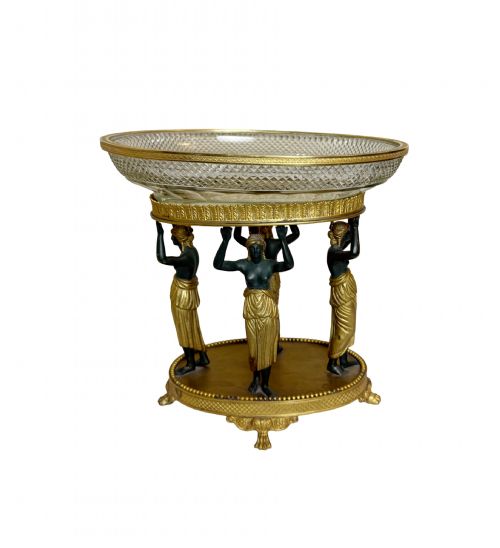
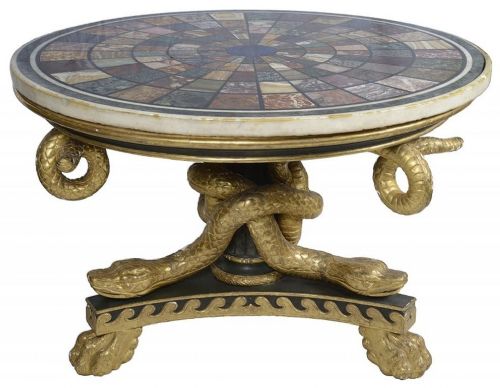
Top surfaces frequently incorporate specimen marble and pietra dura inlay, showing the influence of the Grand Tour. Bronze and gilt bronze mountings complete the construction of the more elaborate examples.
Grand Regency Table Retail Price Guide 2026
Typical asking prices for grand regency table among the pieces listed under this phrase on Sellingantiques today, from the lower quarter to the upper quarter. They describe what is for sale here now, not the wider market.
Listings on this site span the eighteenth century through to nineteen-twenty, featuring materials from solid mahogany and rosewood to specimen marble and brass.
What varies in quality
The distinction between tiers of quality rests on the selection of raw materials and the precision of the decorative work. Specimen marble tops with complex pietra dura bird or geometric mosaics represent a higher grade of craftsmanship than plain timber boards.
Structural ambition also dictates the hierarchy, separating standard domestic furniture from grand scale serving tables and tilt-top dining tables with elaborate pedestal bases and bronze mounts.
The Grand Regency Table Glossary
- Pietra dura
- A historic technique using cut and fitted polished coloured stones to create mosaic images. It appears frequently on Grand Tour tabletops.
- Tilt-top
- A table mechanism allowing the circular top to pivot vertically when not in use, saving space. This feature is common in large nineteenth-century dining tables.
- Grand Tour
- A cultural journey of Europe undertaken by wealthy young men in the eighteenth and nineteenth centuries. It generated a demand for classical marbles and bronzes.
- Ebonised
- Wood treated to resemble ebony through staining or painting. This finish provides a dark, uniform surface that highlights brass inlay.
- Specimen marble
- Marble composed of various distinct fragments or types assembled into a single decorative panel. It demonstrates high-status decorative taste.
Grand Regency Table: Frequently Asked Questions
What defines a grand regency table?
These tables are defined by their substantial proportions, classical architectural motifs, and formal presence. They typically draw on Regency, William IV, and Neoclassical design vocabularies.
Materials such as solid mahogany, rosewood, and inlaid marble underscore their status as centrepieces intended for formal rooms.
How do I use a centre table?
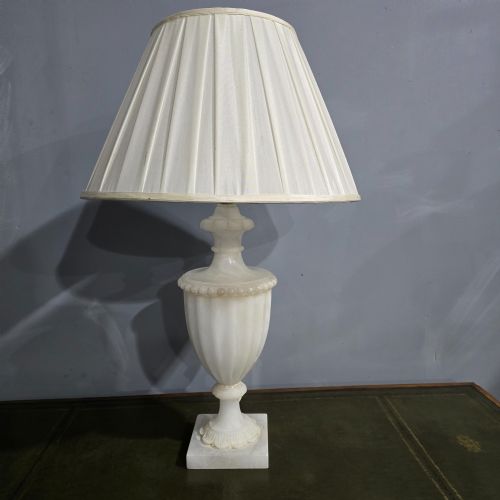
Centre tables are designed to stand free of walls, often anchoring the middle of a large reception room or entrance hall. They provide a surface for lamps, candelabra, or decorative centerpieces.
Their finished appearance from all sides makes them focal points within open floor plans.
How do I tell Regency from William IV?
Regency pieces lean toward refined classical restraint, drawing heavily on Greek and Roman archetypes with delicate brass inlays and slender supports. William IV furniture tends to be heavier and more robust.
William IV examples often feature bolder carved scrollwork, larger scale, and darker woods like rosewood.
What is pietra dura?
Pietra dura is a laborious mosaic technique involving precisely cut hardstones like jasper, chalcedony, and marble. Craftsmen assemble these stones to form pictorial or geometric designs.
On tables from this era, it marks the piece as an item of luxury acquired during European travel.