

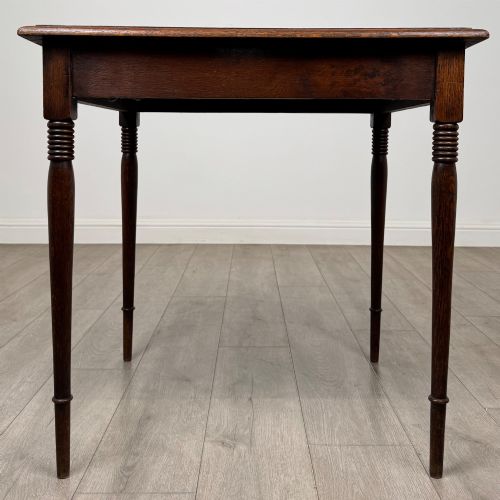
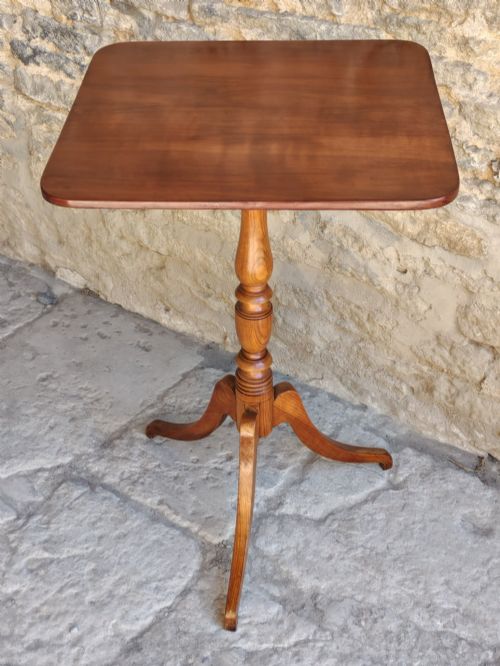
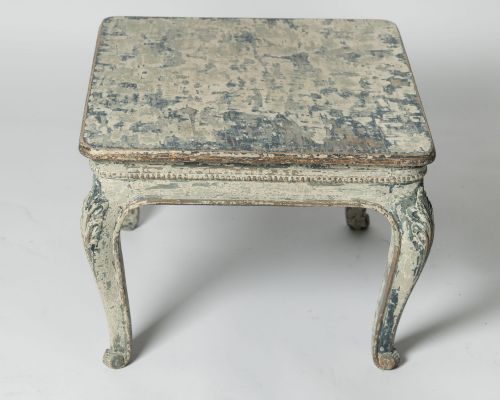
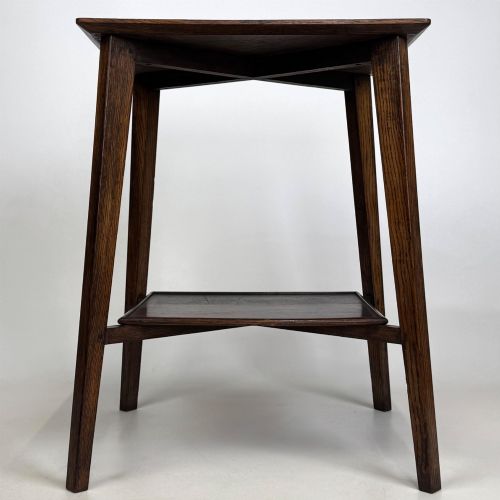


Small Square Lamp Table
A small square lamp table is a compact surface built for a corner or beside a chair, bringing period timber into daily use.
Small Square Lamp Table
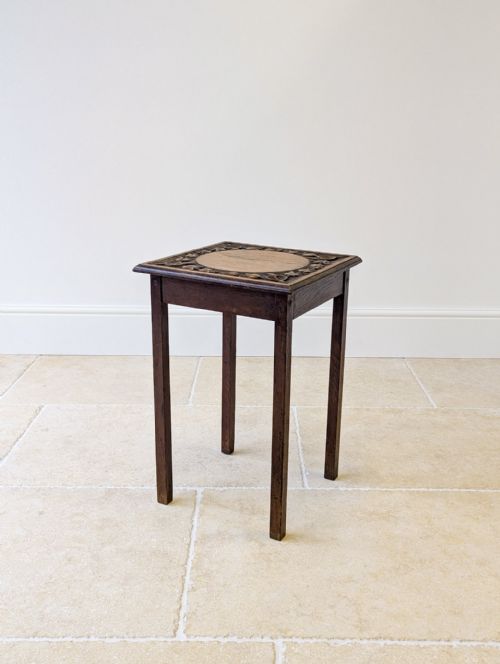
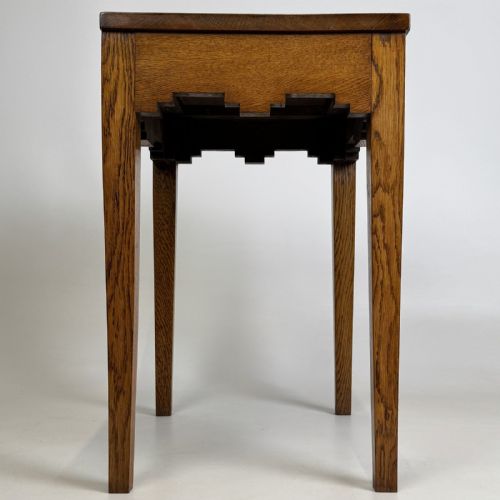
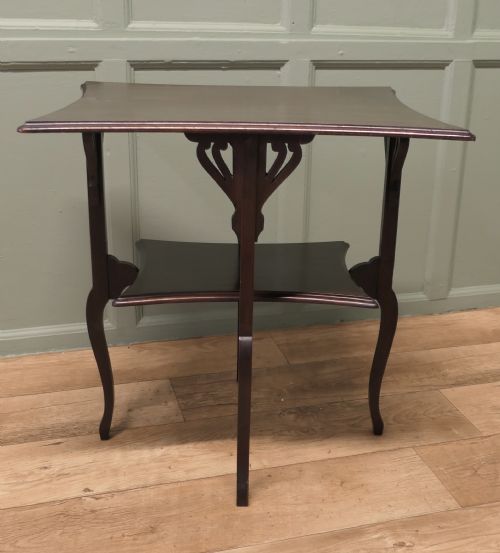
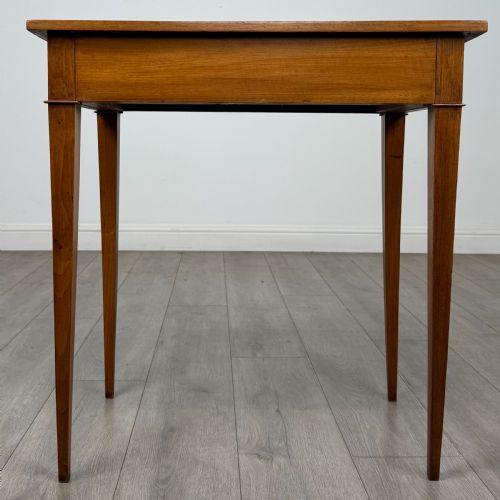
When you search for a small square lamp table, you meet compact occasional, side, and wine tables drawn from centuries of British and continental design. These items serve as functional surfaces beside seating, designed to hold a lamp or a small object without dominating the floor space.
The pieces on this page stretch from the Georgian and Regency eras through the Victorian period, Edwardian years, and into the Arts and Crafts and Art Deco movements. Oak and mahogany dominate the selection, alongside walnut, satinwood, burr yew, and fruitwood.
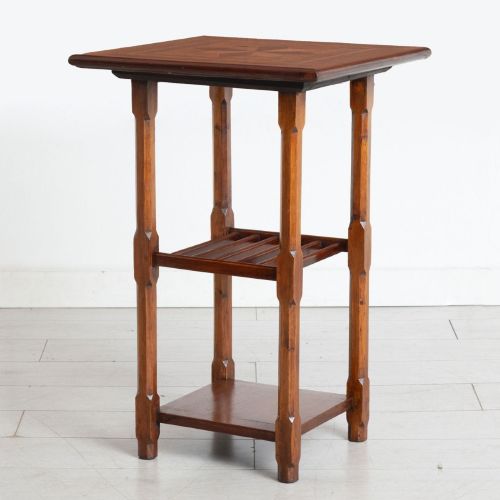
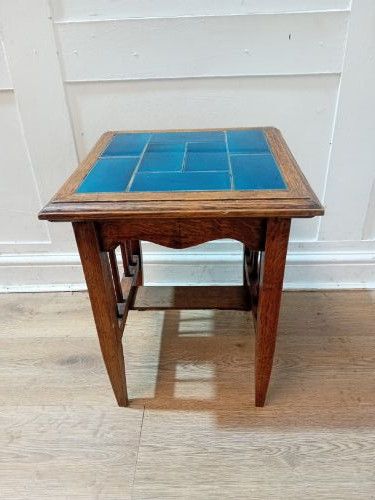
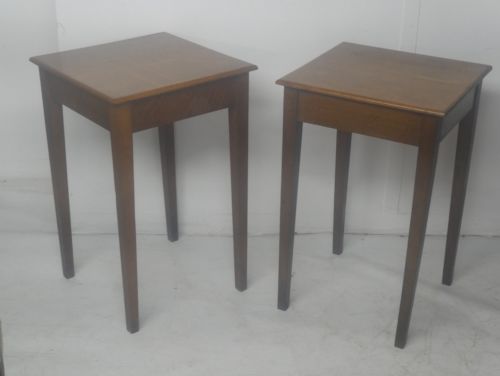
You will encounter simple utilitarian examples alongside Sheraton Revival pieces and pieces bearing ceramic tile tops. Their proportions make them adaptable to modern rooms while retaining the character of their original periods.
How they were made
Cabinet makers utilised solid timbers such as oak, mahogany, and walnut, frequently selecting figured veneers like burr yew and satinwood for decorative surfaces. Joinery methods varied from traditional mortise and tenon frames to turned pedestals and tripod legs.
Surface treatments included wax polishing to reveal the grain, painted finishes, and the insertion of ceramic tiles into oak frames. Carved details and contrasting specimen woods appear on specific Arts and Crafts and Sheraton Revival examples.
Small Square Lamp Table Retail Price Guide 2026
Typical asking prices for small square lamp table among the pieces listed under this phrase on Sellingantiques today, from the lower quarter to the upper quarter. They describe what is for sale here now, not the wider market.
Some Victorian householders demanded ceramic tiles on their occasional tables so hot teapots would not scorch the timber.
What varies in quality
The standard of a small square lamp table rests on the selection of timber and the crispness of the joinery or turnery. Finer pieces demonstrate careful attention to grain alignment in veneers and stability in the leg construction.
Makers who incorporated specialised materials, such as hand-painted surfaces, inset ceramic tiles, or carved decoration, elevated standard utilitarian forms into distinct decorative objects.
Liberty of London·Baillie Scott
The Small Square Lamp Table Glossary
- Occasional table
- A light, movable table designed for minor, specific uses around a room. These pieces can be easily shifted beside a chair or sofa as needed.
- Tripod table
- A small table supported by a central pillar resting on three feet. This construction allows the top to remain stable on uneven floors.
- Specimen wood
- Timber collected for its distinct colour and grain pattern, often used in contrasting geometric arrangements. Craftsmen utilised these varied species to create decorative tabletop patterns.
- Tile top
- A table surface inset with ceramic tiles, frequently seen in Arts and Crafts designs. This feature provided a durable, heat-resistant surface for lamps and hot vessels.
Small Square Lamp Table: Frequently Asked Questions
Where should I place a small square lamp table?
These tables fit easily beside armchairs, sofas, or in room corners where surface space is limited. Their compact footprints allow them to function as lamp stands or resting places for books.
Because they originate from diverse periods like the Georgian era or the Arts and Crafts movement, they blend readily with both traditional and contemporary interiors.
How do I distinguish a Georgian table from a later revival piece?
Examine the construction methods, tool marks, and the natural ageing of the timber. Georgian and Regency pieces show hand-cut joinery and timber patination developed over two centuries.
Sheraton Revival and later nineteenth-century pieces often display lighter mahogany construction and standardised components characteristic of mass production in that era.
What maintenance do these timber tables need?
Keep the wood nourished by applying a traditional beeswax polish periodically to protect the finish from drying out. Avoid placing tables in direct sunlight or near heat sources to prevent timber splitting.
Use coasters beneath glasses and damp items to protect historic polished and painted surfaces from water marks.
Can I use an antique table for daily use?
These sturdy occasional and side tables were built for daily utility and remain robust enough for regular service. Their compact forms support lamps, cups, and small decorative items reliably.
Treating the antique timber with reasonable care ensures it withstands everyday household tasks without losing its structural integrity.