





Grand Crystal Lighting
Grand crystal lighting brings magnificent scale and sparkling refraction to lofty interiors.
Grand Crystal Lighting
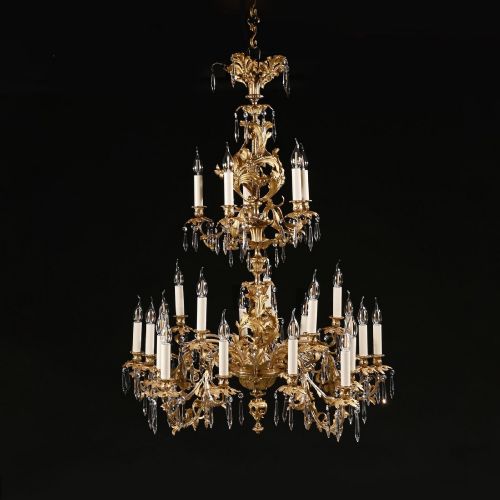
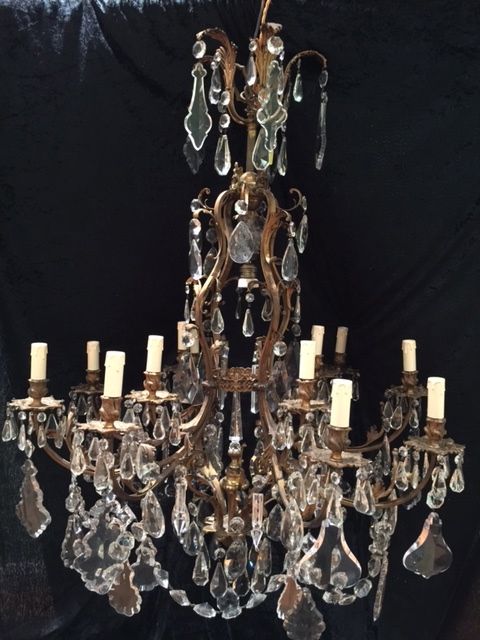
When you search for grand crystal lighting, you look for imposing overhead fixtures designed to illuminate large spaces with exceptional presence. The pieces available span the nineteenth century into the early decades of the twentieth century, including styles such as French Chateau, Maria Theresa, Grand Regency, French Rococo, Bohemian, Rococo Revival, Florentine, and French Classical. Chandeliers and ceiling lights dominate the selection, often featuring multiple tiers and numerous arms to hold double digits of lights.
Italian, French, and English workshops created these grand fixtures, utilising expansive forms like twin tiers and massive ballroom proportions. You encounter substantial configurations holding up to forty-one lights, alongside impressive pairs designed for symmetrical spaces. The overarching aesthetic draws heavily on classical European traditions of opulence and intricate metalwork.
Materials and Construction
Makers constructed these fixtures using robust structural frames of brass, gilded bronze, and general metalwork to support immense overhead weight. Cut glass and lead crystal components were meticulously shaped and hung across multiple tiers to maximise light refraction throughout a room.
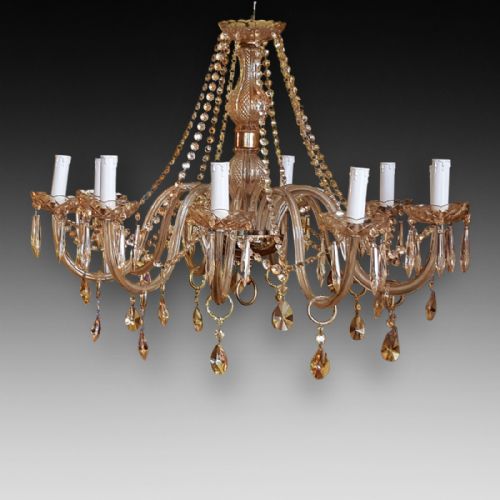
Surface treatments included heavy gilding on bronze and brass frameworks, complemented by coloured crystal elements and delicate glass beadwork. Artisans wired numerous arms, often numbering twelve, sixteen, twenty-five, or forty-one, into hierarchical double-tiered structures.
Grand Crystal Lighting Retail Price Guide 2026
Typical asking prices for grand crystal lighting among the pieces listed under this phrase on Sellingantiques today, from the lower quarter to the upper quarter. They describe what is for sale here now, not the wider market.
Assessing Quality and Execution
Quality rests in the depth of the metal casting and the richness of the gilding applied to the bronze and brass frames. Superior pieces display crisper hand-cutting on the crystal prisms and drops, which produces sharper prismatic colour dispersion when illuminated.
Structural integrity dictates the enduring value of multi-tiered frames carrying dozens of individual light points. The precision of the assembly, from the alignment of the arms to the secure suspension of every crystal strand, separates standard production from exceptional artistry.
Baccarat
The Grand Crystal Lighting Glossary
- Gilded Bronze
- Bronze metal treated with a thin layer of gold or gold-coloured leaf to produce a rich, luminous metallic surface finish. This material provides sturdy support for elaborate chandelier arms while maintaining an opulent appearance.
- Lead Crystal
- Glass manufactured with a high lead content to increase weight, clarity, and brilliance. It allows artisans to achieve deep, sharp cuts that enhance light refraction.
- Maria Theresa Chandelier
- A flat-arm chandelier style characterised by metal straps covered in glass plates and secured with rosettes. This distinct format originates from Austrian imperial history and remains popular in grand interiors.
- Double Tiered
- A structural arrangement where chandelier arms and light points are arranged on two distinct vertical levels. This configuration increases the overall scale and light output of the fixture.
- Cut Glass
- Glass shaped and patterned by grinding against abrasive wheels rather than being moulded. The resulting facets catch and reflect light from multiple angles.
Grand Crystal Lighting: Frequently Asked Questions
How do I clean a large crystal chandelier?
Cleaning requires patience and a methodical approach to reach every individual crystal drop and metal arm.
Technicians typically spray a specialised cleaning solution onto the glass while protecting the underlying bronze or brass framework from excessive moisture.
What ceiling height do I need for grand lighting?
These imposing fixtures demand tall ceilings to allow adequate clearance underneath for movement and visual proportion.
Ballroom and double-tiered designs require substantial vertical space to accommodate their drop length without dominating the room entirely.
How do I determine the period of a chandelier?
Dating relies on examining the metal casting techniques, the specific style of the glass cutting, and the wiring methods.
Nineteenth-century examples often display heavier bronze casting and hand-finished components compared to later twentieth-century production.
Can these chandeliers be rewired for modern use?
Professional electricians can safely update internal wiring to meet current safety standards without altering the exterior historic appearance.
Rewiring ensures that multi-armed fixtures with numerous bulbs operate reliably in contemporary residential or commercial settings.