

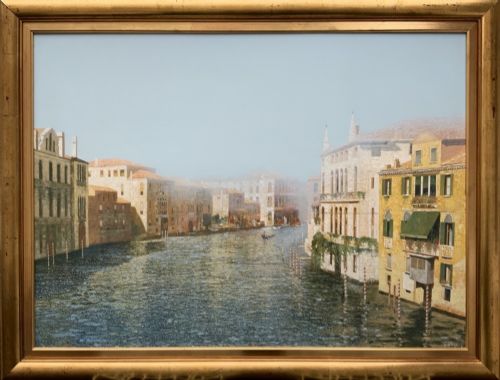
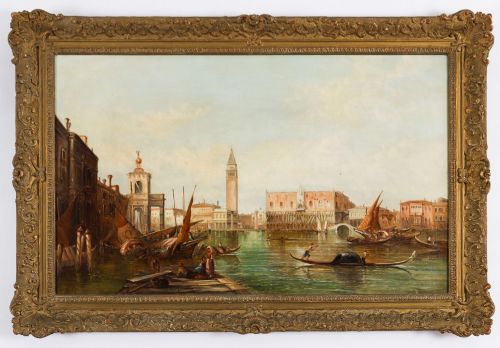
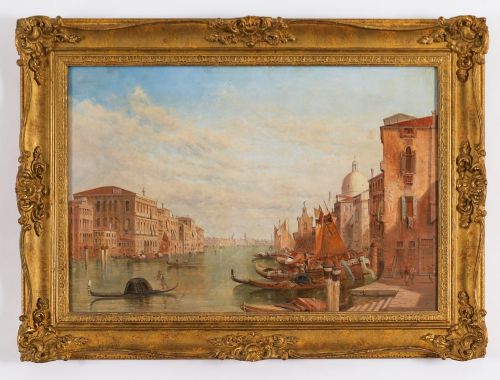
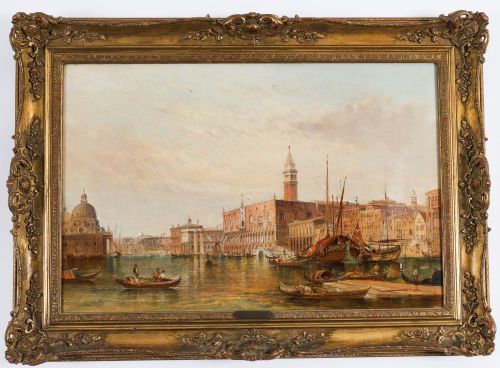


Grand Canal Venice Oil Painting
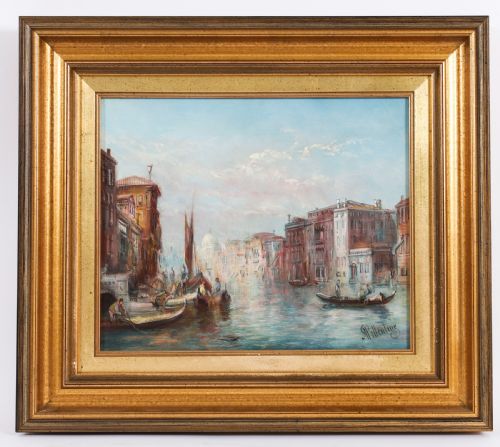
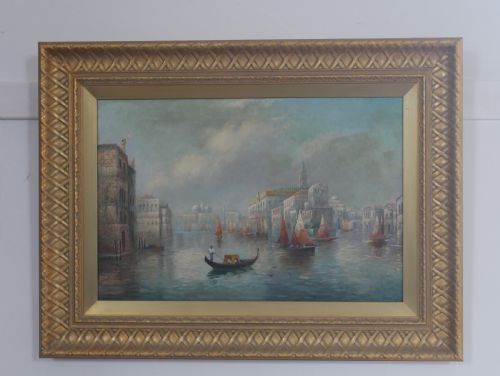
A grand canal venice oil painting captures the historic waterways and architecture of Italy, bringing classic European atmosphere into a room.
Grand Canal Venice Oil Painting
A grand canal venice oil painting depicts famous Venetian landmarks such as the Doge's Palace, the Dogana, and the Santa Maria della Salute across the water. Buyers encounter works from the nineteenth century alongside later twentieth-century interpretations, capturing familiar views of gondolieri and historic palazzos.
Most examples originate from the nineteenth century, reflecting periods of Victorian fine art, Romanticism, and Veduta traditions. These townscapes record the light and architecture of Venice using oil paint on canvas.
Compositions range from intimate canal scenes to larger expansive townscape views looking towards St Mark's Square. Framed formats in giltwood or gesso frequently accompany these canvases, completing the period presentation.
Materials and technique
These works are painted in oil paint on canvas supports, utilising the rich texture and layering capabilities of the medium to render water reflections and atmospheric light. Artists applied pigment to woven canvas to build up detailed architectural perspectives of Venetian palazzos and bridges.
Frames are constructed from wood and finished with gesso, gold leaf, and giltwood. These gilded surrounds enhance the visual depth of the oil paintings while providing traditional period mounting.
Grand Canal Venice Oil Painting Retail Price Guide 2026
Typical asking prices for grand canal venice oil painting among the pieces listed under this phrase on Sellingantiques today, from the lower quarter to the upper quarter. They describe what is for sale here now, not the wider market.
Judging quality
Quality in these works rests upon the precision of the architectural draughtsmanship and the handling of atmospheric light over the water. Superior examples demonstrate confident brushwork in rendering reflections, gondolas, and distant facades without losing structural clarity.
The sophistication of the framing contributes to the overall integrity of the piece. Finely modelled gesso and gold leaf surrounds complement the oil on canvas surface, distinguishing higher grade examples from simpler mountings.
Alfred Pollentine·Marc Aldine·Antoine Bouvard Senior·E. Perez Senet·William Raymond Dommersen·Jane Vivian·J. Yates
The Grand Canal Venice Oil Painting Glossary
- Veduta
- A highly detailed, topographical painting of a cityscape, particularly popular in eighteenth and nineteenth-century Italy. These views document specific canals, monuments, and urban vistas with topographical accuracy.
- Gesso
- A plaster-like mixture applied to wood frames as a base for gilding. It provides a smooth surface for the application of gold leaf.
- Giltwood
- Wood that has been coated with gold leaf or gold paint. This material is commonly used for traditional picture frames.
- Dogana
- The historic customs house of Venice situated at the tip of Dorsoduro. It frequently appears in nineteenth-century townscape paintings alongside Santa Maria della Salute.
- Romanticism
- An artistic movement emphasising emotion, individualism, and awe of nature and history. In Venetian painting, this translates to dramatic skies and atmospheric canal water.
Grand Canal Venice Oil Painting: Frequently Asked Questions
What periods do these paintings date from?
The available selection spans from the nineteenth century through to the twentieth century, with numerous works dated across the eighteen-eighties and eighteen-nineties.
Later interpretations extend into the nineteen-twenties, nineteen-thirties, and nineteen-sixties, reflecting enduring artistic interest in Venetian subjects.
Which Venetian landmarks appear most often?
Commonly depicted structures include the Doge's Palace, the Bridge of Sighs, and the Santa Maria della Salute.
Views frequently feature the Dogana and the Molo, capturing the bustling activity of gondolieri on the water.
How should I frame and display them?
Many of these works retain their original wood, gesso, and giltwood frames, which complement the oil on canvas surfaces.
Display them away from direct sunlight and excessive moisture to protect the canvas support and the gilded wooden frames.
How do I distinguish nineteenth-century works?
Nineteenth-century pieces often align with Victorian fine art, Veduta traditions, or Romanticism, utilising oil on canvas.
Examination of the canvas weave, stretcher frames, and framing materials helps determine the period of origin.