






Gothic Wood Sculpture
These gothic wood sculpture pieces are ecclesiastical and devotional carvings spanning centuries, sought after for their rich material texture and architectural presence.
Gothic Wood Sculpture
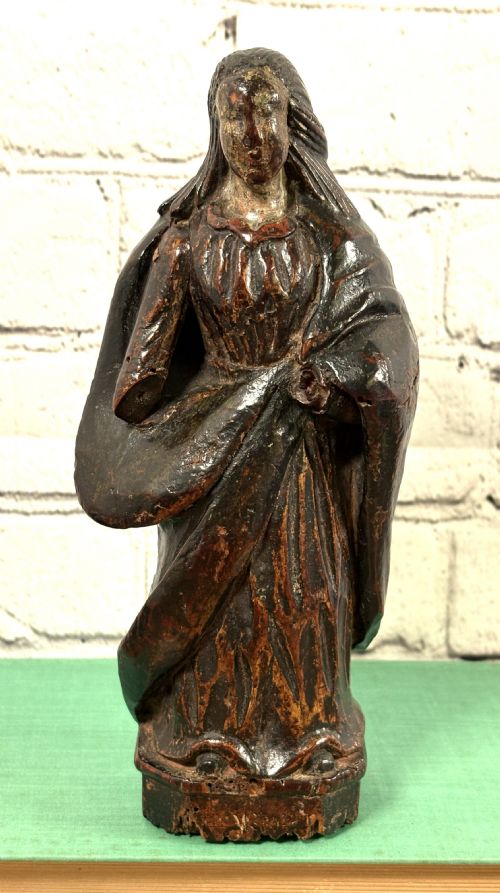
A buyer examining gothic wood sculpture encounters religious figures, saints, altarpiece fragments, and architectural elements created for European churches and private devotional spaces. The selection ranges from pre-sixteenth century medieval carvings and sixteenth century continental figures to later revival works produced in the nineteenth century.
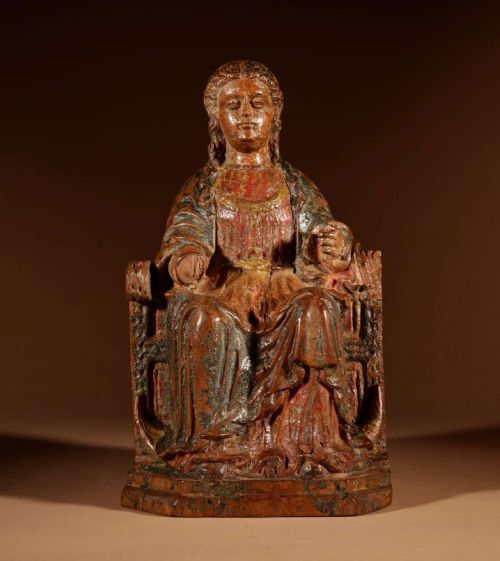
The common forms include standing saints, Madonna and child groups, angels, and relief panels depicting biblical scenes. Pieces originate from workshops in regions such as Germany, Flanders, and France, reflecting the stylistic shifts from late medieval piety through the Renaissance.
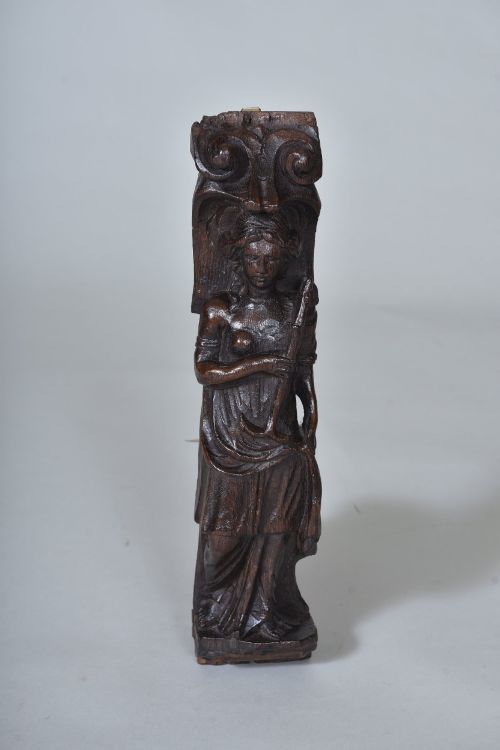
The inventory on this page bridges original medieval church furnishings and subsequent nineteenth century gothic revival interpretations. Buyers meet both freestanding statues and architectural fragments removed from larger ecclesiastical contexts.
Materials and construction methods
Carvers utilised dense timbers such as oak, walnut, limewood, and pine, selecting woods that allowed for deep undercutting and sharp detail in drapery and facial expressions. Oak provides a robust structure for medieval panels and figures, whilst limewood permits the fine, intricate tool marks visible on continental saints.
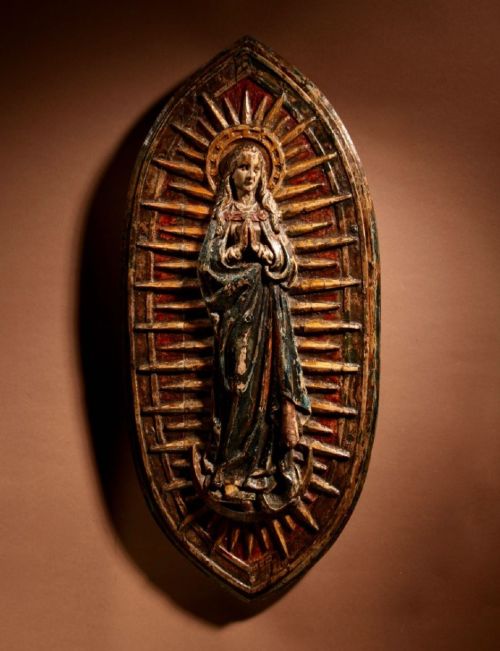
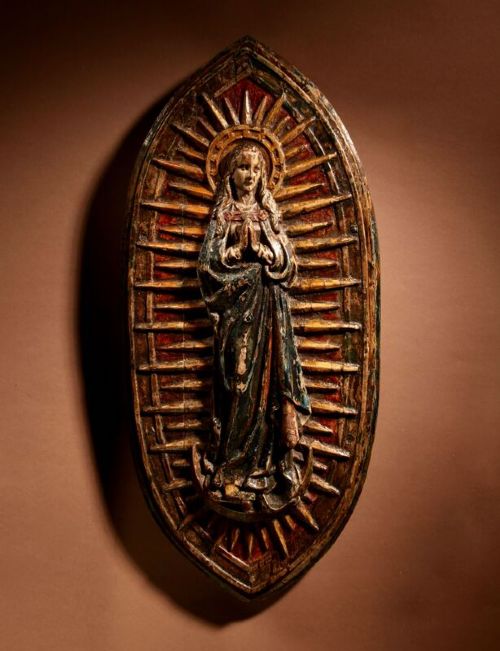
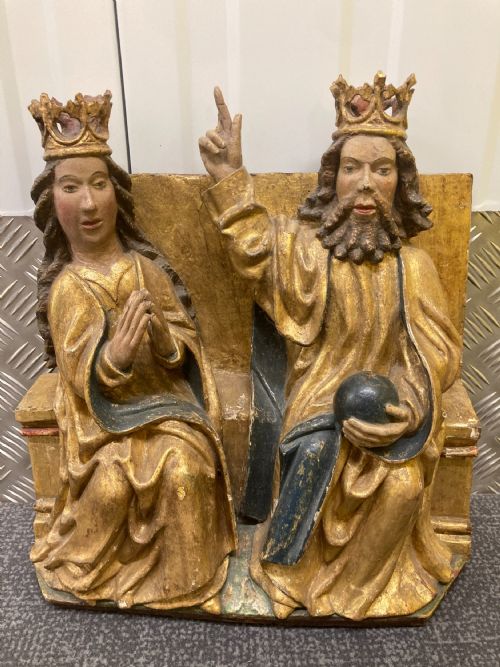
Many surfaces retain traces of their original preparation layers, including gesso applied directly to the timber to receive polychrome paint and gold leaf. These applied finishes transformed raw wood into luminous devotional objects, though centuries of wear have often left only fragments of the original colour.
Several figures gaze past the viewer with traditional painted polychrome eyes, preserving the exact expression intended for medieval churchgoers.
Evaluating sculptural quality
Quality rests upon the skill of the hand carving, seen in the natural fall of drapery, the expressive modelling of hands and faces, and the depth of relief. Superior pieces exhibit a dynamic sense of movement and anatomical proportion within the conventions of the period.
The survival of original surface treatments, such as polychrome paint or gilding, elevates a piece, as does the integrity of the timber form without extensive modern reconstruction. The precision of tool work distinguishes master workshop production from simpler provincial output.
The Gothic Wood Sculpture Glossary
- Polychrome
- Painted in several colours. This finish was commonly applied over a gesso ground on medieval and Renaissance wood figures to enhance realism.
- Gesso
- A plaster mix applied to wood surfaces. It served as a smooth base for subsequent gilding and paint layers.
- Altarpiece
- A structured artwork set above an altar. Central panels and flanking saints from these large wooden assemblies frequently survive as independent sculptures.
- Relief
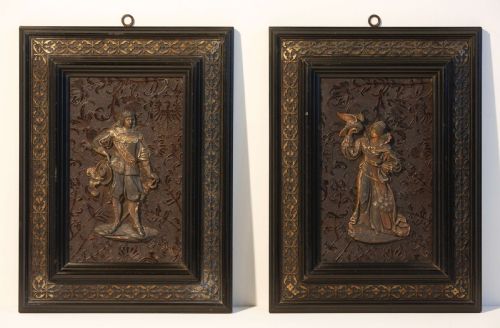
- A sculptural technique where figures project from a flat background. Wall plaques and architectural fragments utilise this method to depict narrative scenes.
Gothic Wood Sculpture: Frequently Asked Questions
Where were these carvings originally displayed?
Most pieces originated inside European churches, abbeys, and private chapels as components of altarpieces, rood screens, or architectural wall panelling. They served to instruct and inspire the faithful during services.
Later nineteenth century revival pieces were often created for domestic libraries or decorative ecclesiastical interiors.
How should I care for antique wood sculpture?
Maintain stable humidity and temperature levels in the room to prevent the timber from drying out, cracking, or warping. Keep pieces away from direct sunlight and strong heat sources.
Dust gently with a dry, soft brush and avoid applying modern polishes or oils to historic wood and painted surfaces.
What is the difference between medieval and revival pieces?
Original medieval and Renaissance carvings display the authentic tool techniques, wear patterns, and organic material degradation associated with active religious use over centuries. Nineteenth century revival pieces imitate these historical styles using contemporary nineteenth century methods and timbers.
Examining the depth of the patina and construction joints helps distinguish the two eras.