


Gothic Style Wood Carving
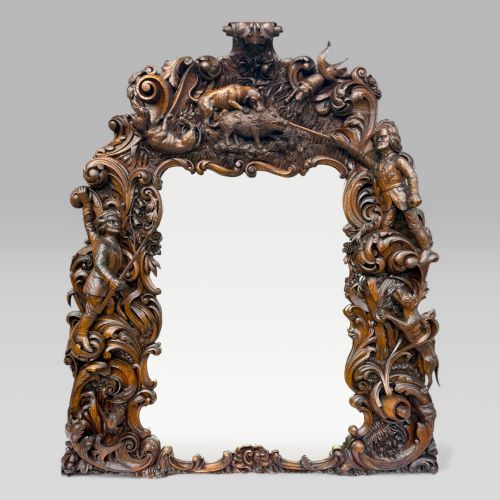
These heavy, figurative pieces of gothic style wood carving bring architectural drama and centuries-old craftsmanship straight into a modern room.
Gothic Style Wood Carving
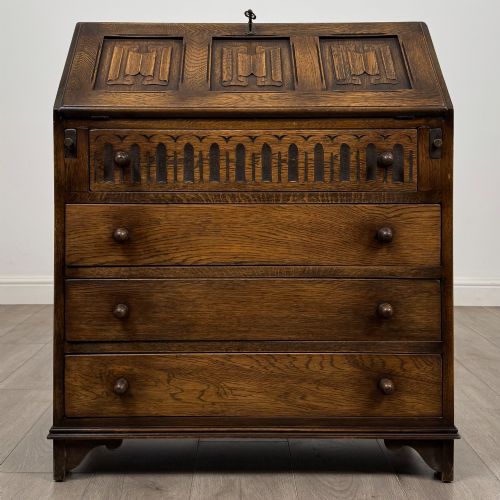
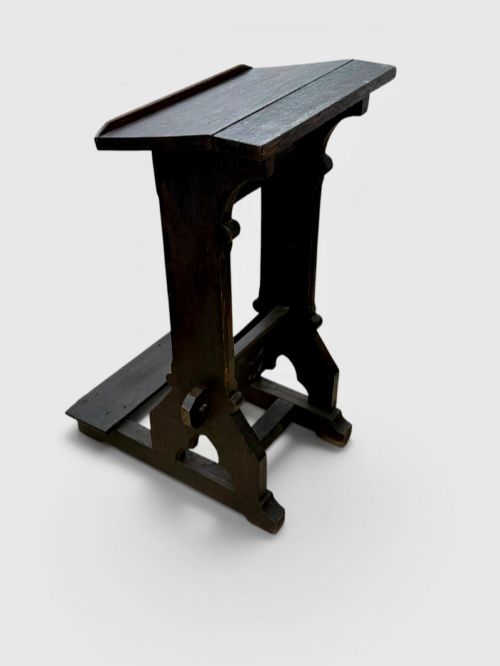
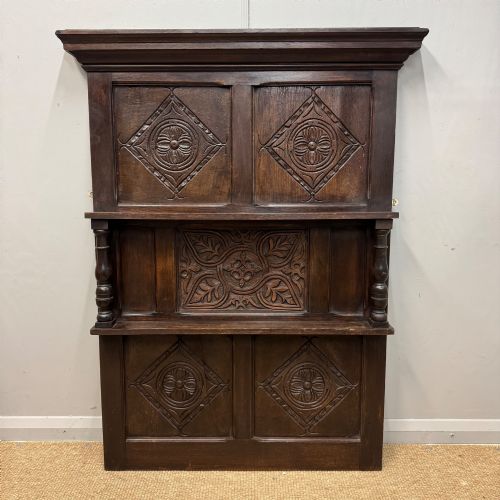
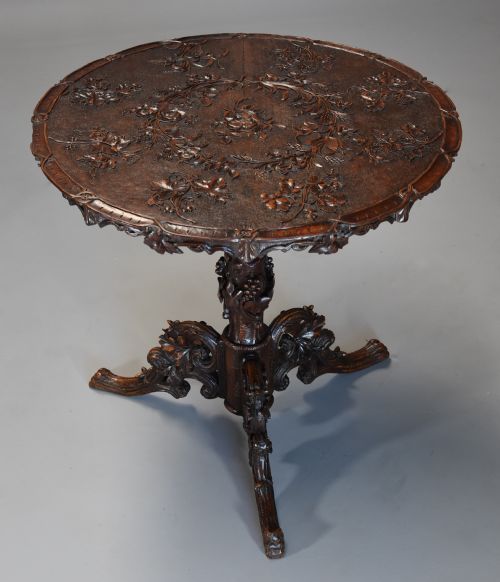
When you search for gothic style wood carving, you enter a field populated heavily by nineteenth-century revival pieces alongside earlier ecclesiastical fragments. The selections span oak prayer desks, overmantle panels, and wainscot armchairs that channel medieval ecclesiastical architecture. You will frequently encounter Victorian and Edwardian interpretations alongside distinct French, German, and English regional works.
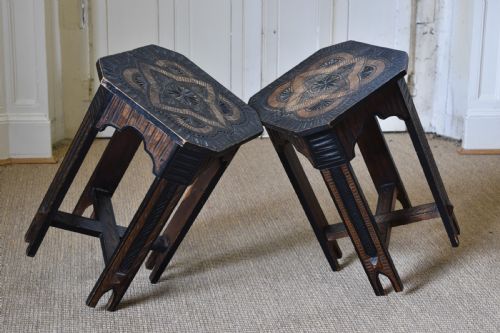
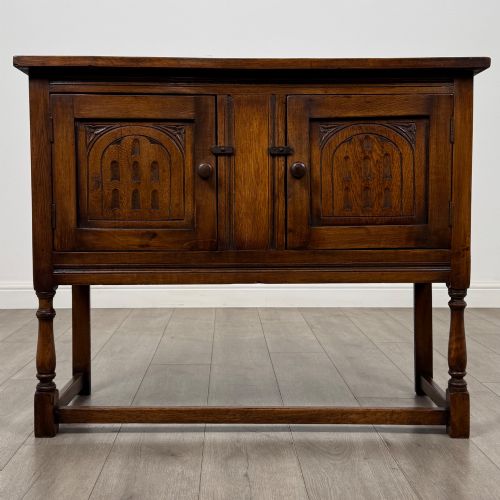
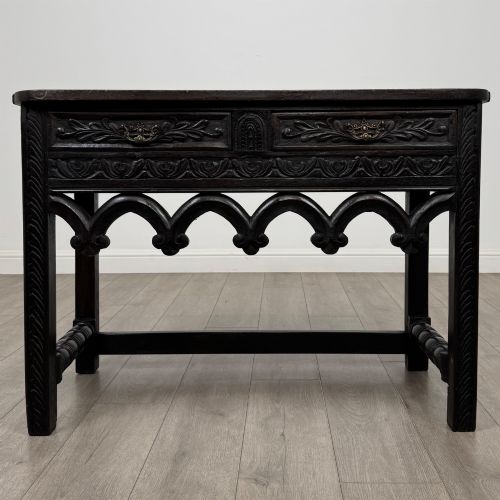
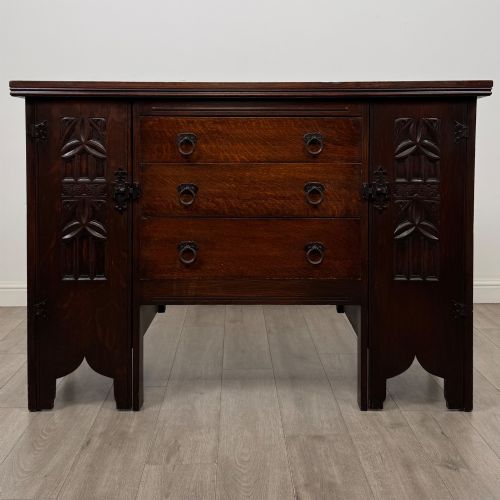
Domestic furniture takes the form of side tables, cupboards, and sideboards augmented with tracery and linenfold panels. Architectural fragments and religious figures, including saints and angels dating back to the sixteenth century, appear regularly among the seating and mirrors. These items serve both functional roles in a hall or library and purely decorative functions as wall art.
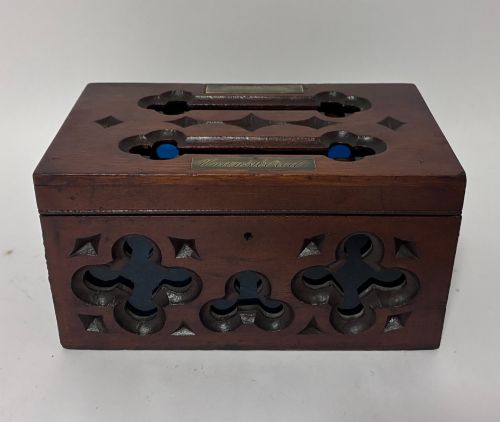
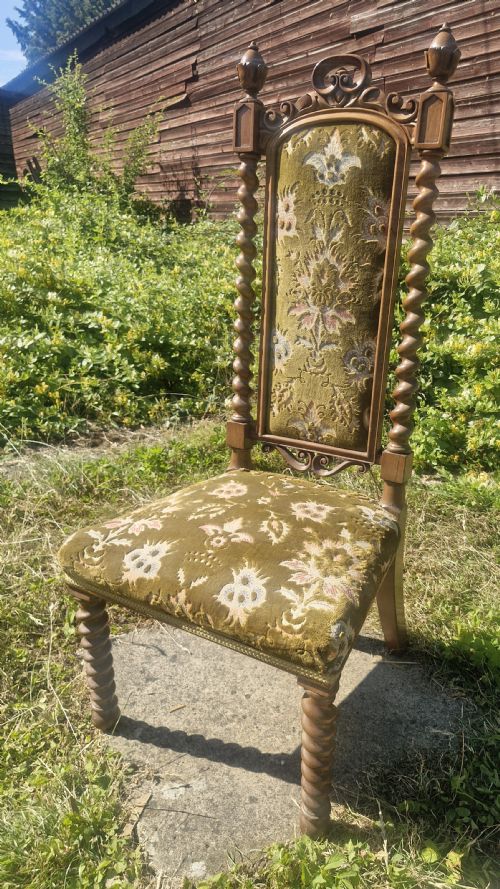
Revival styles on display stretch across Gothic, Tudor, and Jacobean idioms, often merging medieval forms with nineteenth-century domestic comfort. Heavy seating, such as high-back chairs and hall thrones, dominates the physical output alongside smaller tabletop ornaments and correspondence boxes. Oak remains the primary medium through which these medieval motifs are expressed across the centuries.
Materials and construction
Oak dominates the material evidence, chosen for its durability and its historical association with medieval and revival interiors. Craftsmen utilised dense hardwoods like linden and walnut for intricate figural sculptures and smaller decorative items such as Black Forest carvings. Surfaces frequently display deep relief work, chip carving, and linenfold patterns executed entirely by hand.
Joinery methods reflect traditional timber framing, utilising pegged mortise and tenon joints to bear the weight of heavy panels and seating. Secondary materials such as iron hinges, brass fittings, and occasional polychrome or gilt paint finishes complement the carved wooden substrates. The resulting objects rely on the natural strength of seasoned timber to survive centuries of domestic use.
Assessing quality and execution
Depth and crispness of the chisel work separate ordinary decorative items from superior examples of the craft. Sharp undercut details and proportioned figures demonstrate an artisan's complete mastery over the timber, whereas flat or mechanical incisions indicate rushed production. The selection of timber grain, particularly in quartersawn oak, determines the visual depth of the finished surface.
Historical integrity also defines the upper tier of these pieces, distinguishing genuine structural age from later decorative additions. The relationship between the carving and the supporting furniture piece must feel integrated rather than applied as an afterthought. Superior items maintain proportion, balance, and harmony between their structural framework and their ornamental motifs.
The Gothic Style Wood Carving Glossary
- Linenfold
- A style of wood carving that mimics folded fabric or linen, commonly seen on Tudor and Gothic revival panels. This motif became especially popular during the fifteenth century and saw a resurgence in nineteenth-century domestic furniture.
- Tracery
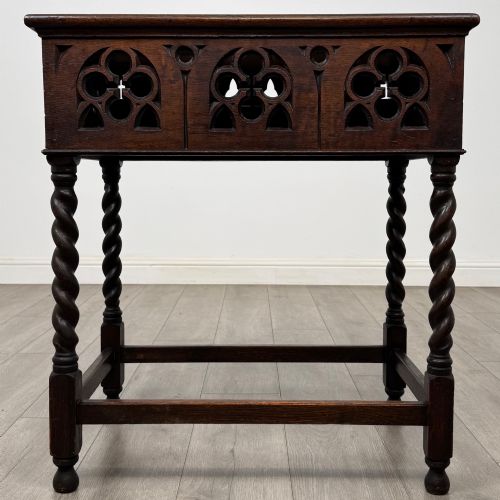
- Openwork stonework patterns translated into woodwork, featuring intersecting ribbing and cusps. It frequently defines the upper sections of cabinets, mirrors, and ecclesiastical screens.
- Wainscot
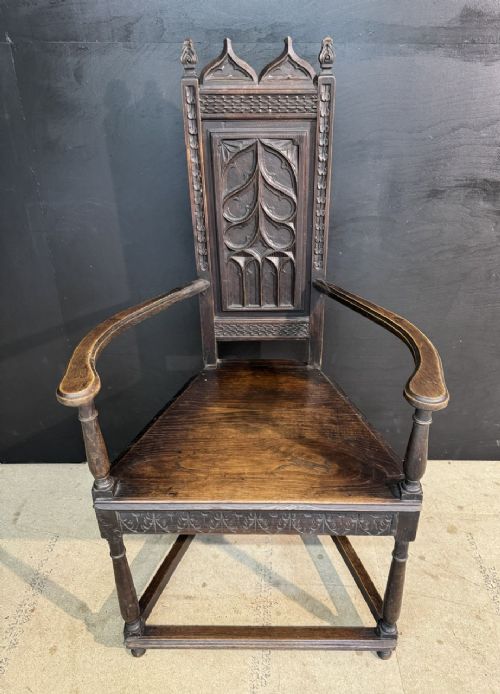
- A heavy wooden armchair constructed with panelled backrests, typical of sixteenth and seventeenth-century English interiors. These sturdy seats often feature carved strapwork and heavy arm supports.
- Creedence
- A small side table or cabinet historically used in churches for holding communion elements. In domestic settings, these pieces provide compact storage behind panelled doors.
- Polychrome
- Painting executed in multiple colours, often found on early religious sculptures and architectural fragments. This technique added lifelike qualities to carved wood figures before being exposed to bare wood aesthetics in later centuries.
Gothic Style Wood Carving: Frequently Asked Questions
How do I style a heavy oak panel?
Heavy oak panels function best when mounted directly onto plain plaster walls to let the carved relief work command visual attention. Pairing them with minimal modern furniture prevents a room from feeling overcrowded.
Ensure the wall fixings match the substantial weight of historic timber, as these panels require robust support.
Are these items from the medieval period?
While the design vocabulary originates in the medieval era, the vast majority of pieces date from nineteenth-century Gothic Revival movements. True sixteenth-century fragments appear alongside Victorian reproductions, making period identification essential.
Examine the tool marks, timber shrinkage, and joinery methods to determine the exact age of each specific piece.
How should I care for carved wood?
Maintain a stable room humidity to prevent the dry timber from splitting or warping over time. Dust the deep crevices regularly with a soft bristle brush to keep the intricate carvings clear.
Avoid applying modern silicone polishes, opting instead for a light microcrystalline wax when the surface requires nourishment.
What is a prayer desk kneeler?
A prayer desk kneeler is an ecclesiastical furniture piece designed for private devotion, featuring an angled shelf for books and a padded or wooden lower platform. These items reflect the domestic piety of nineteenth-century revival interiors.
They integrate well into modern studies or quiet corners as distinctive writing surfaces or display stands.