

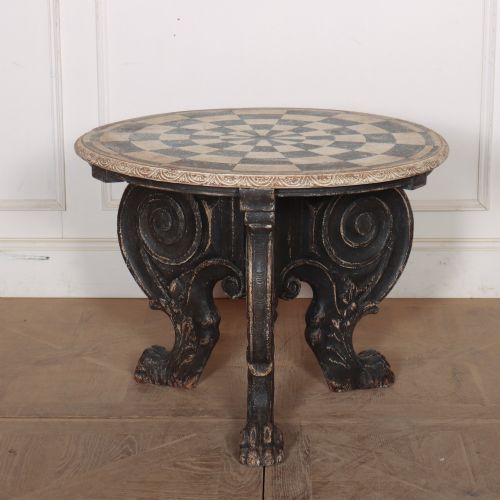
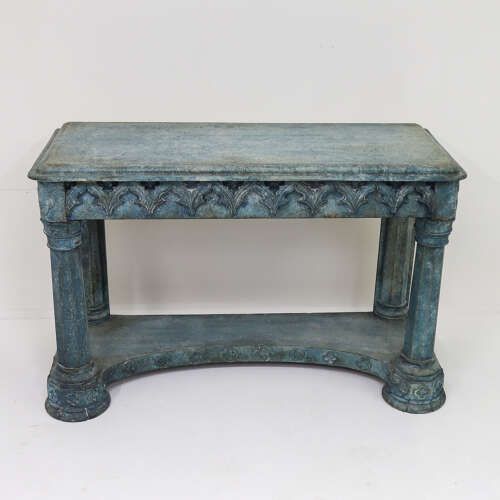

Gothic Style Side Table
These gothic style side table examples unite heavy ecclesiastical timber framing with domestic utility, offering centuries of architectural character.
Gothic Style Side Table
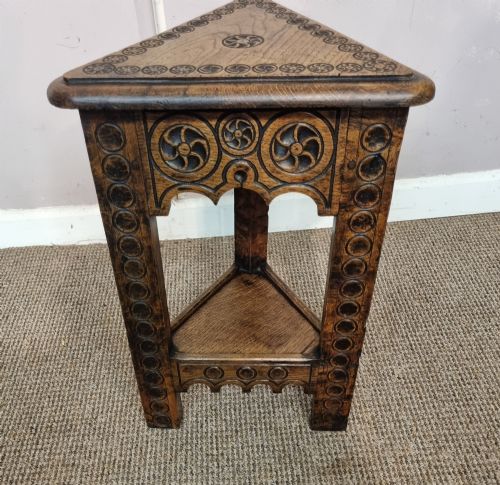
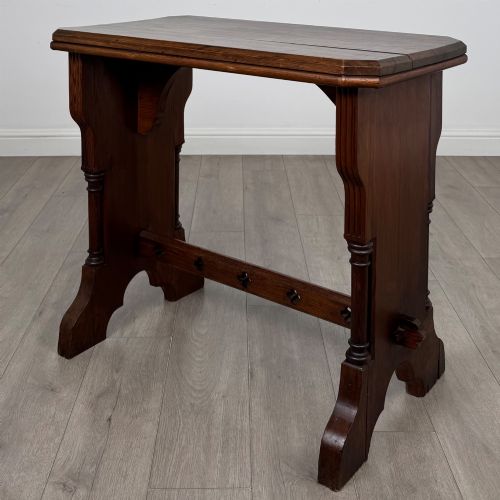
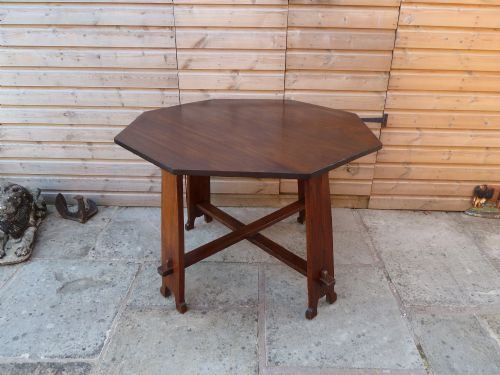
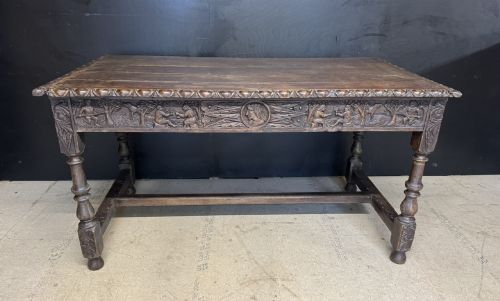
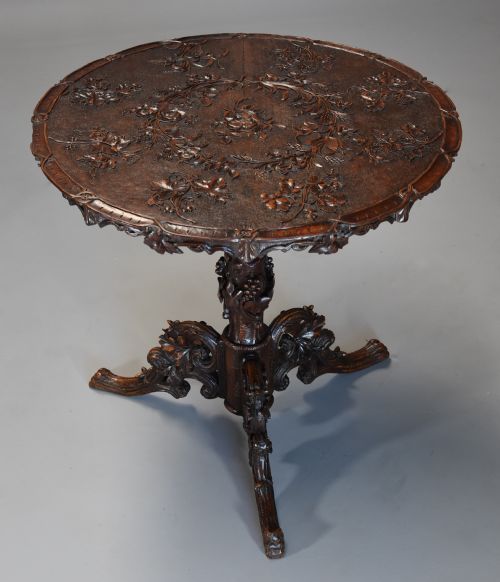
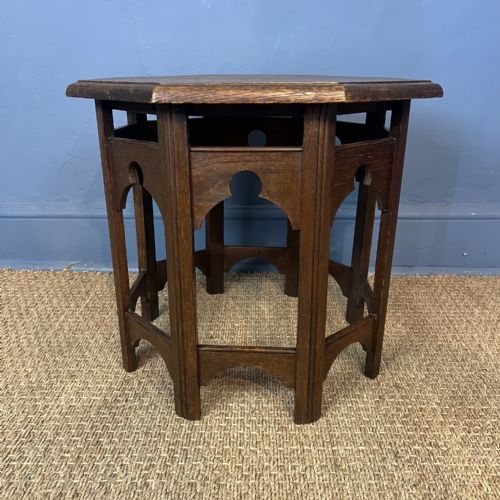
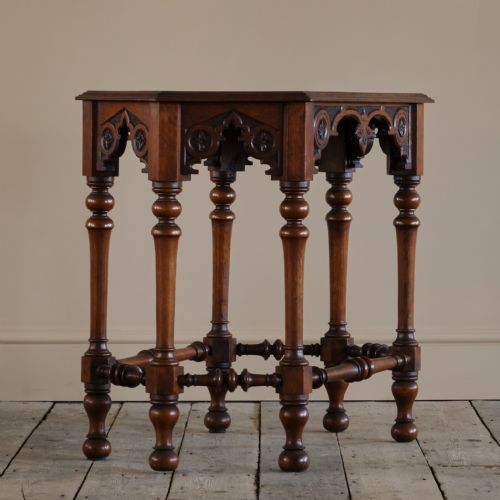
A gothic style side table brings medieval architectural motifs into domestic spaces, drawing heavily on nineteenth-century revival movements. Buyers encounter forms ranging from simple occasional tables and heavy oak writing desks to triangular lift-top pieces and console tables.
The material palette leans decisively towards solid oak and pitch pine, frequently accompanied by painted wood or walnut. Pieces appear across Victorian, Edwardian and early twentieth-century periods, often crossing stylistic boundaries into Arts and Crafts or Jacobean Revival.
How They Were Made
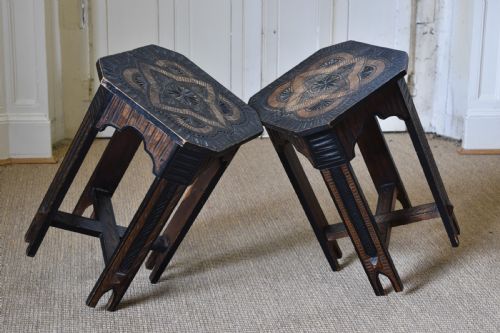
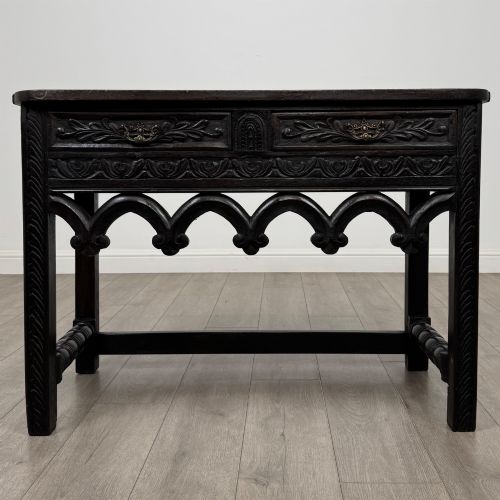
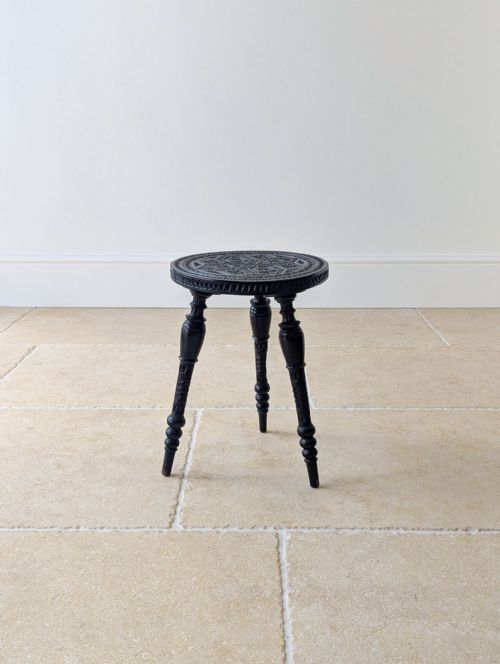
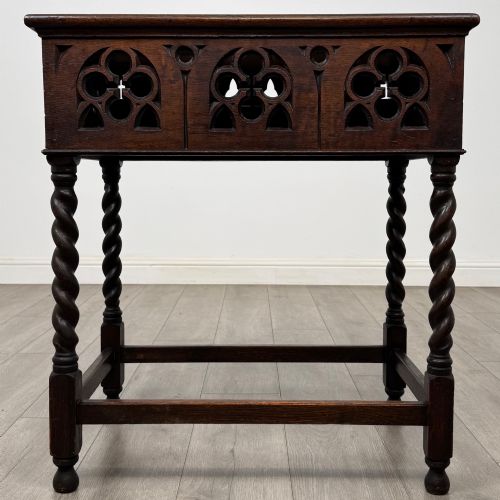
Cabinet makers relied predominantly on solid timber construction using oak, pitch pine and mahogany, joined with traditional framing techniques. Surfaces often display chip carving, fretwork or profuse linenfold and tracery details executed by hand.
Secondary materials such as brass fittings and painted finishes enhance the structural elements, while linden wood appears in specialised carved work. The finish depends on the timber, ranging from ebonised treatments to natural waxed oak.
One unexpected survivor on the marketplace is an apprentice piece window seat fashioned from solid oak.
What Varies in Quality
Quality rests primarily on the depth and crispness of the hand carving, distinguishing deeply undercut tracery from flat machine work. The choice of timber also dictates standard, with dense prime oak and pitch pine sitting above softer painted woods.
Structural integrity defines the better pieces, particularly in how heavy joints and triangular or hexagonal frames bear weight over time. Proportion and architectural fidelity separate standard production items from bespoke cabinet work.
Baillie Scott
The Gothic Style Side Table Glossary
- Chip carving
- A method of removing small chips from a wooden surface to form geometric or mediaeval patterns. It appears frequently on nineteenth-century occasional tables.
- Tracery
- Architectural stonework ornamentation adapted by cabinet makers for wooden panels and doors. It defines the gothic aesthetic on friezes and table skirts.
- Credence table
- A small side table traditionally used in churches to hold sacramental elements. Revival versions often incorporate heavy oak and open lower shelves.
- Ebonised
- Wood finished with a dark stain or pigment to imitate ebony. This treatment was popular during the Victorian period for accentuating carved details.
Gothic Style Side Table: Frequently Asked Questions
What periods do these tables come from?
The selection spans principally the nineteenth and early twentieth centuries, encompassing Victorian, Edwardian and revival eras.
Craftsmen produced these designs heavily between eighteen-seventy and nineteen-thirty, drawing inspiration from medieval architecture.
How do I identify a gothic style side table?
Look for structural elements borrowed from architecture, including pointed arches, quatrefoils, heavy chamfering and carved tracery.
Timbers are typically dark oak or pitch pine, constructed with robust joinery and solid panel tops.
Where were these tables used originally?
They served various domestic functions in halls, studies and libraries as writing desks, lamp tables or serving surfaces.
Some forms originated from ecclesiastical settings, translating altar and credence table designs into domestic furniture.
How do I care for antique oak furniture?
Maintain the wood by applying a natural beeswax polish occasionally to nourish the dry timber and protect the finish.
Keep pieces away from direct heat sources and strong sunlight to prevent timber movement and fading.