
Gothic Revival Wooden Chairs
These gothic revival wooden chairs bring architectural presence into a room, fashioned from solid timbers to echo medieval forms.
Gothic Revival Wooden Chairs
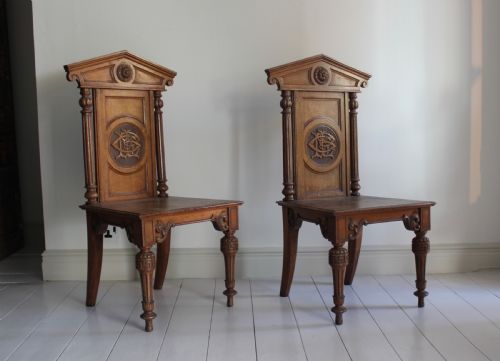
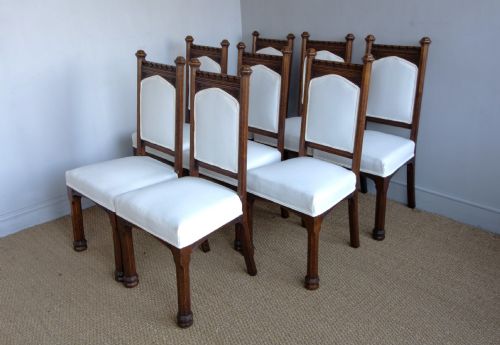
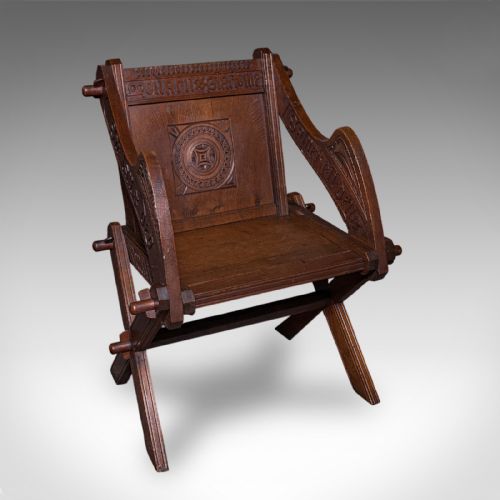
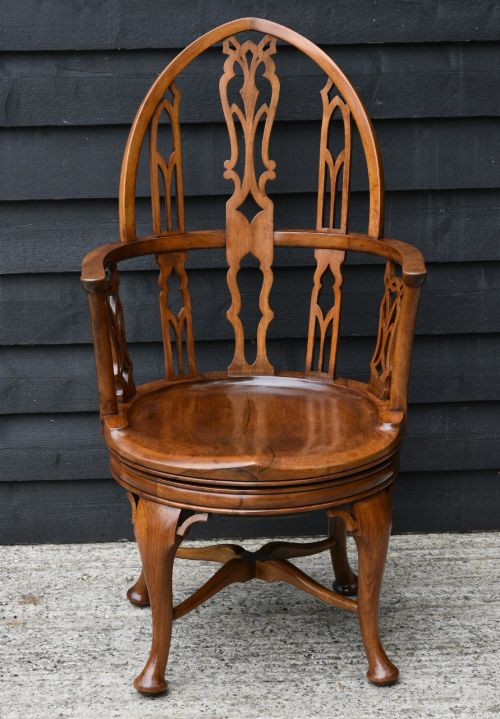
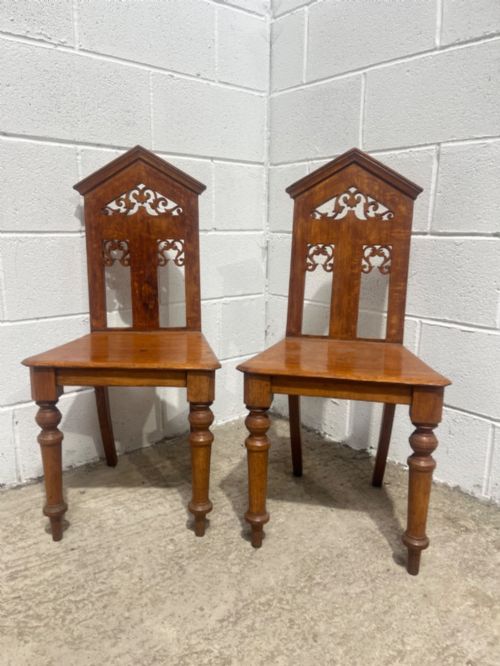
Gothic revival wooden chairs encompass seating created during the nineteenth and early twentieth centuries under the influence of medieval design. The selection includes dining chairs, hall chairs, armchairs, and desk chairs designed for domestic and ecclesiastical interiors.
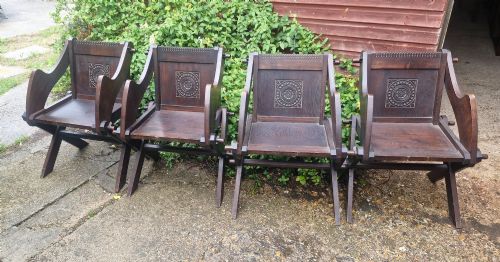
Oak forms the primary material for these pieces, appearing alongside walnut, mahogany, and pitch pine. Examples span specific forms such as Glastonbury chairs, Turner's chairs, and architectural hall seats bearing carved details.
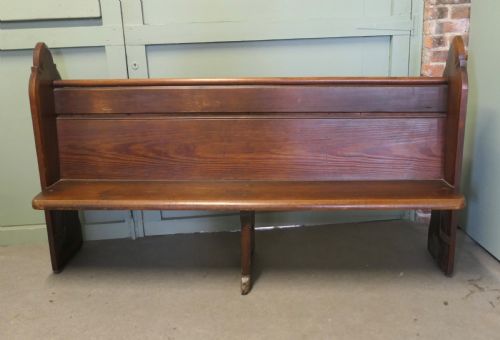
The style merges Victorian interpretation with earlier Gothic elements, sometimes crossing into Jacobean revival, Renaissance revival, and Aesthetic movement influences. Pieces range from simple church pews to substantial armchairs and matched dining sets.
How They Were Made
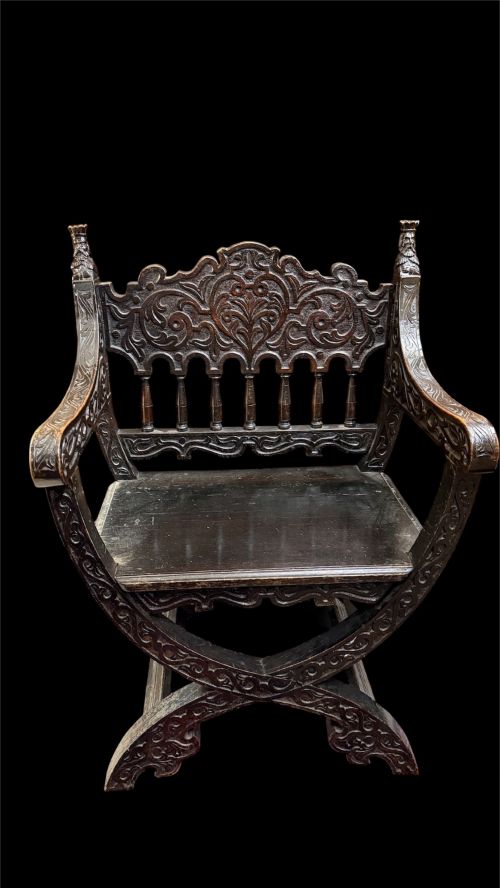
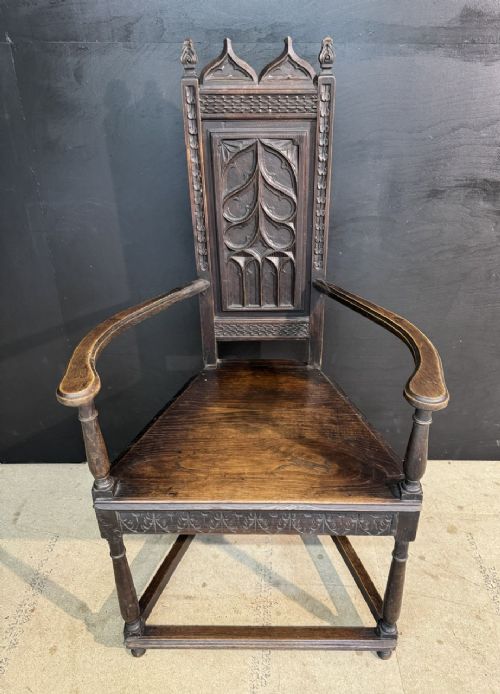
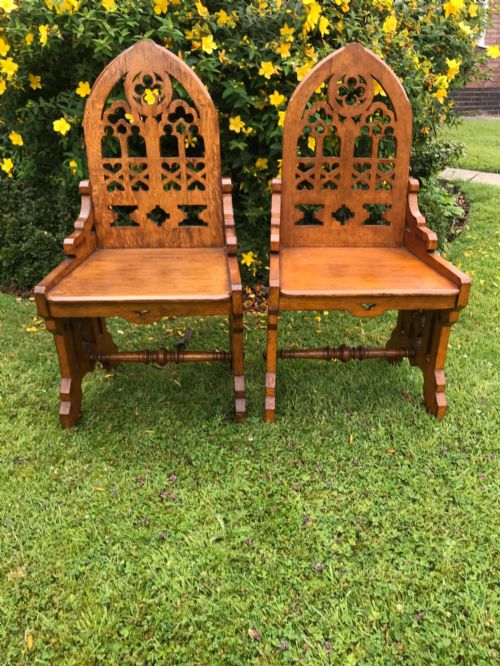
Cabinet makers utilised dense hardwoods, predominantly oak and walnut, joined with traditional framing techniques to support heavy architectural carving. Surfaces display hand-cut linenfold panels, tracery, and turned elements such as barley twists.
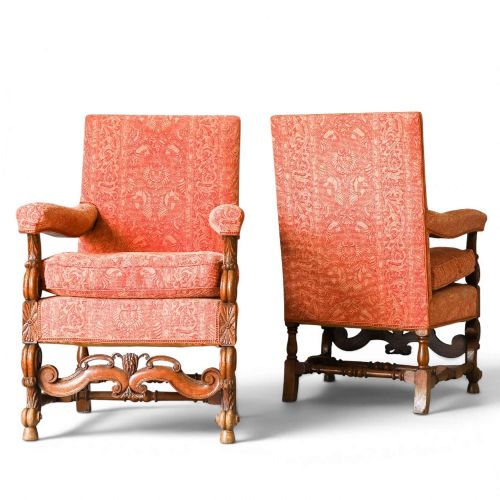
Certain models incorporate structural brass work or upholstery in leather and fabric, though plain timber surfaces remain dominant. The construction relies on solid joints designed to endure heavy use in reception halls, dining rooms, and ecclesiastical settings.
A revolving desk chair from the eighteen-nineties proves that Victorian scholars still enjoyed spinning around while studying ancient texts.
What Varies in Quality
Quality rests upon the depth and precision of the hand carving and the choice of timber figure within the oak or walnut. Pieces produced by known workshops or institutional commissions display sharper architectural proportions and heavier timber scantlings than standard commercial output.
The integrity of the frame construction and the survival of original surface patination determine the standing of an individual chair. Matched sets and pairs demonstrate higher consistency in maker execution than single assembled items.
Norwich Maker·Liberty And Co
The Gothic Revival Wooden Chairs Glossary
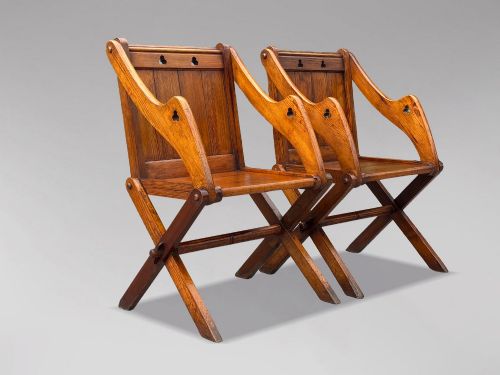
- Glastonbury chair
- A type of folding armchair with an X-framed base and a sloping panel back, popularised during the nineteenth-century revival. These pieces derive their name from an ancient relic chair associated with Glastonbury Abbey.
- Turner's chair
- A sturdy armchair constructed from turned wooden spindles and triangular seats, also known as a Saxon or roundabout chair. The design mimics seventeenth-century vernacular seating.
- Hall chair
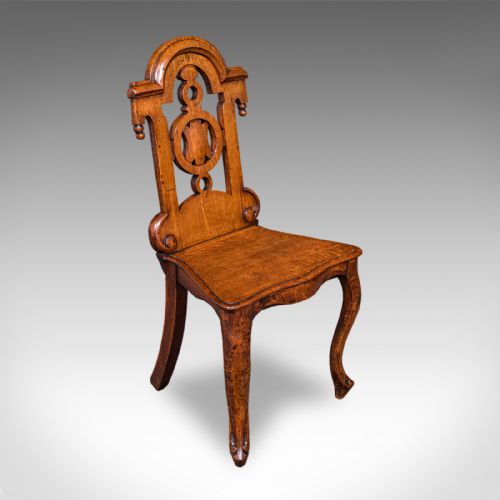
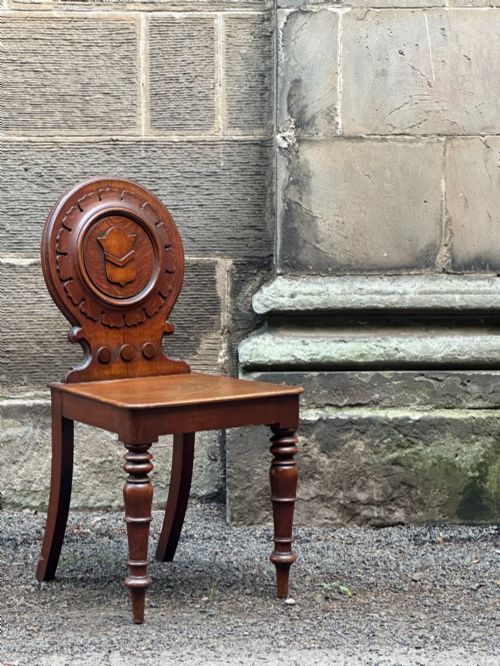
- A rigid wooden seat intended for entrance halls, typically featuring a solid carved back and plain timber seat. These pieces often bear family crests or architectural tracery.
- Wainscot chair
- A heavy wooden armchair constructed with panelled backs and solid armrests, originating in the sixteenth and seventeenth centuries and reinterpreted during the Victorian period. The term denotes a chair made from imported quarter-sawn oak boards.
- Pitch pine
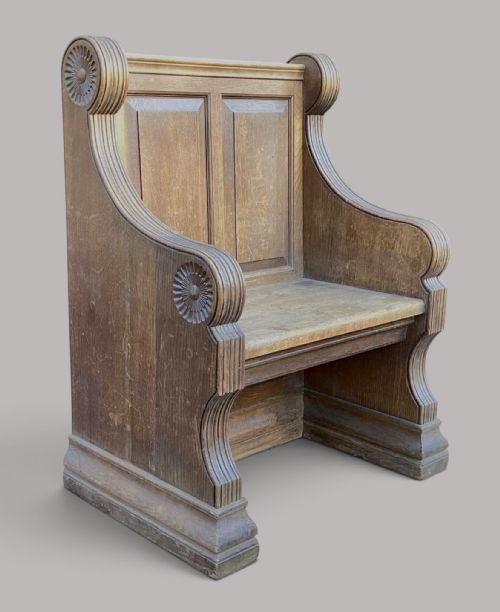
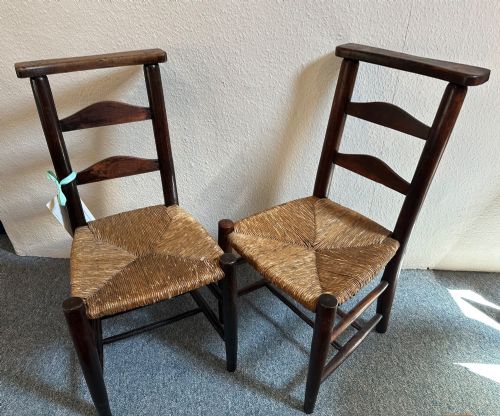
- A resinous softwood utilised in nineteenth-century church pews and institutional seating for its durability and strong grain pattern. This timber accepts heavy use while retaining a distinct linear texture.
Gothic Revival Wooden Chairs: Frequently Asked Questions
Where were these chairs used?
These chairs served in domestic entrance halls, dining rooms, libraries, and ecclesiastical buildings such as churches and chapels. Many were commissioned for specific institutional spaces.
Domestic variants furnished reception rooms and desks, while heavier pews and throne chairs fulfilled ceremonial or seating duties in public buildings.
Are these chairs comfortable for daily use?
Most variants offer upright seating designed for dining, hall use, or desk work rather than lounging. Solid wooden seats and strict architectural backs encourage an upright posture.
Upholstered desk chairs and padded armchairs provide softer support, while wooden hall chairs function best as occasional seating.
How do I care for antique oak chairs?
Maintain the wood by applying occasional beeswax to nourish the dry timber and preserve the historic surface patination. Avoid placing chairs near direct heat sources or rapid temperature shifts.
Keep upholstered elements clean using appropriate textile methods, and inspect structural joints periodically for stability.