







Gothic Revival Wooden Box
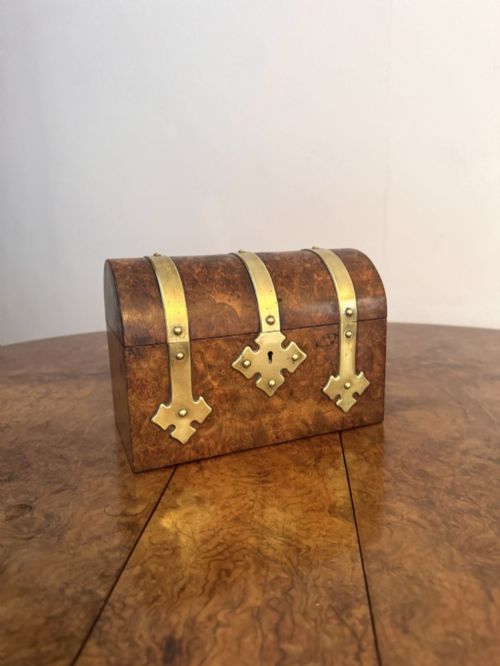
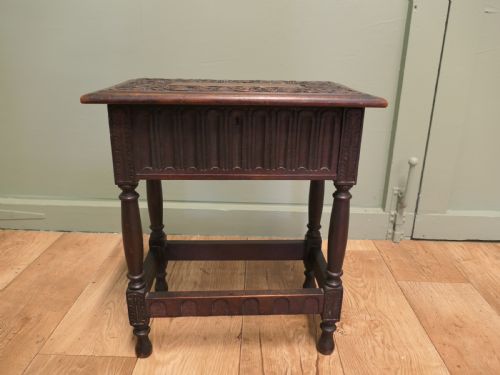
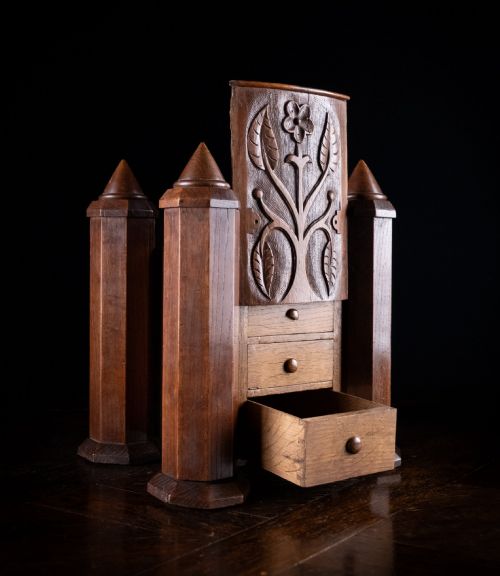
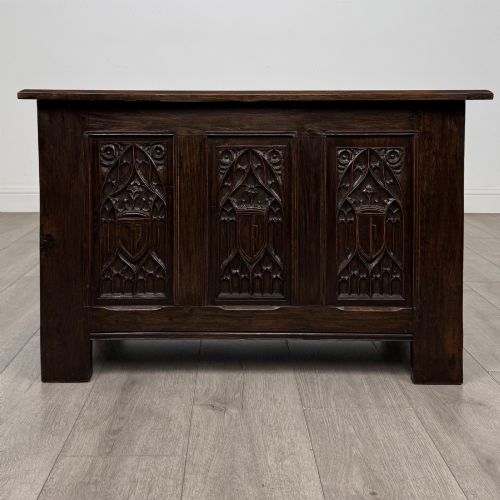
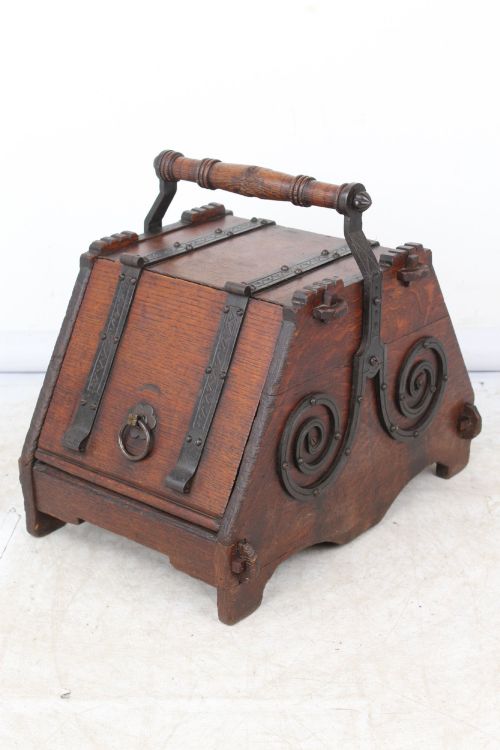
A gothic revival wooden box brings medieval architecture into domestic spaces through pointed arches, heavy tracery and rich timber.
Gothic Revival Wooden Box
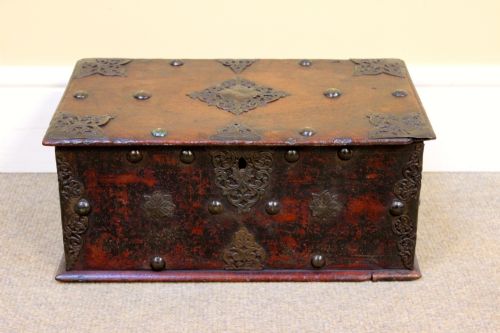
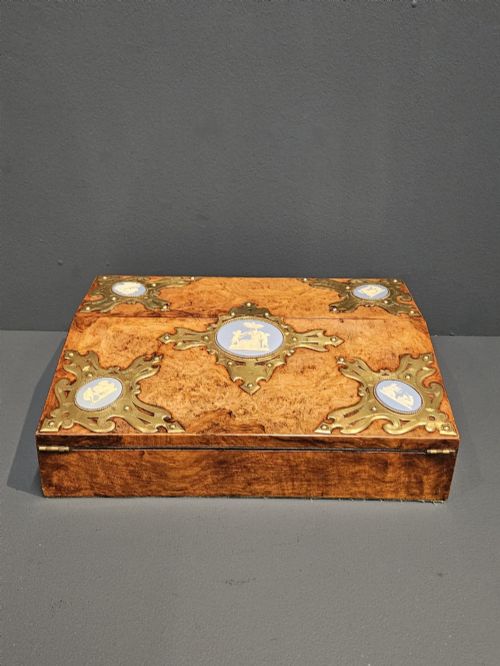
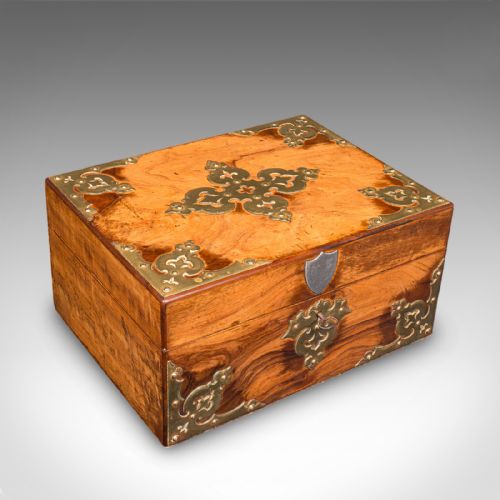
A gothic revival wooden box encompasses small desktop pieces like correspondence boxes and stationery cabinets alongside larger coffers and tea caddies. These containers were designed to store valuables, letters, or domestic commodities safely while displaying architectural ornament derived from medieval stone buildings.
The pieces appearing on this page span the nineteenth century into the twentieth, with Victorian examples dominating the selection. Buyers regularly encounter oak, walnut, and coromandel constructions shaped into dome tops, slant fronts, and heavy chests.
Beyond standard storage containers, the category extends to specialised items including sewing cases, jewellery boxes, and inkstands. Each object adapts ecclesiastical or medieval motifs for domestic use, merging functional storage with ornamental revivalism.
Materials and Construction
Cabinet makers utilised dense hardwoods such as oak, mahogany, walnut, and exotic coromandel to build these containers. These timbers provided the structural strength required for heavy carving, panel assembly, and the mounting of substantial metal hardware.
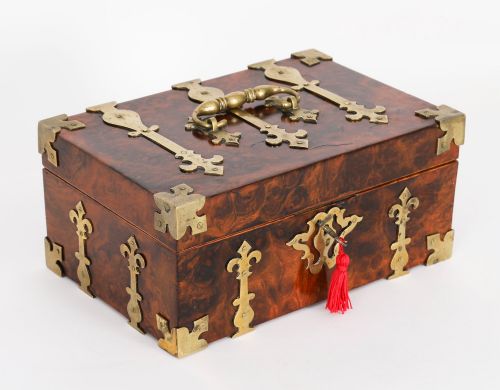
Brass straps, hinges, and lock plates frequently reinforce the timber corners and edges, often secured with visible screws or rivets. Interior fittings involve secondary woods, glass panels, and velvet or silk linings designed to protect stored items.
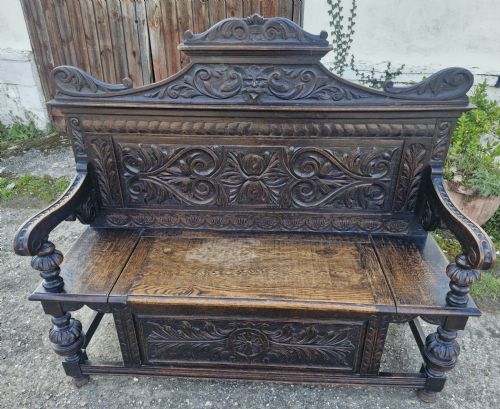
Surface decoration relies on deep relief carving featuring tracery, linenfold patterns, and geometric motifs. Joinery techniques include dovetailing for box bodies and mortise and tenon joints for larger chests and coffers.
Gothic Revival Wooden Box Retail Price Guide 2026
Typical asking prices for gothic revival wooden box among the pieces listed under this phrase on Sellingantiques today, from the lower quarter to the upper quarter. They describe what is for sale here now, not the wider market.
One determined box contains secret compartments engineered to test the patience of any visiting family member.
Assessing Quality and Execution
The distinction between standard production and superior execution rests upon the depth and sharpness of the timber carving. Master carvers rendered architectural arches and foliage with crisp undercut details, whereas lesser examples rely on shallow, machine-routed patterns.
Hardware integration marks another divergence in execution, seen in heavy brass mounts, straps, and working locks fitted flush to the timber. Superior pieces employ figured veneers like burr walnut or amboyna laid over solid carcase woods with precise grain matching.
Christopher Dresser·Jack Grimble Pollard·Pugin·Rodman and Co
The Gothic Revival Wooden Box Glossary
- Gothic Revival
- An architectural and decorative style drawing inspiration from medieval forms, pointed arches, and ecclesiastical motifs. It manifested in furniture and decorative objects throughout the nineteenth century.
- Stationery Box
- A desk accessory fitted with tiered compartments or dividers to hold writing paper and envelopes. These boxes often feature sloping drop-fronts or upright cabinet doors.
- Coromandel
- A dense, heavily figured exotic hardwood imported from Asia, valued for its dark brown colour and contrasting black streaks. It frequently served as a primary veneer on high-status Victorian boxes.
- Teapoy
- A small stand or box mounted on a pillar and base, designed originally to hold canisters of tea. Nineteenth-century examples often incorporate internal caddies and mixing bowls.
- Escutcheon
- A flat plate of brass or iron surrounding a keyhole to protect the surrounding timber from wear. On these pieces, they frequently take decorative pointed or trefoil shapes.
Gothic Revival Wooden Box: Frequently Asked Questions
What were gothic revival wooden boxes used for?
These containers served practical domestic functions such as storing stationery, jewellery, tea, and writing materials. Their robust construction kept valuable documents and commodities secure within the Victorian household.
At the same time, their decorative architectural motifs allowed owners to display refined taste and an appreciation for medieval design in studies and drawing rooms.
How do I care for antique wooden boxes?
Maintain stable humidity levels and keep wooden boxes away from direct heat sources to prevent the timber from splitting or warping. Dust regularly with a dry cloth and apply occasional wax polish to nourish old finishes.
Avoid using modern liquid cleaners or harsh chemical sprays, as these can strip traditional wax or shellac coatings and damage vulnerable brass mounts.
How can I tell Victorian boxes apart from Edwardian ones?
Victorian examples generally display heavier proportions, deeper relief carvings, and abundant brass mounts or exotic veneers like coromandel. The ornamentation often leans towards elaborate ecclesiastical Gothic Revival details.
Edwardian pieces tend to show cleaner lines influenced by the Arts and Crafts movement, favouring plain pollard oak or mahogany with simpler hardware and understated joinery.
Are these boxes suitable for daily desktop use?
Many stationery boxes, inkstands, and desk accessories remain fully functional for modern use. Their internal compartments and sturdy construction accommodate pens, letters, and small office supplies effectively.
Users should simply check that hinges operate smoothly and that historical locks have functioning keys before relying on them for daily security.