



Gothic Revival Umbrella Holder
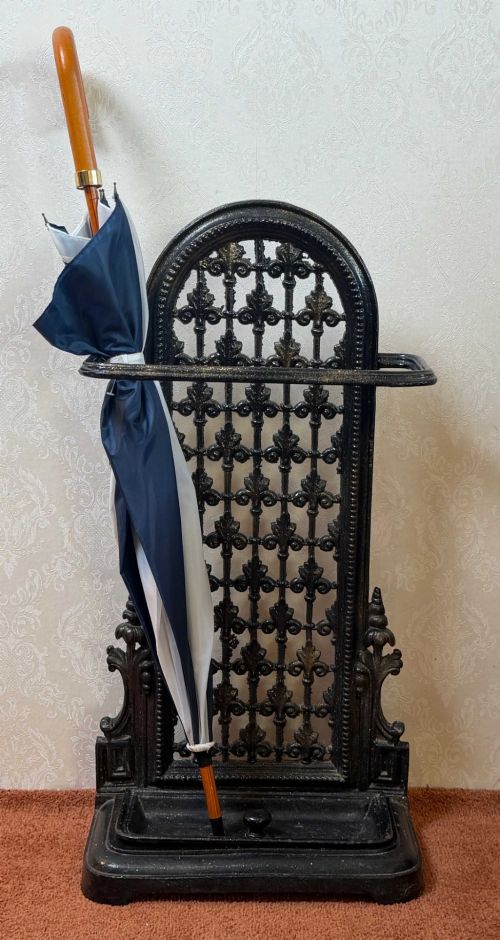
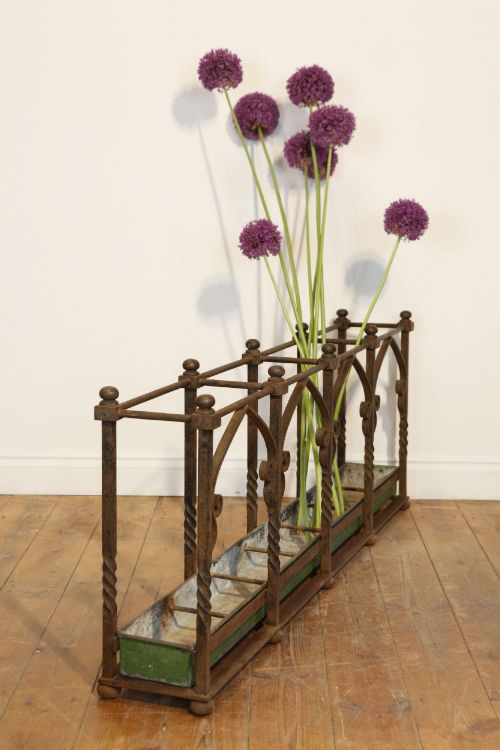
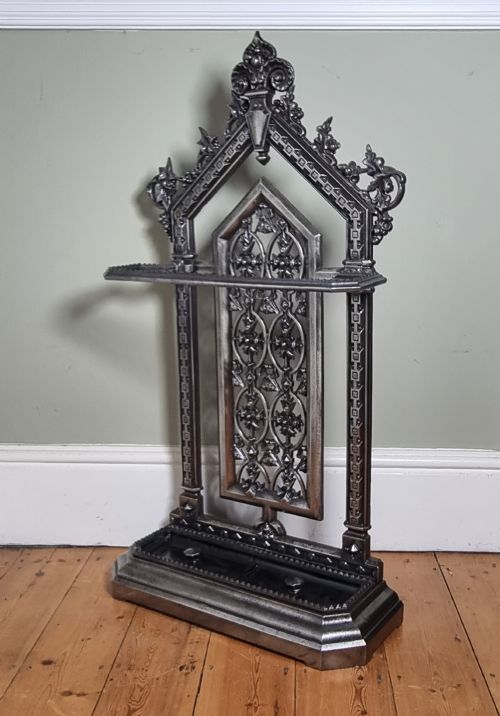
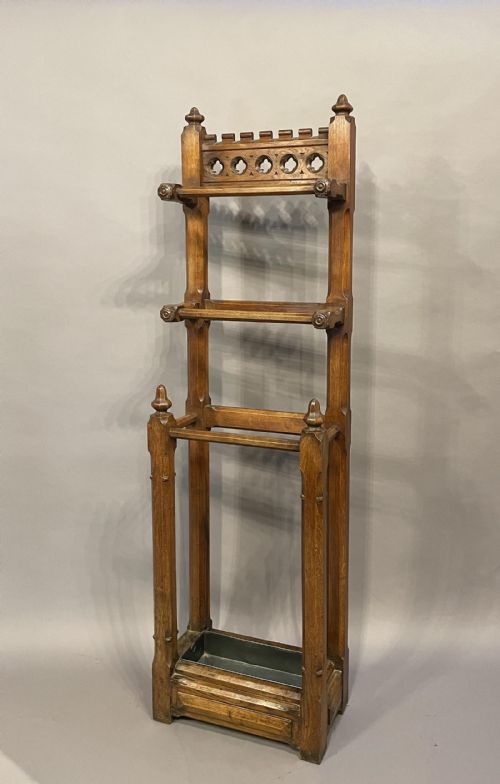
These gothic revival umbrella holder pieces bring serious architectural presence to a hallway, combining cast iron or oak with pointed arches and historicist detail.
Gothic Revival Umbrella Holder
When you search for a gothic revival umbrella holder, you encounter robust hallway furnishings designed to handle wet walking sticks and heavy coats. These pieces range from dedicated umbrella stands and umbrella and stick stands to broader hall stands incorporating hat and glove storage.
The versions most likely to be met on this page belong to the nineteenth century, with Victorian pieces dominating the selection. They appear in styles that mix gothic revival with aesthetic movement or Victorian jacobean revival influences.
Makers and foundries utilised durable materials suited to daily household traffic, producing both single stands and large pairs intended for country houses. Their forms draw directly upon medieval architectural motifs translated for nineteenth-century domestic interiors.
Materials and construction
Foundries cast heavy metals into structural frames, using cast iron, iron, brass, zinc, and sheet metal to build rigid uprights and drip trays. These metal structures often feature complex pierced patterns or figural depictions.
Cabinetmakers constructed alternative examples from solid oak, carving pointed arches and linenfold panels to match the architectural taste of the period. Sheet metal and zinc frequently lined the bases of these stands to catch moisture from wet items.
Gothic Revival Umbrella Holder Retail Price Guide 2026
Typical asking prices for gothic revival umbrella holder among the pieces listed under this phrase on Sellingantiques today, from the lower quarter to the upper quarter. They describe what is for sale here now, not the wider market.
Judging quality in these items
Quality rests upon the crispness of the casting in metal examples or the depth of the carving in oak pieces. Finer items retain clear surface detail in figural elements and architectural tracery rather than soft or blurred edges.
Scale and capacity separate ordinary hallway items from substantial country house pieces. Larger formats, including pairs or stands with integrated hat and glove compartments, demonstrate more ambitious design and heavier construction.
Coalbrookdale
The Gothic Revival Umbrella Holder Glossary
- Gothic Revival
- An architectural and decorative style drawing inspiration from medieval forms, characterised by pointed arches, trefoils, and heavy vertical lines. This revival dominated nineteenth-century design.
- Cast Iron
- Molten iron poured into a sand mould to create rigid, durable objects with intricate surface decoration. It formed the standard material for heavy nineteenth-century umbrella racks.
- Stick Stand
- A domestic furnishing designed to hold walking sticks, riding crops, and umbrellas upright in a hallway. These often incorporate a metal tray at the base to catch rainwater.
- Aesthetic Movement
- A late nineteenth-century design current that emphasised visual beauty over narrative meaning in decorative arts. Pieces from this movement often display refined geometric or stylised natural motifs.
Gothic Revival Umbrella Holder: Frequently Asked Questions
Where were these stands placed?
These pieces sat immediately inside the front door of a nineteenth-century home, providing a designated place for guests and family members to leave wet walking gear before entering the main rooms.
Their substantial weight and architectural design ensured they anchored the hallway scheme while keeping damp umbrellas away from interior carpets.
How do I care for cast iron?
Cast iron requires minimal intervention beyond dusting and ensuring the base tray remains free of standing moisture to prevent rust. Applying a light wax can help protect the finished surface.
Avoid harsh chemical cleaners that might strip the historic patination accumulated over the nineteenth century.
What is a hall stand?
A hall stand is a larger piece of furniture that combines an umbrella rack with clothes hooks, a mirror, and sometimes storage boxes for gloves. These items served as central entry furniture in larger Victorian houses.
They offered a complete greeting point for visitors arriving from the outdoors.
How do I date these pieces?
Dating relies upon stylistic markers, material choices, and occasional foundry stamps or registration marks cast into the metalwork. The nineteenth-century examples often combine gothic arches with Victorian manufacturing methods.
Oak pieces display period-specific joinery techniques and carving styles typical of the era.