





Gothic Metal Umbrella Stand
A gothic metal umbrella stand brings robust industrial presence to an entrance, offering architectural form and practical storage for walking gear.
Gothic Metal Umbrella Stand
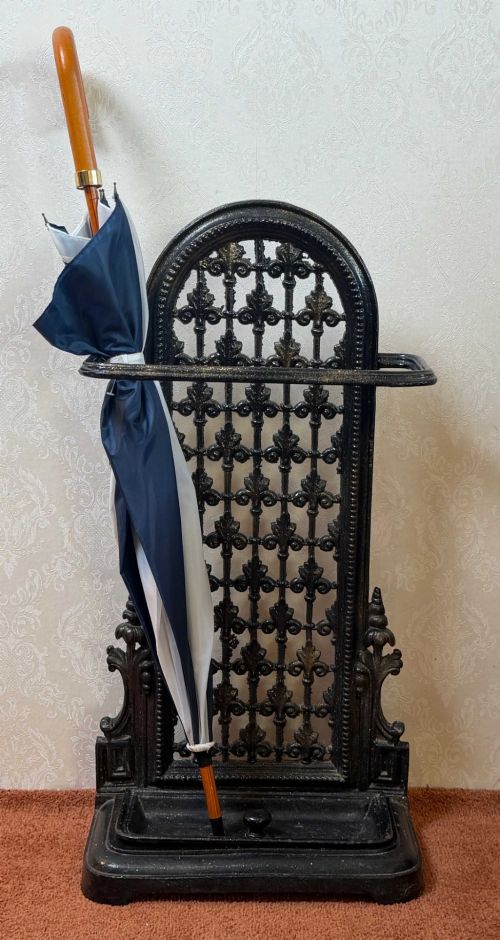
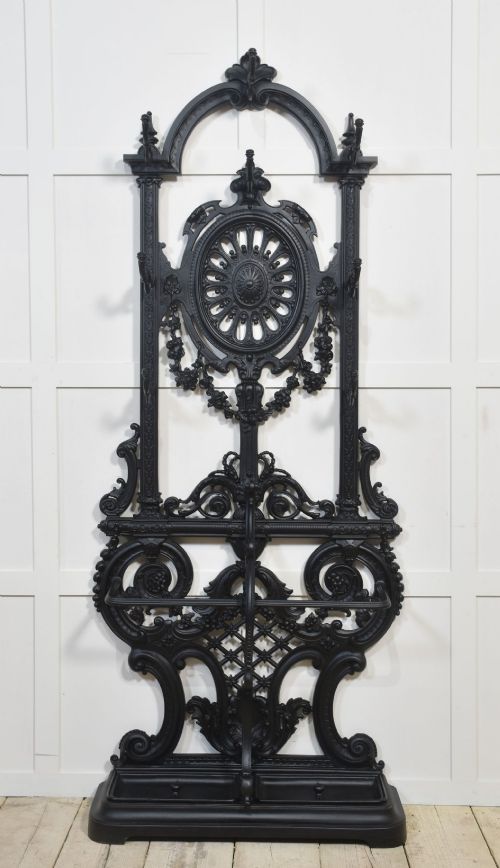
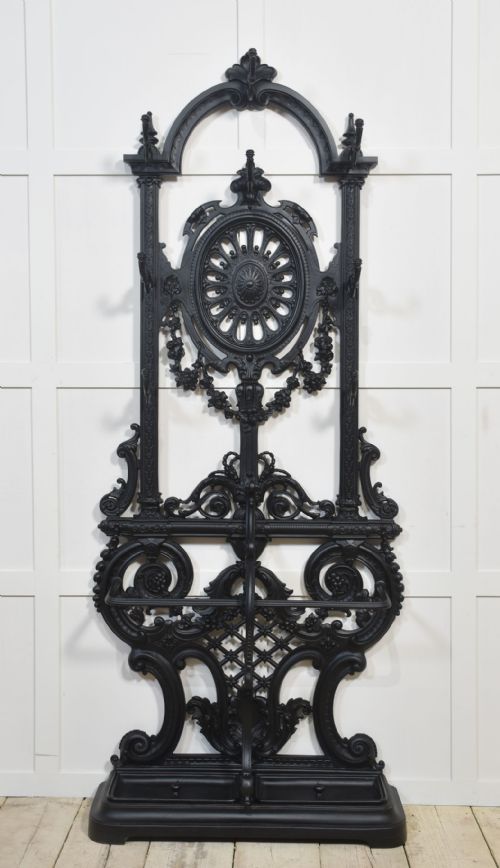
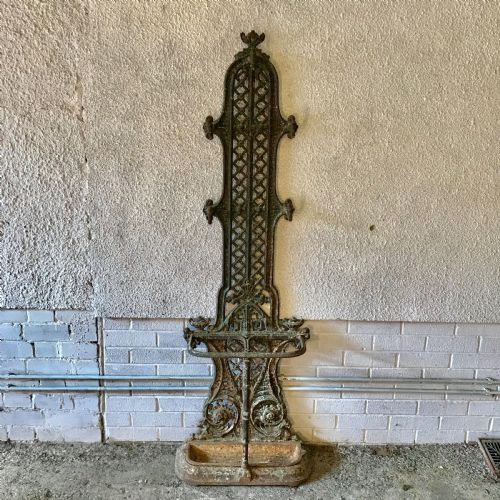
When searching for a gothic metal umbrella stand, a buyer examines heavy structural furnishings designed to hold walking sticks and wet umbrellas in a hallway. The versions encountered most frequently on this page date from the Victorian and nineteenth-century periods, capturing the heavy revival styles of the era.
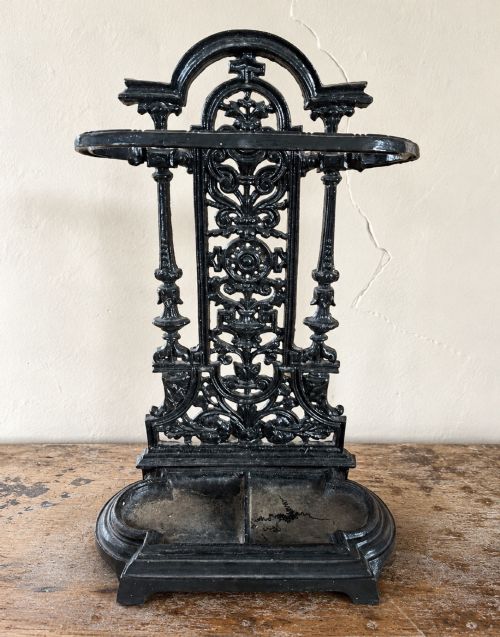
These items manifest primarily as cast iron hall stands, stick stands, and dedicated umbrella stands. The designs draw heavily upon architectural gothic vocabulary, incorporating pointed arches, trefoils, and heavy structural framing executed in robust metal.
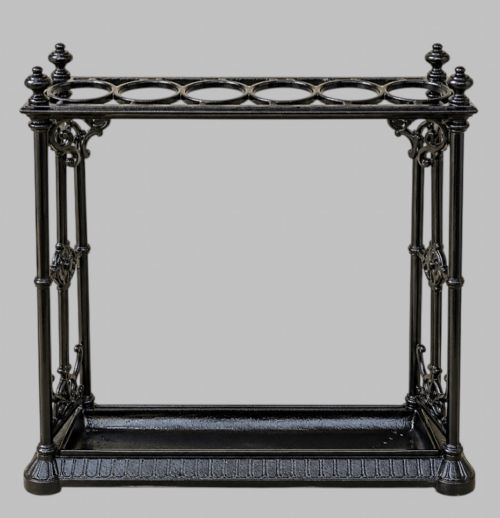
Makers such as the Falkirk Foundry and manufacturers working in the Coalbrookdale style dominate the physical forms seen here. Buyers encounter variations that range from twenty-four ring circular arrangements to large pairs intended for country houses.
How they were made
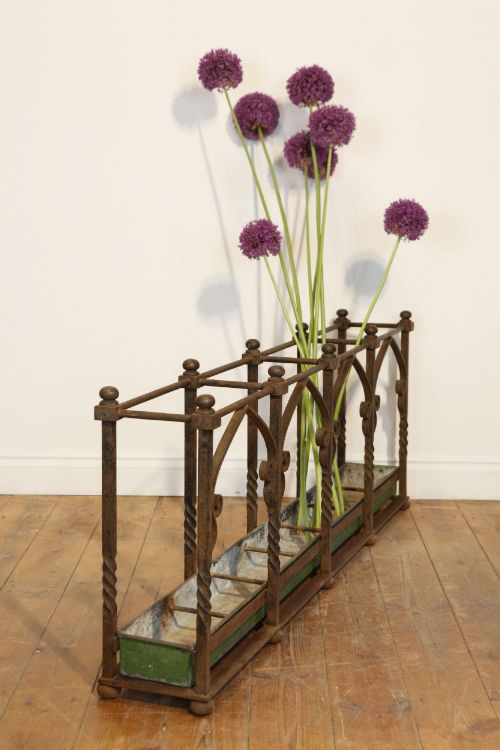
Cast iron serves as the primary structural material, poured into complex moulds to achieve intricate architectural tracery and heavy load-bearing frames. Wrought iron, sheet metal, and zinc elements frequently supplement the main castings to form drip trays and secondary bracing.
Gothic Metal Umbrella Stand Retail Price Guide 2026
Typical asking prices for gothic metal umbrella stand among the pieces listed under this phrase on Sellingantiques today, from the lower quarter to the upper quarter. They describe what is for sale here now, not the wider market.
Some twenty-four ring stands could accommodate an entire regiment of umbrellas on a particularly rainy morning.
What varies in quality
The sophistication of the casting work dictates the distinction between standard production items and exceptional examples. Crispness in the rendering of gothic revival details, such as deep undercut mouldings and sharp architectural motifs, marks superior execution.
Substantial weight and structural integrity separate robust country house scale pieces from lighter domestic variants. The integrity of secondary metals, such as original removable zinc or copper drip pans, influences the completeness of the object.
Falkirk Foundry
The Gothic Metal Umbrella Stand Glossary
- Gothic Revival
- An architectural and decorative style drawing on medieval forms, prominent during the nineteenth century. This movement reintroduced pointed arches and heavy structural ornaments to domestic metalwork.
- Cast Iron
- A hard, brittle alloy of iron and carbon poured into moulds to create complex shapes. It forms the heavy structural body of most nineteenth-century stick stands.
- Hall Stand
- A large piece of entrance furniture combining coat hooks, a mirror or panel, and a stick stand base. These items organise visitors' outdoor gear in grand hallways.
- Drip Tray
- A removable metal basin positioned at the base of a stand to catch water from wet umbrellas. These trays protect interior flooring from moisture.
- Arts and Crafts
- A design movement valuing handcraftsmanship and honest materials over mass production. Pieces from this tradition often combine hammered copper with exposed ironwork.
Gothic Metal Umbrella Stand: Frequently Asked Questions
What periods do these metal umbrella stands date from?
The pieces listed originate primarily from the nineteenth century, encompassing Victorian production as well as items dated around eighteen-eighty and nineteen hundred.
Design influences span standard Victorian work, Gothic Revival architecture, and later Arts and Crafts movements.
How were these stands used in nineteenth-century homes?
Households placed them in entrance halls and vestibules to store wet umbrellas and walking sticks upon returning from outdoors.
They kept hallways tidy and protected wooden floors from moisture dripping from wet outerwear.
What materials make up a gothic metal umbrella stand?
Cast iron forms the primary structural body of the majority of pieces, frequently supplemented by wrought iron, sheet metal, and zinc.
Some examples incorporate contrasting elements of brass, copper, or oak timber within their construction.
How do I distinguish between different styles of stands?
Victorian Gothic examples feature heavy architectural motifs like pointed arches and quatrefoils cast directly into the iron frame. Arts and Crafts pieces tend to showcase hammered copper or mixed metals with simpler structural lines.
Larger country house versions often take the form of combined hall stands with integrated coat hooks.