
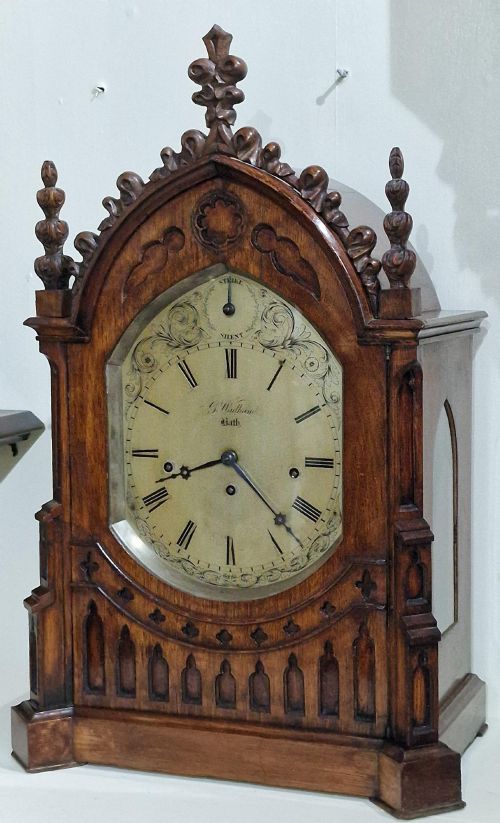
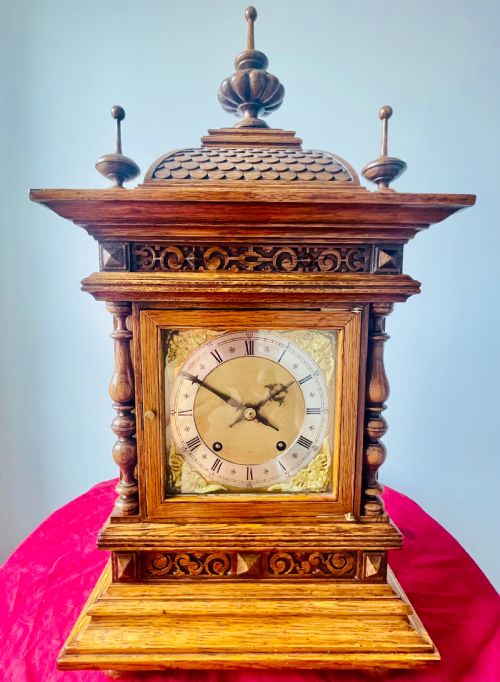
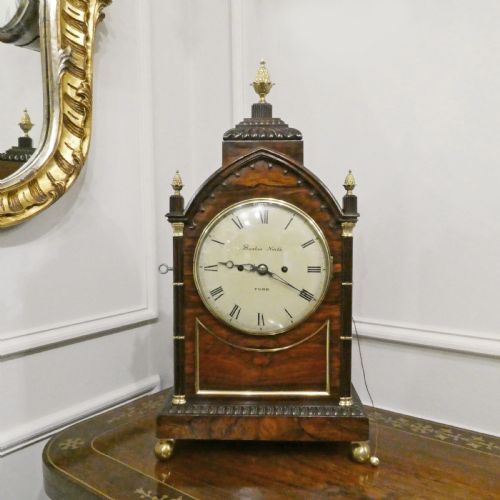

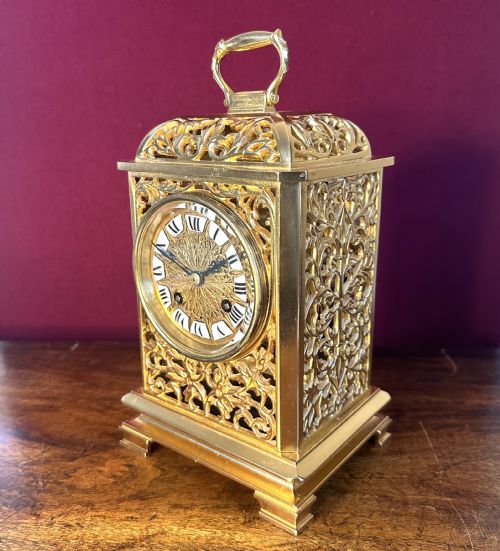


Gothic Revival Table Clock
These gothic revival table clock examples offer striking architectural presence, combining medieval verticality with precision timekeeping for the interior.
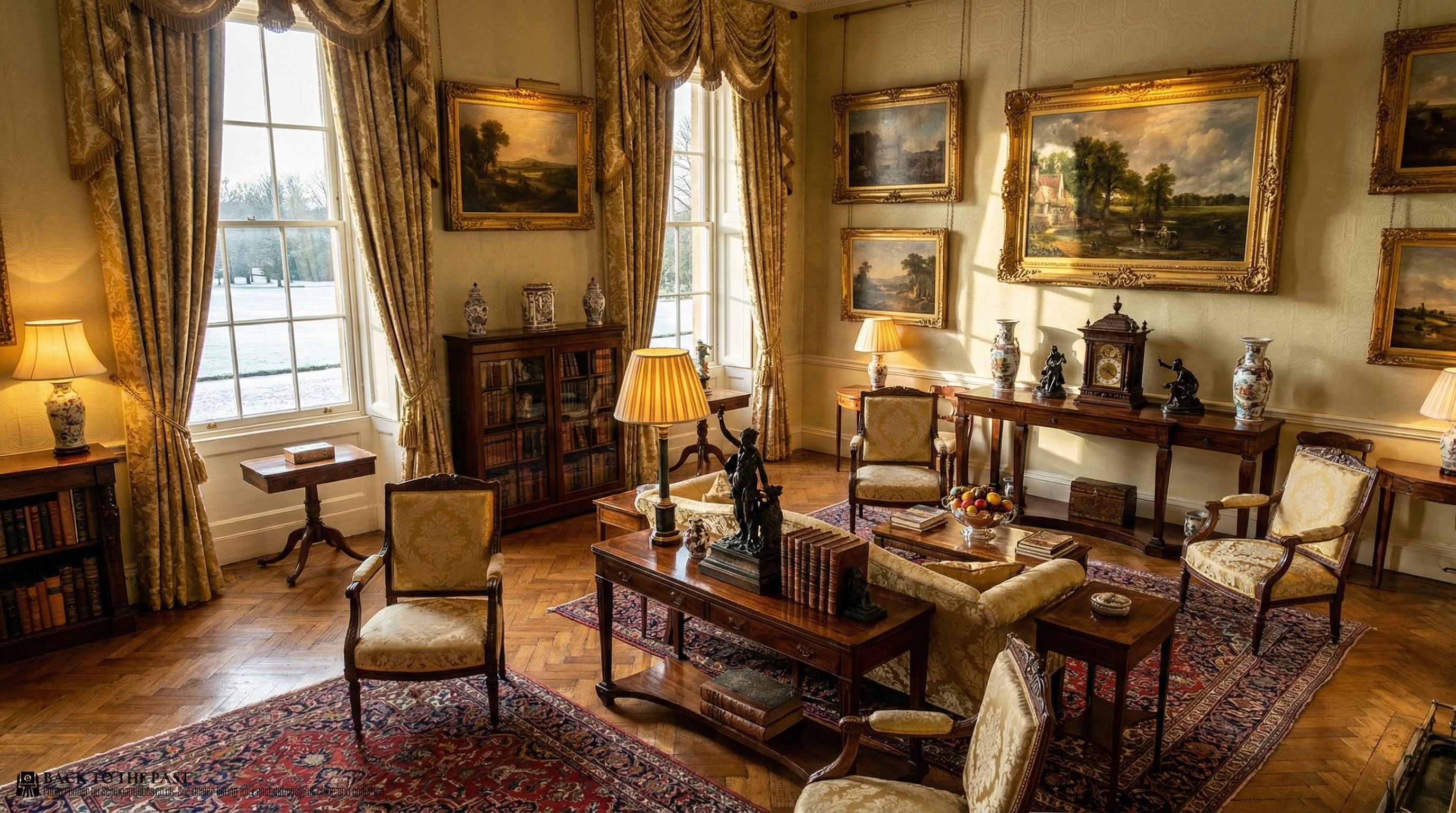
Gothic Revival Table Clock
A gothic revival table clock draws on medieval architectural motifs such as pointed arches, lancets and tracery, appearing primarily in mantel and bracket forms. The selection spans Victorian and nineteenth century periods, alongside Regency and twentieth century instances, reflecting sustained interest in ecclesiastical design.
Makers housed these movements in varied timber and metal housings, from mahogany and rosewood to bronze, brass and marble. Examples range from library and bracket clocks to monumental boardroom pieces and cathedral-arch forms.
Materials and construction
Cases combine dense hardwoods like mahogany, rosewood, oak and ebonised timber with cast bronze, brass and ormolu mounts. These metals articulate structural tracery, pinnacles and bezel surrounds against the timber bodies.
Movements utilise brass components, fusee mechanisms and striking trains, sometimes incorporating bells or gongs. Dials frequently feature enamel cartouches and visible escapements.
Materials in the current selection include mahogany, rosewood, brass, glass, bronze, marble, oak and enamel.
Assessing quality in the pieces
Quality rests on the architectural crispness of the case carving and the integration of bronze or brass mounts. Superior pieces display harmonious proportions between the heavy timber housing and delicate tracery.
Movement complexity distinguishes the range, with triple fusee, quarter-striking and multiple bell configurations representing higher technical ambition than standard time-only variants.
George Wadham·Winterhalder·Barber and North·George Orpwood·Bryson Edinburgh·Ravrio·Edwards Of London·Christie of Perth·Mitchell and Russell
The Gothic Revival Table Clock Glossary
- Bracket clock
- A portable clock designed to sit on a bracket, shelf or table rather than stand on the floor. Most feature sturdy carrying handles on top.
- Fusee
- A conical pulley used in spring-driven clocks to equalise the declining power of the mainspring as it unwinds. This mechanism improves timekeeping accuracy across the running cycle.
- Skeleton clock
- A timepiece with an open framework designed to expose the gear train and escapement to view. They are typically protected by a glass dome.
- Double fusee
- A movement incorporating two separate fusee mechanisms, one to drive the timekeeping train and another for the striking train.
- Ebonised
- Timber treated with a dark finish to imitate ebony. This technique was popular in Victorian and Aesthetic Movement pieces.
Gothic Revival Table Clock: Frequently Asked Questions
What is a gothic revival table clock?
A gothic revival table clock is a timepiece housed in a case decorated with medieval architectural elements like pointed arches and buttresses. These pieces date predominantly from the nineteenth century.
They function as both functional timekeepers and decorative ornaments designed for placement on mantels, brackets or desks.
How do fusee movements work?
A fusee movement uses a conical pulley connected to the mainspring via a cord or chain to maintain steady tension as the spring unwinds. This mechanical device ensures consistent power delivery to the escapement.
Clocks with fusee movements often require professional servicing to maintain their complex gear trains.
Where should I place a bracket clock?
Bracket clocks are designed for sturdy surfaces such as mantelpieces, dedicated wall brackets, or heavy wooden tables where their weight is supported. Ensure the placement surface is completely level to keep the pendulum swinging evenly.
Keep them away from direct sunlight and damp environments to protect the wood and metal components.
How do I identify the period of a clock?
Period identification relies on examining the timber species, housing style, dial construction, and movement signatures. Victorian pieces often show heavier ebonisation or gothic ornamentation, while Regency pieces tend toward classical proportions.
Maker signatures or engraved numbers on the backplate provide further clues regarding the manufacturing date.