


Gothic Revival Stick Stand
These gothic revival stick stand pieces bring architectural presence to a hallway, offering sturdy utility shaped by pointed arches and ecclesiastical motifs.
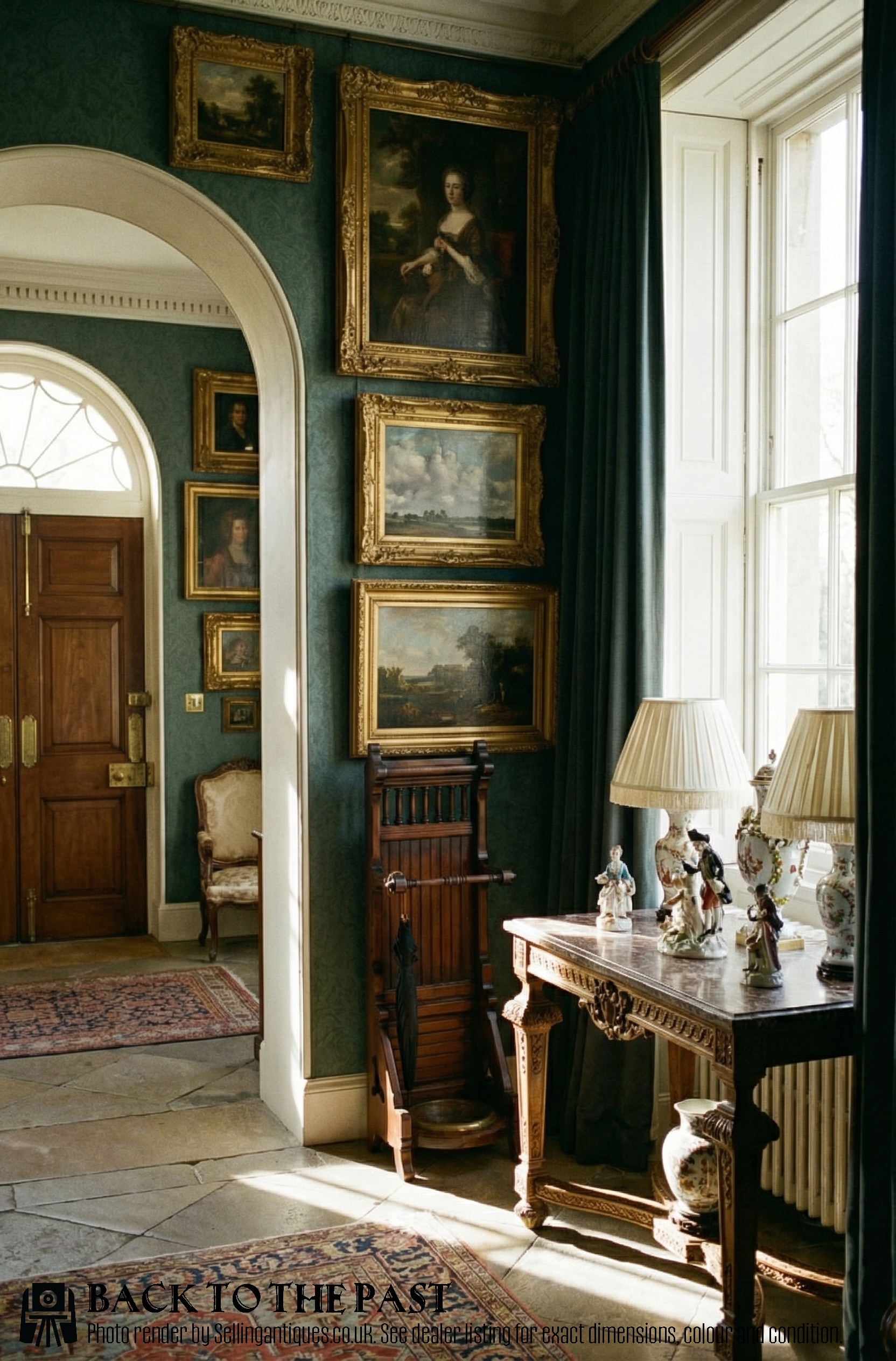
Gothic Revival Stick Stand
A gothic revival stick stand is a functional hallway furnishing designed to hold walking sticks, canes, and umbrellas while displaying medieval architectural ornamentation. When exploring this selection, buyers encounter utilitarian hall furniture and umbrella racks created across the nineteenth century and into the early twentieth century.
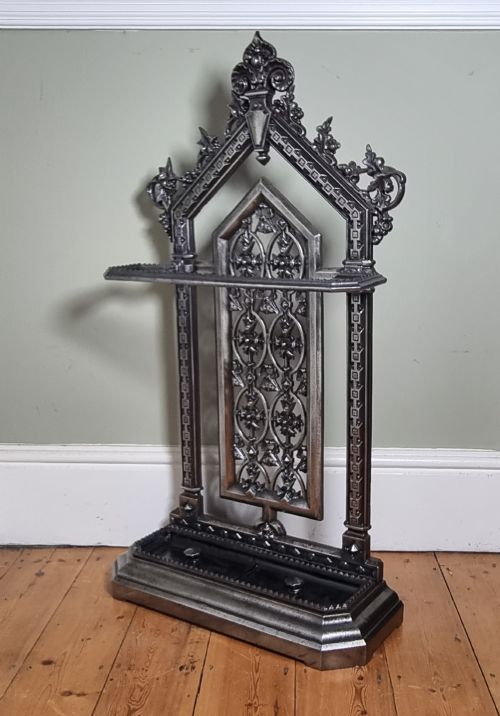
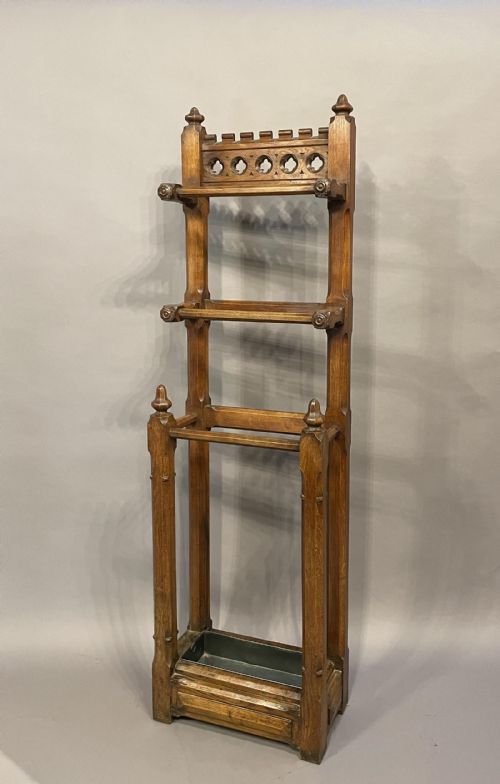
The objects take several distinct forms, including dedicated cast iron stick stands, corner umbrella racks, and larger oak hall stands combining hat and glove storage with umbrella wells. Pieces from this grouping typically incorporate pointed arches, quatrefoils, and heavy structural framing characteristic of the Gothic Revival and Victorian eras.
Beyond standard hall stands, related items such as cast iron and oak umbrella stands dominate the current selection, occasionally overlapping with aesthetic movement and arts and crafts sensibilities. These domestic items translate monumental church architecture into practical furniture for the nineteenth century home.
How they were made
Makers utilised durable metals and timbers, casting heavy iron and brass or carving solid oak to withstand daily hallway use. Cast iron examples often relied on modular moulding techniques, producing intricate openwork frames with integrated drip pans to catch rainwater.
Wooden pieces feature solid oak construction joined with traditional methods, sometimes incorporating carved linenfold panels, tracery, and applied mouldings. Brass elements were cast and finished with patination, while zinc liners frequently protected the wooden bases from moisture.
Gothic Revival Stick Stand Retail Price Guide 2026
Typical asking prices for gothic revival stick stand among the pieces listed under this phrase on Sellingantiques today, from the lower quarter to the upper quarter. They describe what is for sale here now, not the wider market.
Materials recorded across the inventory include cast iron, brass, oak, pewter, zinc, and glass.
What varies in quality
Quality in a gothic revival stick stand rests upon the crispness of the casting or the depth of the timber carving. Superior examples exhibit sharply defined architectural details, substantial gauge metal, and well-integrated structural components rather than shallow or blurred ornamentation.
The integrity of the original drip tray and water basin heavily influences desirability, as these functional elements frequently suffer replacement or loss over time. Finer pieces demonstrate careful attention to proportion, substantial weight, and uncompromised structural joins across both iron and oak construction.
T Thomason And Co·Coalbrookdale
The Gothic Revival Stick Stand Glossary
- Gothic Revival
- An architectural and decorative style drawing inspiration from medieval ecclesiastical design, featuring pointed arches, tracery, and structural gravity. This aesthetic dominated much of nineteenth century architecture and furniture production.
- Drip Pan
- A removable metal basin located at the base of a stick stand to catch moisture from wet umbrellas. Original pans add considerable authenticity to the piece.
- Quatrefoil
- A decorative Christian symbol and architectural element composed of four partially overlapping circles. It appears frequently pierced through the ironwork or carved into the wooden panels of these stands.
- Hall Stand
- A large multi-functional hallway furniture piece combining a stick stand with coat hooks, a mirror, and glove boxes. They anchor the entrance space of larger period homes.
- Aesthetic Movement
- A late nineteenth century design tendency prioritising visual beauty over narrative meaning, occasionally intersecting with gothic forms. It emphasised craftsmanship and stylised natural motifs.
Gothic Revival Stick Stand: Frequently Asked Questions
Where did these stands live?
These pieces sat in the entrance halls and vestibules of Victorian houses, serving visitors as they arrived from wet weather. They provided a designated drop-off point for walking sticks and umbrellas.
Positioned near the front door, they established an imposing architectural tone before guests entered the main reception rooms of the home.
How do I care for cast iron?
Cast iron requires minimal maintenance beyond dusting and occasional light waxing to protect the surface finish from moisture in the hallway environment. Keeping the interior drip trays clean prevents rust accumulation at the base.
Avoid using harsh chemical cleaners that might strip the historic patination accumulated over generations of domestic use.
Are these pieces waterproof?
Most original stands include a metal drip pan or zinc liner designed to catch water running off wet umbrellas. However, timber stands require careful management of these liners to prevent dampness from affecting the surrounding oak.
Many collectors use modern discreet plastic inserts inside the historic pans to protect the antique metal from standing water.
How do I spot a reproduction?
Genuine nineteenth century pieces display consistent wear patterns, heavy foundry casting marks, and appropriate timber shrinkage rather than uniform modern machine finishing. The weight of genuine cast iron and the patination on brass provide clear indicators of age.
Examining the fixings, screws, and construction joints reveals whether the stand dates to the Victorian era or represents a later twentieth century copy.